

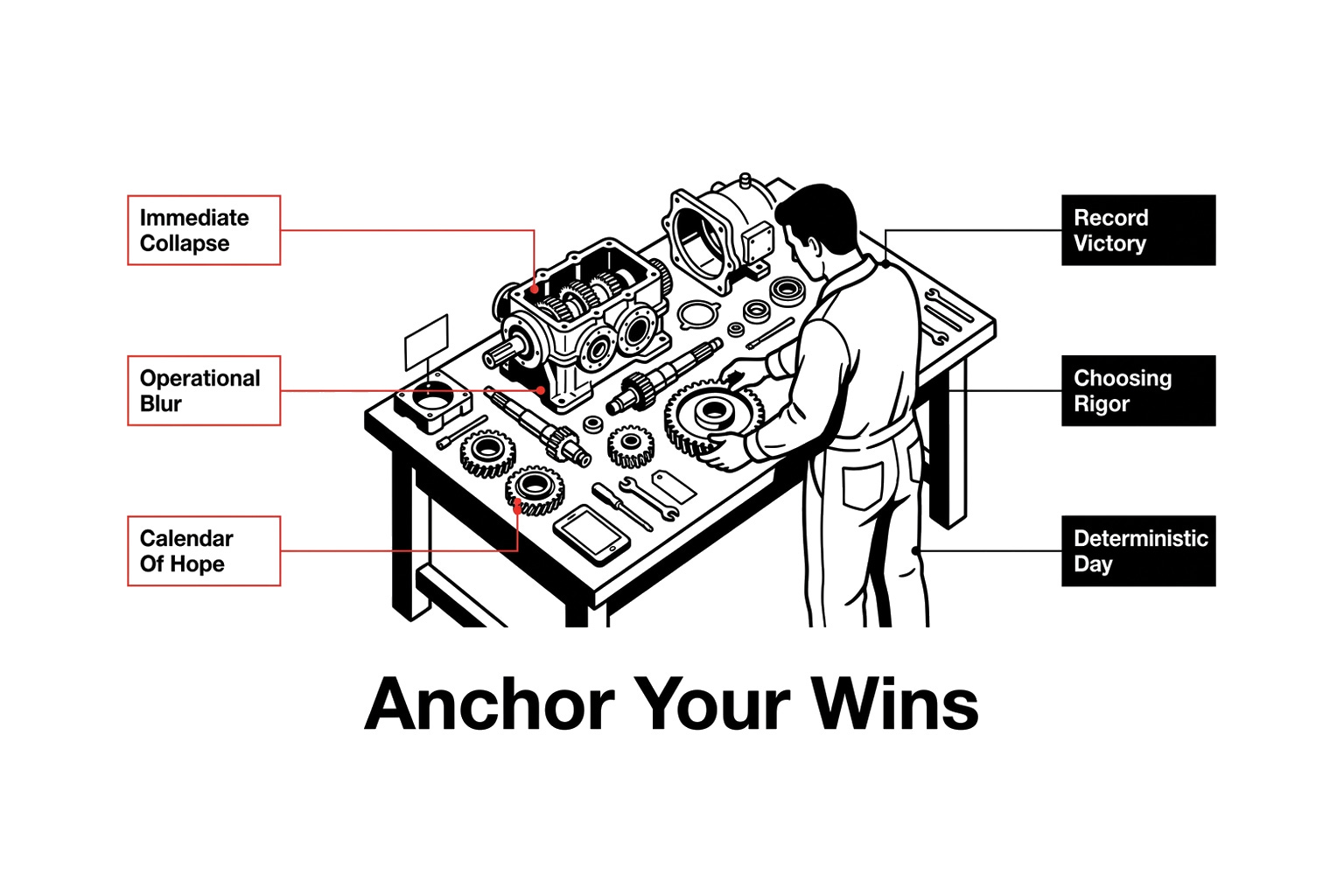
To rebuild your business momentum today, you must install three critical shifts: anchor your wins before you collapse into rest, separate your loose play from your high-stakes matches, and pay down the operational debt you owe to your future self.
You just closed the mastermind session, or maybe you finally got that elusive contract signed after three weeks of painful back-and-forth bureaucracy. Your chest feels light, the background hum of anxiety dissipates, and your immediate instinct is to shut the laptop and go for a walk in the park, telling yourself you’ve earned a break. But forty-eight hours later, you wake up with a familiar, heavy fog in your temples, staring at a blank calendar, realizing that the temporary high is gone and you are back at square one, begging the market for another hit of certainty. The friction isn't that you lack the drive to work; it is that you treat your victories as permission to go dormant, leaving your brain to associate hard effort only with exhaustion.

The Homeostasis Trap: Why Resting After a Win Starves the Brain
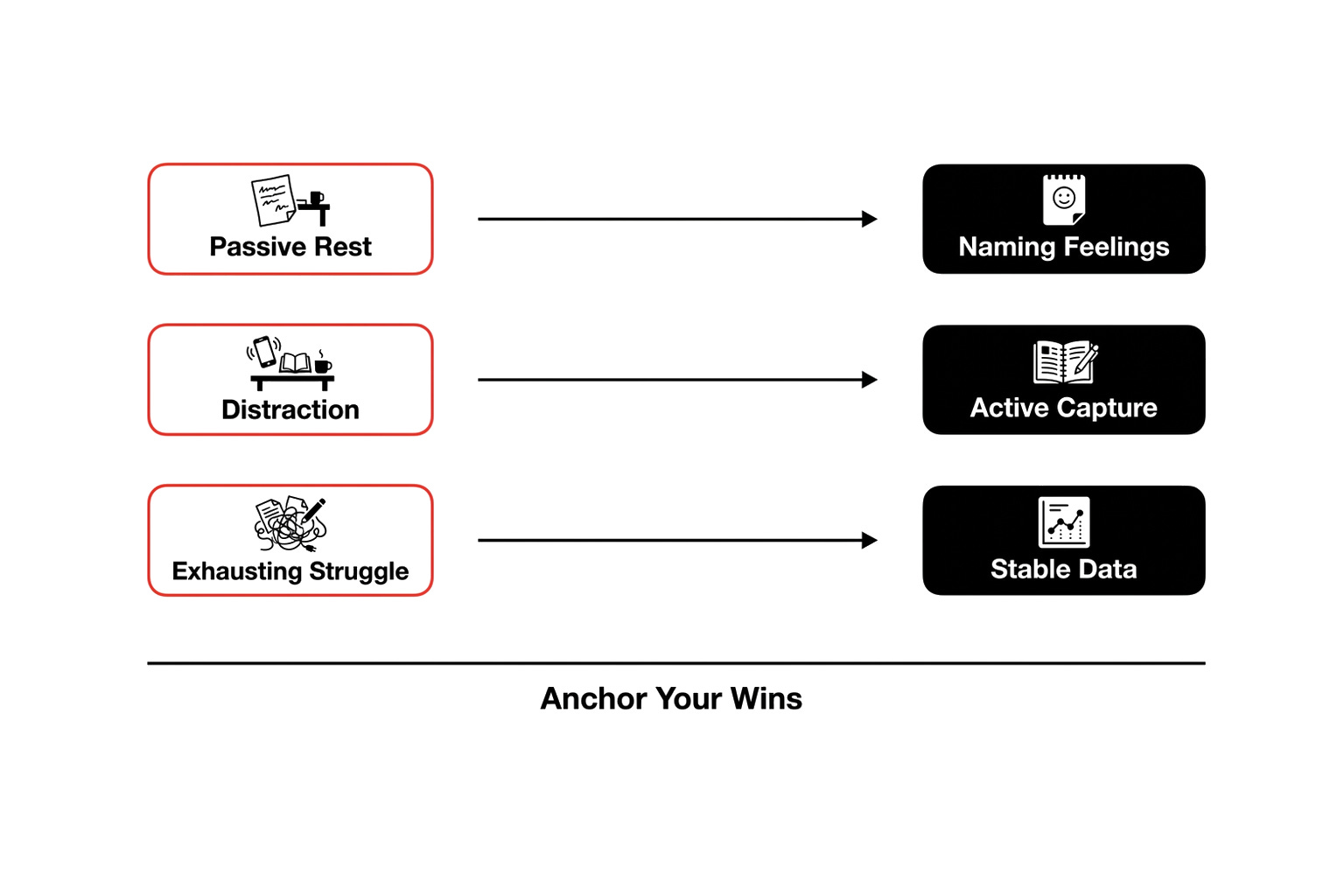
When you experience a significant breakthrough—whether it is securing a high-value client or clearing a complex operational hurdle—your immediate biological response is to seek homeostasis through passive rest. While rest is necessary for physical recovery, collapsing into sleep or distraction immediately after a victory prevents your brain from consolidating the neural pathways of success. Without conscious intervention, the brain’s reward circuit fails to link the intense effort you just expended to the positive outcome, leaving only the memory of the exhausting struggle behind.
Go deeper 👉 : How to Move Beyond Wounds and Humiliation
To prevent this cognitive decay, you must practice instrumental emotion regulation by actively capturing the physiological signature of your wins. When we name and write down the precise physical state of a victory, we leverage a cognitive mechanism known as affect labeling. Neuroimaging research by Matthew Lieberman (2007) demonstrates that putting feelings into words dampens amygdala reactivity and recruits the prefrontal cortex, transforming a fleeting emotional high into stable, accessible cognitive data.
"If the only thing your body learns is that intense, focused effort ends in immediate collapse or passive distraction, you have trained the strain and starved the reward. You must teach the circuit exactly what the win feels like in the chest."
By documenting what a "right place" moment feels like in your body and placing that record alongside your hardest operational days, you build a reliable psychological anchor. This deliberate repetition is what drives myelin insulation around your high-performance circuits, ensuring that your brain learns to seek the victory itself rather than merely seeking relief from the pain of working.
Playing the Match: Choosing Rigor Over Sunday Play
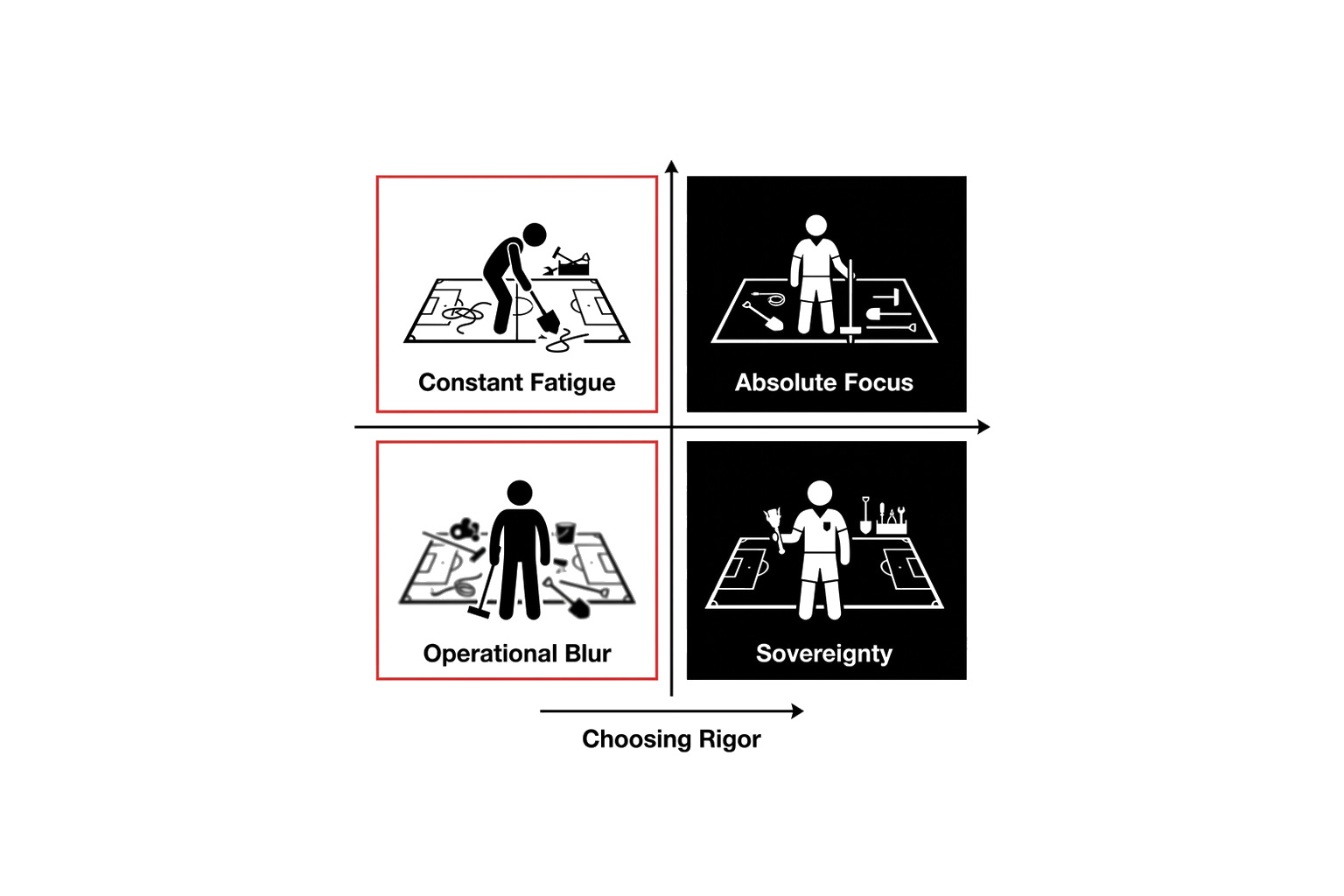
Many independent consultants live in a perpetual state of operational blur, where their creative work feels like play, but their administrative tasks feel like a sentence. They struggle with constant fatigue because they fail to establish clear boundaries between different modes of engagement, allowing micro-negotiations with their comfort to dictate their daily schedule. To regain sovereignty over your business, you must consciously choose whether any given hour is a relaxed, low-stakes rehearsal or the actual championship match.
Go deeper 👉 : Stop Voting on Your Morning
"You cannot keep every past, comfortable version of yourself and call the resulting pile growth. Some ways of working must die at the boundary of your new standards."
This distinction requires you to elevate your personal standards and accept the discomfort of letting go of outdated habits. When you step onto the field for a high-stakes match, your focus must be absolute, your tools pre-arranged, and your willingness to execute unconditional. By separating your creative, unstructured play from your rigorous business execution, you eliminate the cognitive friction of trying to be both an amateur and a professional in the same breath.
The Cadence of Responsibility: Debt to Your Future Self
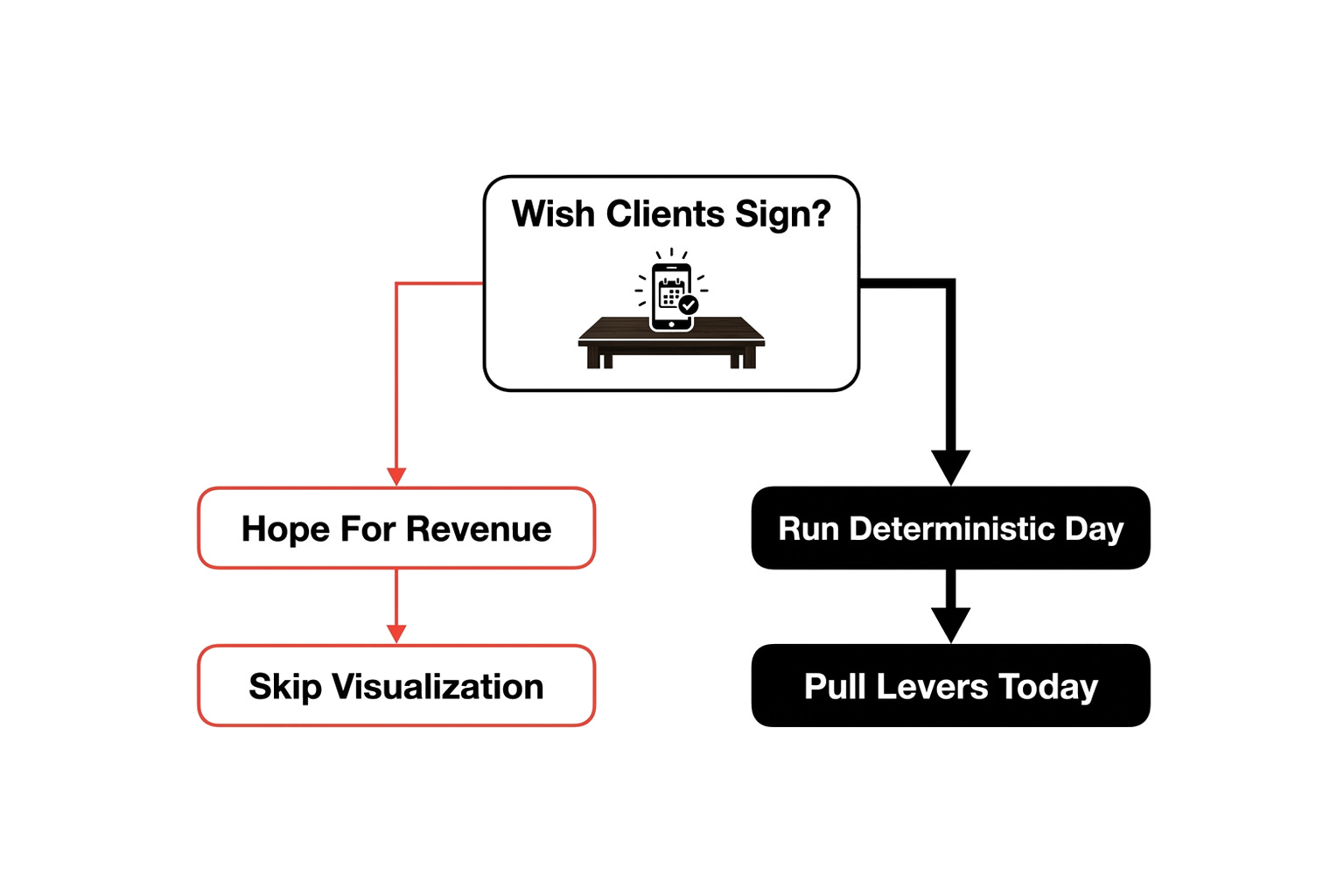
A major source of anxiety for independent operators is the habit of treating client acquisition as a matter of hope rather than a predictable process. When you build your schedule around the wish that someone will sign your proposal, you introduce a massive intention–execution gap into your business. Sovereignty means running a deterministic day where your actions are governed by lead measures—such as the number of direct conversations you initiate—rather than lagging indicators like revenue.
Go deeper 👉 : Archaeology of the Self — 30 minutes free
Even Yann admits to this friction. "I don't yet run my own picture of absolute excellence," he shares during the session. "The intention is there, the reminder fires on my phone, and yet I still find myself skipping the visualization sequence I designed for myself. The work is never about achieving a flawless state; it is about closing the gap one deliberate repetition at a time."
"A calendar built on hope is an abdication of leadership. You do not count the clients you wish would sign; you count the operational levers you actually pulled today."
By establishing a strict cadence of responsibility, you pay down the debt you owe to your future self. You design the daily adversity you need, execute the necessary reach-outs without waiting for the perfect mood, and measure your success by your adherence to the process. When your calendar is deterministic, uncertainty about the market no longer paralyzes your daily execution.
Exploded-view thinking: Record the first imperfect teaching
A strategy you cannot explode into parts is a strategy you cannot teach. Take the trait, the context, and the consequence apart the way a mechanic lays a gearbox on the bench — so your twin can hear the sequence.
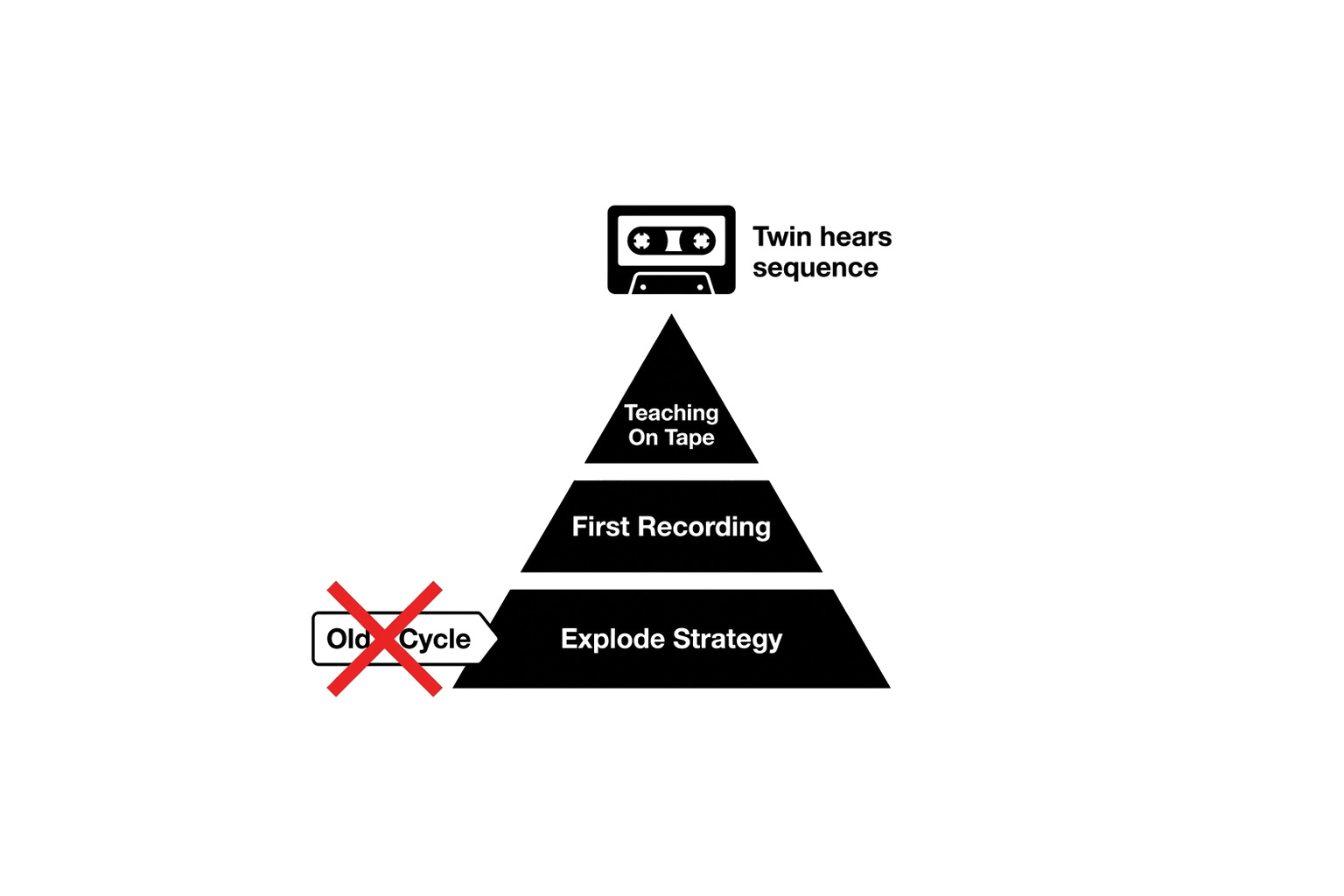
The first recording is supposed to be imperfect. Name one cell already at ease and one still tight. Paper fades in two weeks; the old cycle returns unless the teaching is on tape.
Your Move This Week
Copy the YAML block into Claude, ChatGPT, or your preferred AI.
Replace each placeholder with your situation this week.
Paste the three numbered returns into your notes.
### INSTALLS
1. Anchor your wins using affect labeling to train the neural reward circuit.
2. Define the operational frame of your hours to separate Sunday play from the match.
3. Run a deterministic calendar measured by lead actions rather than hoped-for clients.
### YOU ARE
An independent consultant or coach who feels stuck in a cycle of unpredictable revenue,
struggling to maintain consistent operational momentum between client wins.
### MY SITUATION
[ROLE]
[LOAD]
[REVENUE_STABILITY]
[OPERATIONAL_DISCIPLINE]
### ASK 1
Identify one recent felt victory that you simply slept off or ignored. Write down the
exact physical sensation of that win, linking it directly to one difficult operational
boundary you maintained.
### ASK 2
Audit your calendar for the coming week. Designate exactly one hour as 'The Match'
(high-stakes, zero-distraction execution) and one hour as 'Sunday Play' (creative,
low-pressure exploration).
### ASK 3
Replace your revenue expectations for this week with a hard count of your operational
levers. Track the exact number of direct client conversations initiated rather than hoping
for a signature.
### RETURN ONLY
1. The physical anchor of your recent win and the hard boundary it validates.
2. The scheduled times for your Match hour and your Sunday Play hour, with the rules for
each.
3. Your lead-measure metric count for the week, stripped of any wishful thinking.