


Here is how to reclaim your executive runway: eliminate morning micro-negotiations, collapse your tracking complexity, and turn vague fears of rejection into concrete, playable forms.
You sit at your desk at 8:15 AM. The coffee is hot, the screen is blank, and your inbox is a minefield of potential directions. Instead of writing the high-leverage proposal or calling the warm lead who went quiet last week, you spend twenty minutes negotiating with yourself. Should you check the CRM first, write a LinkedIn post, or review your quarterly goals?
This is the "morning vote." It feels like professional freedom, but it is actually a slow-acting tax on your business. By the time you finally make a choice, your executive battery is already half-depleted, leaving you with a tight sensation behind your temples and a sudden, restless urge to check social media just to escape the pressure of deciding.
The business consequence of this leak is brutal: you push your most critical, revenue-generating work to the afternoon, when your cognitive energy is spent. You end up shipping fuzzy offers, avoiding hard sales conversations, and watching your runway shrink—until the quiet, tempting thought of returning to a salaried role starts to feel like the only way to breathe again.
The Morning Vote
I know how easily this trap snaps shut. Recently, I landed in Geneva at midnight, exhausted after walking the Camino de Santiago, with my body screaming for structure. The next morning did not begin with an internal debate about what to do first. It started with a non-negotiable, thirty-minute physical rail: the sofa, a light-therapy lamp that automatically triggers when my phone gets close, and absolute silence.
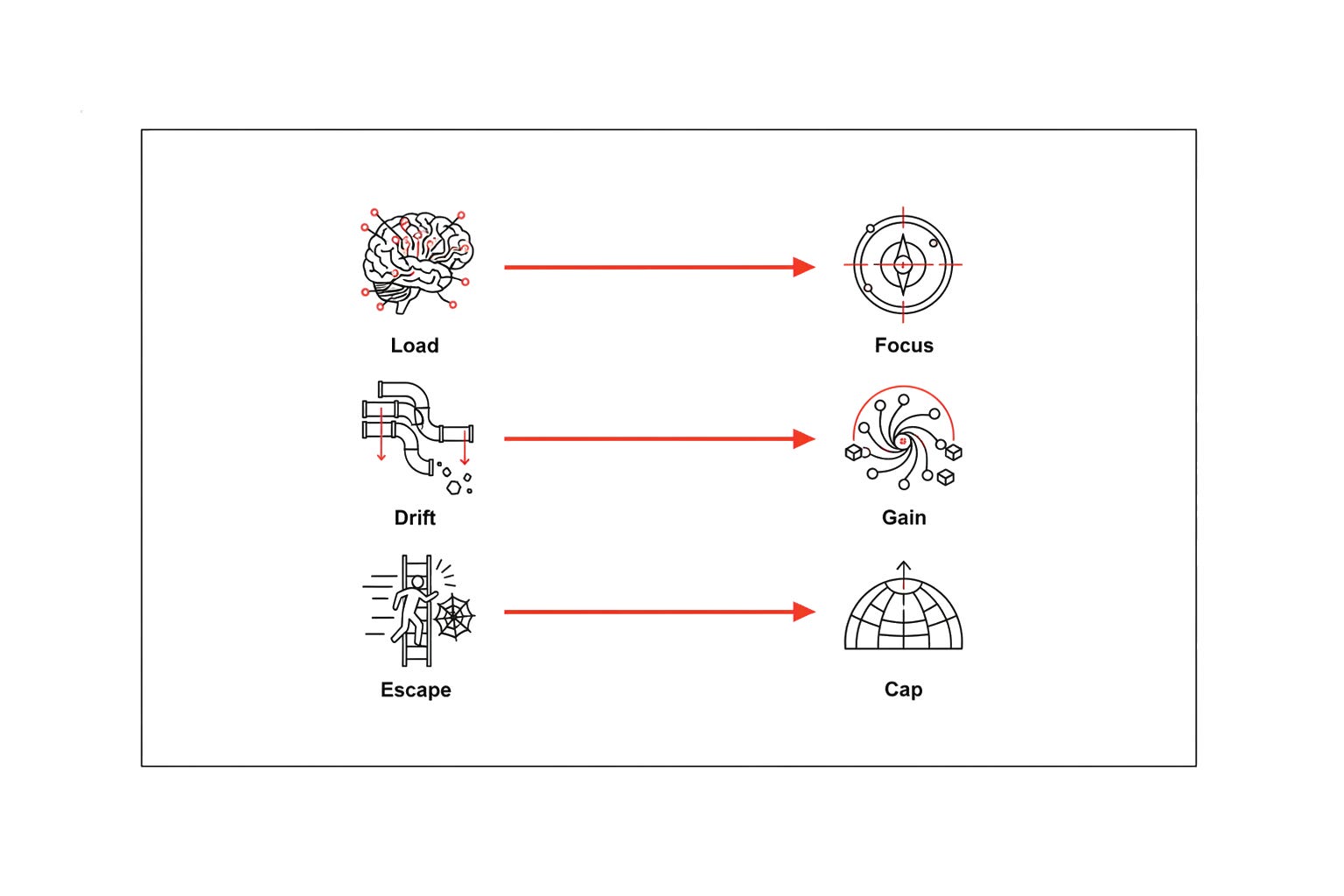
Go deeper 👉 : Are You Still Far From What You Said You Would Build?
This is not a lifestyle choice; it is a clinical preservation of executive capacity.
The science behind this is clear. In cognitive psychology, this phenomenon is known as ego depletion. Research led by Kathleen D. Vohs (2008) demonstrates that the physical act of making choices—even trivial, administrative ones—actively depletes the self-regulatory resources of your prefrontal cortex. When your brain has to negotiate whether to turn on a light, open a journal, or draft an email first, you are burning the exact same glucose reserves you need later to hold your price on a sales call.
"When you turn your morning into an election, your nervous system spends its best energy campaigning instead of executing. The system must hold the morning so you don't have to vote."
If your morning routine requires you to make decisions about how to start, you have already lost the day's primary battle. You do not need more willpower; you need a physical system that makes your first three moves entirely automatic.
The Law of Conserved Complexity
When independent consultants realize they are leaking energy, they usually overcompensate by building complex tracking systems. They create a grid for their anxiety, a spreadsheet for their habits, and a journal for their daily reflections. But when you are tired at 6:00 PM, the sheer cognitive load of maintaining these tools becomes another chore you quietly abandon.
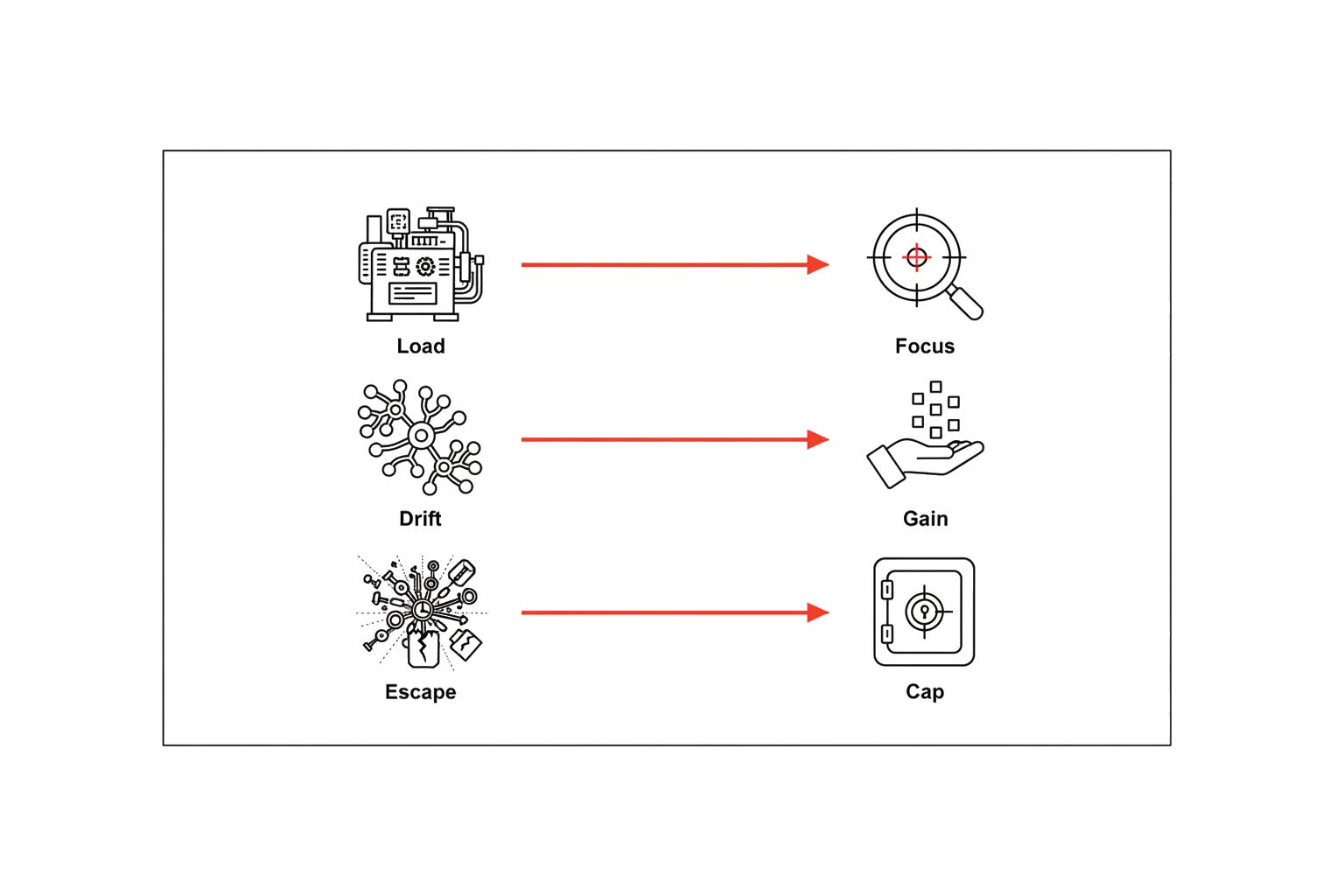
Go deeper 👉 : Do You Lack the Energy to Propel Your Business?
This is where we must respect Tesler’s Law, also known as the Law of Conservation of Complexity.
This principle states that every system has an inherent amount of complexity that cannot be removed; it can only be moved. If you do not build the constraint into the design of your tools, that complexity lands squarely on your tired brain.
To protect your focus, you must collapse your tracking. Instead of managing multiple grids, reduce your evening review to a single, low-friction format—like a simple daily performance journal powered by voice-to-text.
Additionally, stop trying to generate self-discipline out of thin air. Instead, leverage what we call a Team Player: an external, structural constraint that forces your hand. This could be an automated calendar invite, a standing appointment with an assistant, or a software lock that shuts down your browser.
"Excellence does not hide in your capacity to endure friction. It hides in the systems you build to bypass it. If your self-tracking requires willpower, your system is broken."
By moving the complexity of discipline into automated constraints, you free up your prefrontal cortex to do what it does best: solve high-value problems for your clients.
Decision Fatigue Is Not a Character Flaw
Independent consultants often misread the morning vote as a personality problem: I am undisciplined. I lack grit. Other people just decide. That story is expensive. It turns a capacity leak into a moral verdict, which then fuels more negotiation—I should try harder—instead of installing a rail that removes the choice.
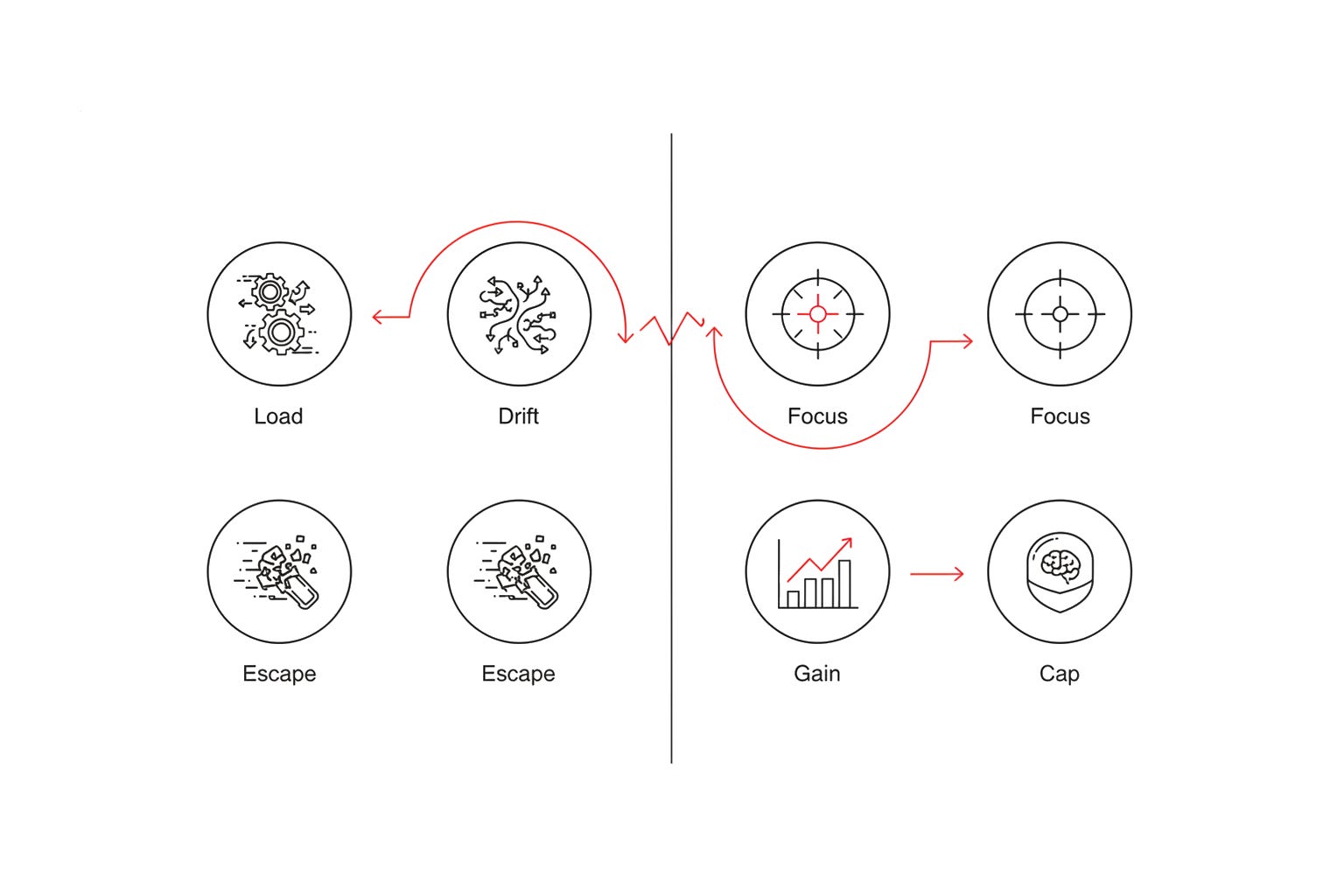
Go deeper 👉 : The exact moment everything tips
Decision fatigue is a resource constraint, not a character report. When the morning still feels like an election after you have “tried to focus,” stop recruiting more willpower. Move the decision out of your head and into the environment: one place, one lamp, one first move that fires without a ballot.
The working contrast is simple. Soft story: another motivational restart. Working stack: a physical Team Player that holds the first thirty minutes so your executive function arrives at the client work still charged.
Playing the Polarity
The deepest leak in an independent consultant’s business is almost always a fuzzy relationship with refusal. You tell yourself, I am not at ease with rejection. It sounds like a permanent weather system or a fundamental flaw in your personality.
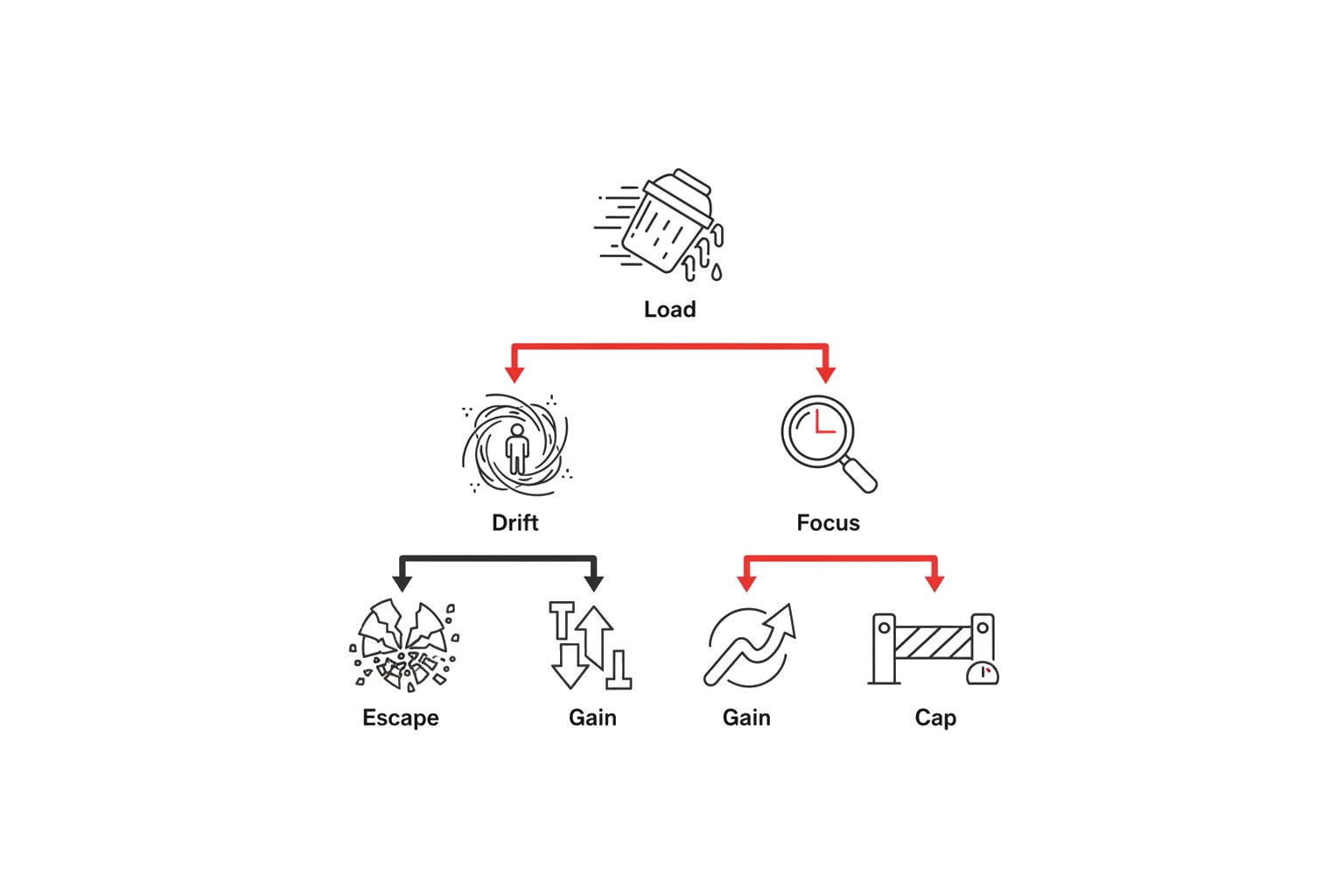
Because the word "rejection" remains a vague cloud, your nervous system interprets every unanswered email or declined proposal as a survival threat. To protect yourself, you unconsciously engage in people-pleasing behaviors: you lower your prices before the client even asks, you over-deliver to the point of exhaustion, and you avoid making direct offers.
To break this cycle, you must define the exact form of rejection you are trying to avoid.
Is it the prospect who says, "You are too expensive"? Is it the client who signs with a competitor? Once you name the specific transaction, it stops being a terrifying climate and becomes an observable data point.
Only then can you stop being the puppet of your fears and begin to play the polarity. Instead of hiding from conflict, you learn to step into the archetype of the assertive negotiator who is entirely willing to walk away from a bad fit. This is not a moral transformation; it is a strategic posture. When you clarify your definitions, you stop running from the "no" and start using it to anchor your value.
Your Move This Week
Copy the YAML block into Claude, ChatGPT, or your preferred AI.
Replace each placeholder with your situation this week.
Paste the three numbered returns into your notes.
### INSTALLS
1. Replace morning micro-negotiations with a single, non-negotiable physical constraint.
2. Collapse tracking complexity into a single daily performance journal.
3. Reframe your fear of rejection from a vague climate into a specific, observable form.
### YOU ARE
An independent consultant or coach experiencing executive fatigue, struggling with offer
clarity, and feeling the quiet pressure to return to a salaried role.
### MY SITUATION
[ROLE]
[LOAD]
### ASK 1
Identify the exact point in your morning where your routine turns into a debate. What is
the single physical constraint you can install to eliminate this choice?
Return:
- The specific micro-negotiation that drains your early energy.
- The physical anchor (e.g., a specific chair, a lamp, a pre-set notebook) that removes
the vote.
### ASK 2
Review your current self-tracking or productivity tools. Where has complexity become a
chore that you avoid when tired?
Return:
- The multiple grids or lists you are currently trying to maintain.
- The single, collapsed tracking format or voice-to-text input that will replace them.
### ASK 3
Pinpoint the vague fear of rejection that prevents you from closing deals or sending bold
proposals. What is its precise, observable form?
Return:
- The generic "weather" statement you tell yourself (e.g., "I hate cold outreach").
- The concrete, specific scenario or sentence you actually fear, stripped of emotional
drama.
### RETURN ONLY
1. The morning micro-negotiation and its physical anchor.
2. The collapsed tracking format that eliminates decision fatigue.
3. The specific form of rejection you are choosing to observe and play with.
Three Doors to Go Deeper
If you are tired of voting on your morning and want to build a business that supports your life rather than consuming your energy, here is how we can work together:
The Club: Join a private room of high-performing independent consultants who are actively building systems to protect their focus, refine their offers, and scale their revenue.
The Codex: Access our complete, living library of operational blueprints, cognitive models, and system designs.
The Framework: Apply the exact principles of executive sovereignty to your business through tailored, high-touch strategic coaching.
P.S. The transition from a chaotic consulting practice to a highly structured, sovereign business does not happen through motivation. It happens when you install constraints that make failure impossible. What is the first vote you will eliminate tomorrow?