

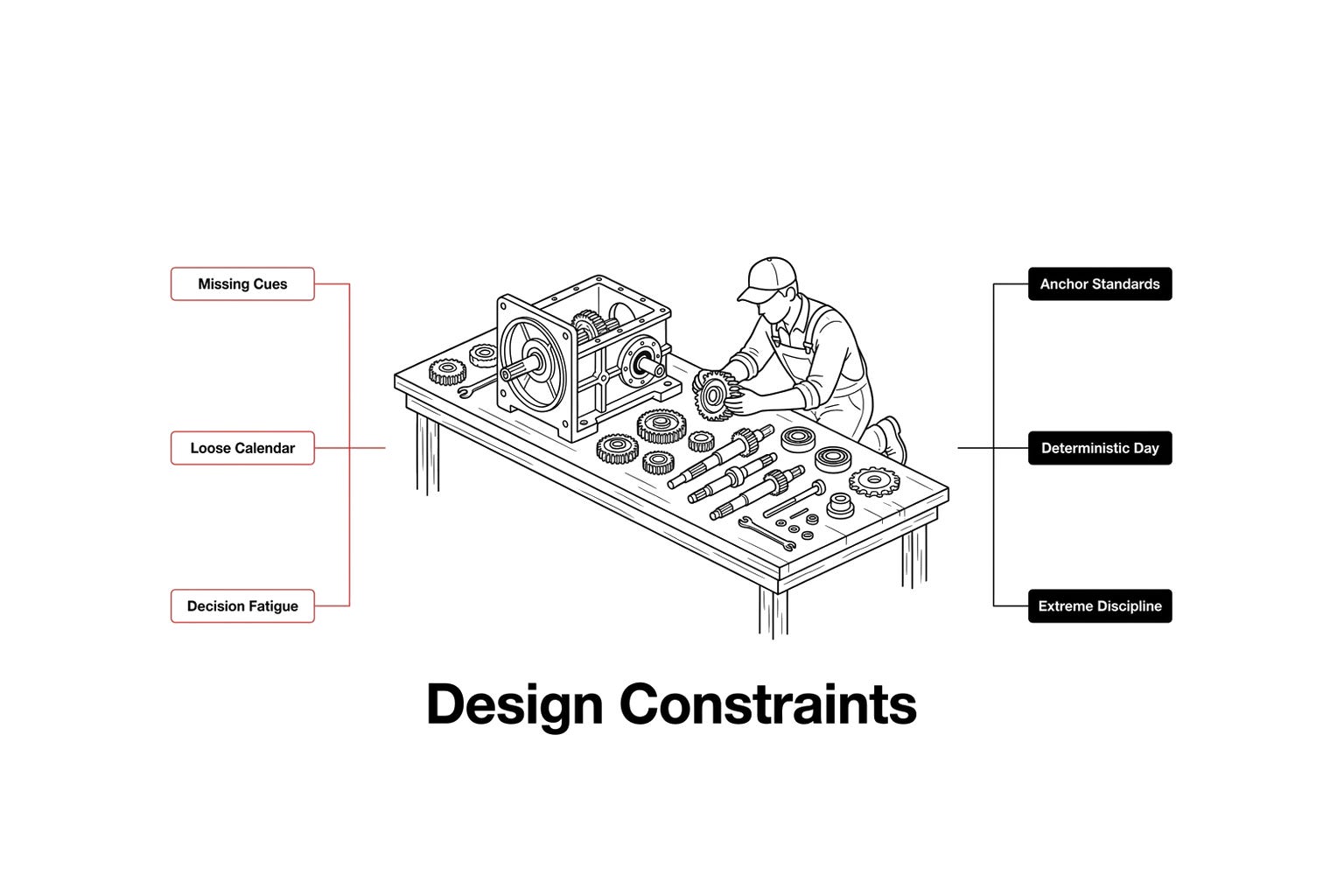
We are installing three shifts today: anchoring your standards to physical spaces, selling your calendar to your own brain first, and identifying who pays for your unedited decisions.
The client delivery tunnel is over, but the victory feels like a hangover. You sit at your desk, staring at a calendar that looks like a battlefield of loose blocks, half-finished proposals, and empty slots. Your body is sending a dull, heavy signal of exhaustion—not a temporary sleepiness, but a deep, systemic fatigue. You tell yourself you need more willpower to kickstart your business development again, but your hand hovers over the browser, choosing distraction instead. The runway is getting shorter, the return to a corporate salary is starting to look like a relief rather than a failure, and you are realizing that your "freedom" has become a prison of constant, exhausting choices.

The room is the cue
When you step out of your regular environment, your standards do not travel with you. You think your discipline is a character trait, but it is actually an environmental lease. When a veteran consultant returned to her desk after three weeks of intense, out-of-town client delivery, she realized her daily preparation routines had vanished. She hadn't lost her skills; she had lost her room.
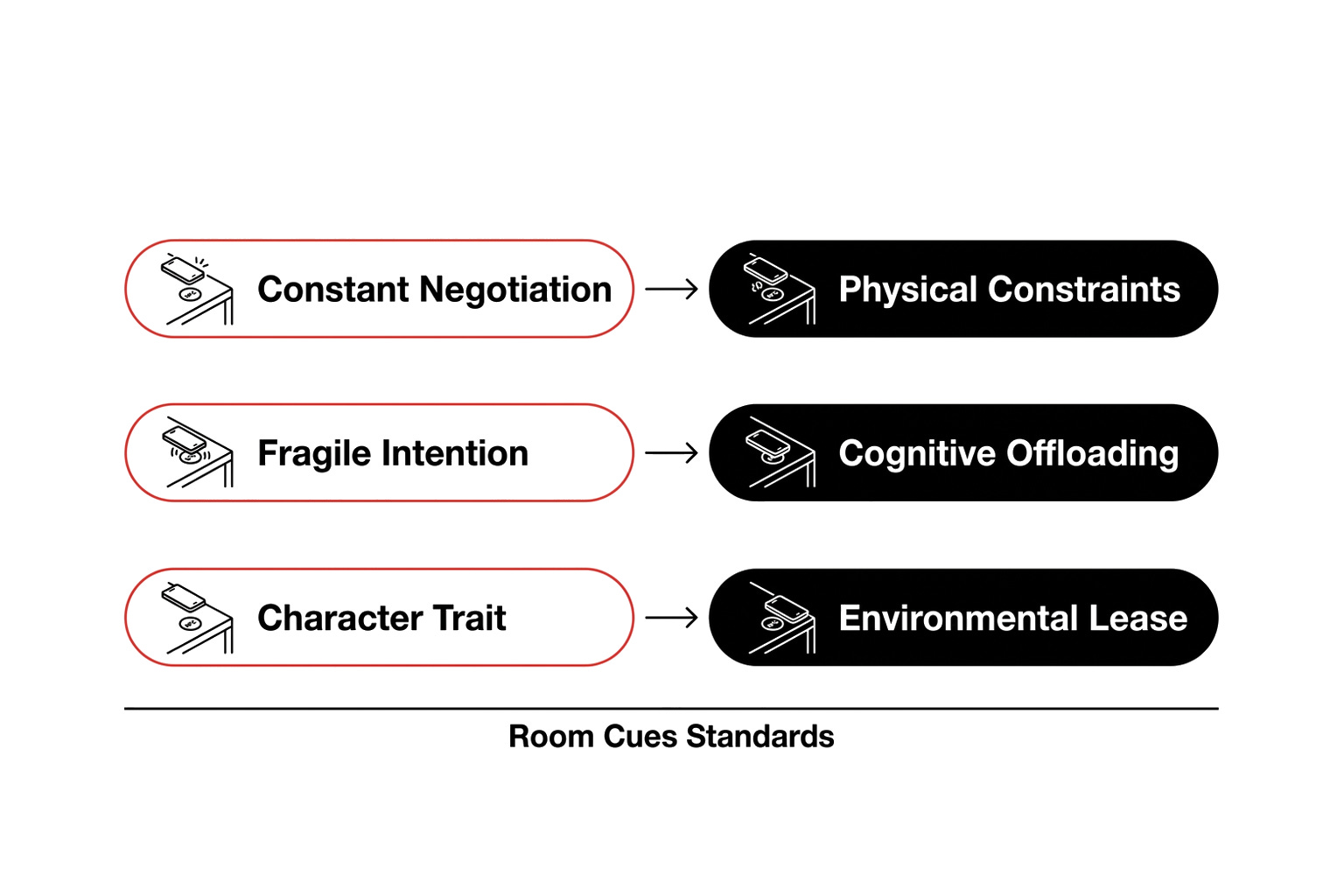
I experienced this exact friction myself last week. Sitting in a hotel room away from my usual desk, my morning journaling and system reviews simply didn't happen. I didn't decide to skip them—the cues that trigger the sequence were missing. This is because our habits rely heavily on cognitive offloading; we use physical spaces to anchor our standards so our brains don't have to vote on them every morning.
"The standard was in the room. Remove the room and your high-performance routine is nothing more than a fragile intention."
When your environment changes, your brain enters a state of constant negotiation. To prevent this, you must design physical constraints—like a specific deck of physical cards on your desk or an automated sequence triggered by an NFC tag—that leave you no honest way to skip the work.
Go deeper 👉 : How to Move Beyond Wounds and Humiliation
Sell the deterministic day to yourself
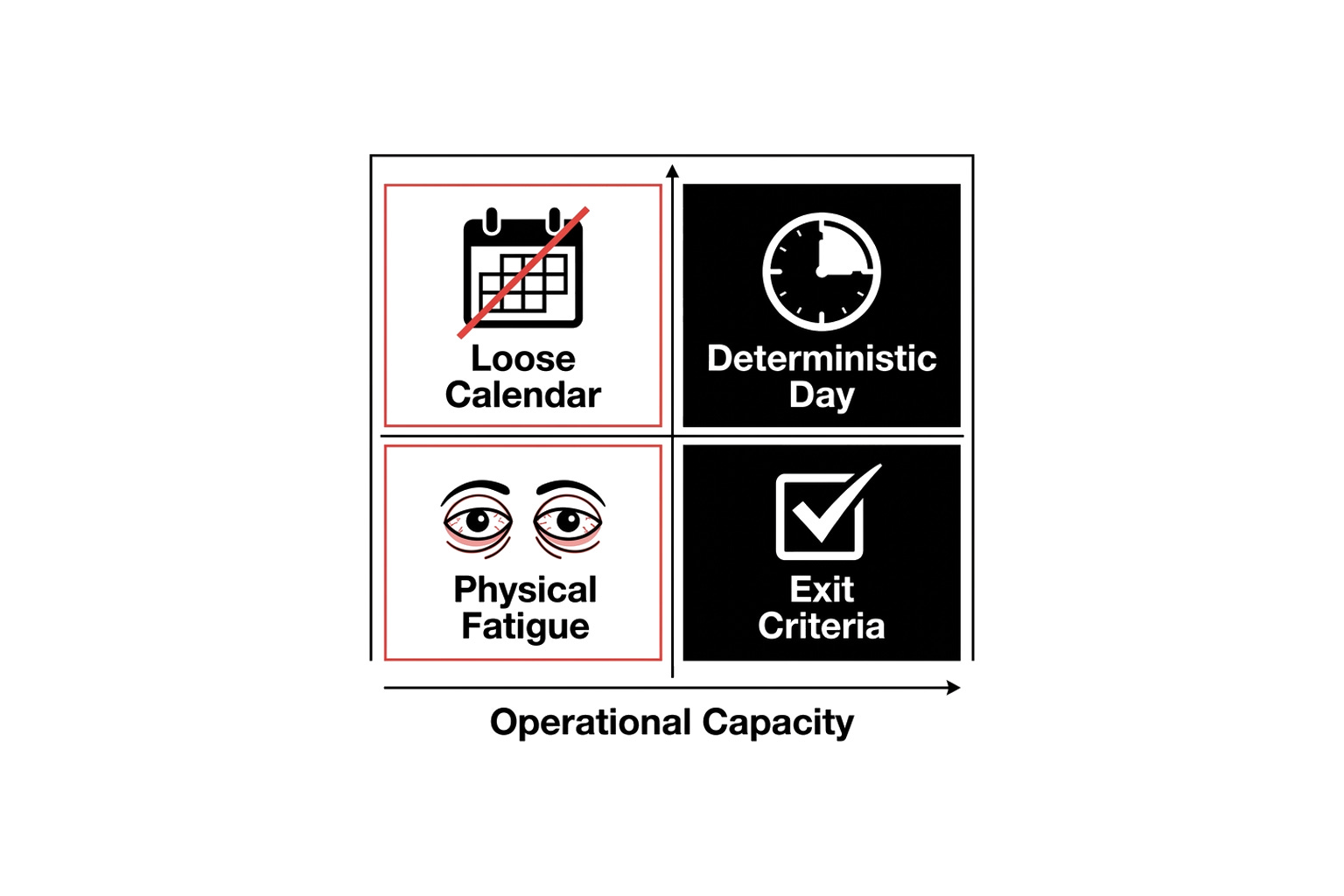
Most independent consultants design their schedules like a wish list, leaving the outcome probabilistic. You write down "work on offer" for two hours, but when the time comes, you check email instead. This happens because you haven't performed a transfer of certainty to yourself before the hour starts. If you do not believe in the value of the block, you will not build the necessary boundaries to protect it.
Go deeper 👉 : Stop Voting on Your Morning
This is where human biology dictates your operational capacity. Your body communicates its energetic state through the afferent vagal system, sending continuous sensory data from your organs to your brain. When you are fatigued—whether from a demanding client project or early-stage physical strain—this system flags your energy reserves as critically low. If your calendar is loose and probabilistic, your brain will immediately interpret this vagal signal as a license to skip the hard work.
"If you do not sell the day to your own brain before the morning begins, you will spend the afternoon renegotiating your standards with your fatigue."
To bypass this, you must run a deterministic day. This means specifying the exact inputs, physical locations, and exit criteria for your critical blocks. You don't hope the day works; you design it so that the finish line is mathematically predictable, leaving zero room for mid-day debate.
Who pays the price of complexity?
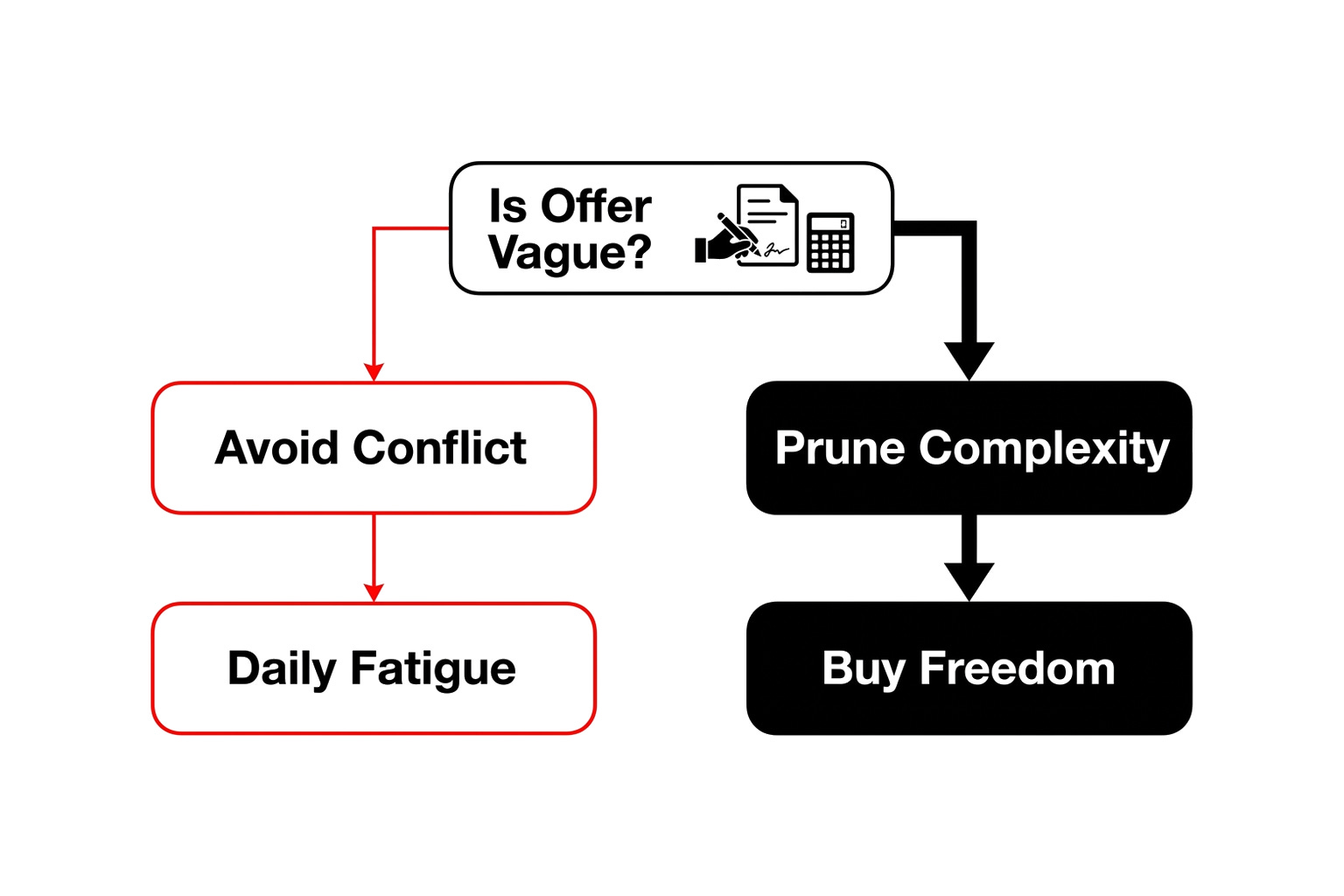
Every time you leave an offer vague, keep a toxic client, or avoid setting a hard boundary, you are not avoiding conflict—you are simply shifting the cost. This is the hidden price of complexity that quietly drains the runway of independent practices. The complexity you refuse to prune is paid for by your nervous system, your family, or your financial survival.
Go deeper 👉 : Are You Still Far From What You Said You Would Build?
When you live in a state of constant micro-negotiations—arguing with yourself about whether to make the sales call, whether to prep for the meeting, or whether to rest—your cognitive load skyrockets. You end up exhausted not from the work you did, but from the decisions you failed to automate.
"Complexity is a loan you take out to avoid an uncomfortable decision today. The interest rate is paid daily in decision fatigue."
By establishing extreme discipline in your operational setup, you buy back extreme freedom in your creative and strategic work. You must name exactly who or what is currently paying for the systems you refuse to build.
Exploded-view thinking: Record the first imperfect teaching
A strategy you cannot explode into parts is a strategy you cannot teach. Take the trait, the context, and the consequence apart the way a mechanic lays a gearbox on the bench — so your twin can hear the sequence.
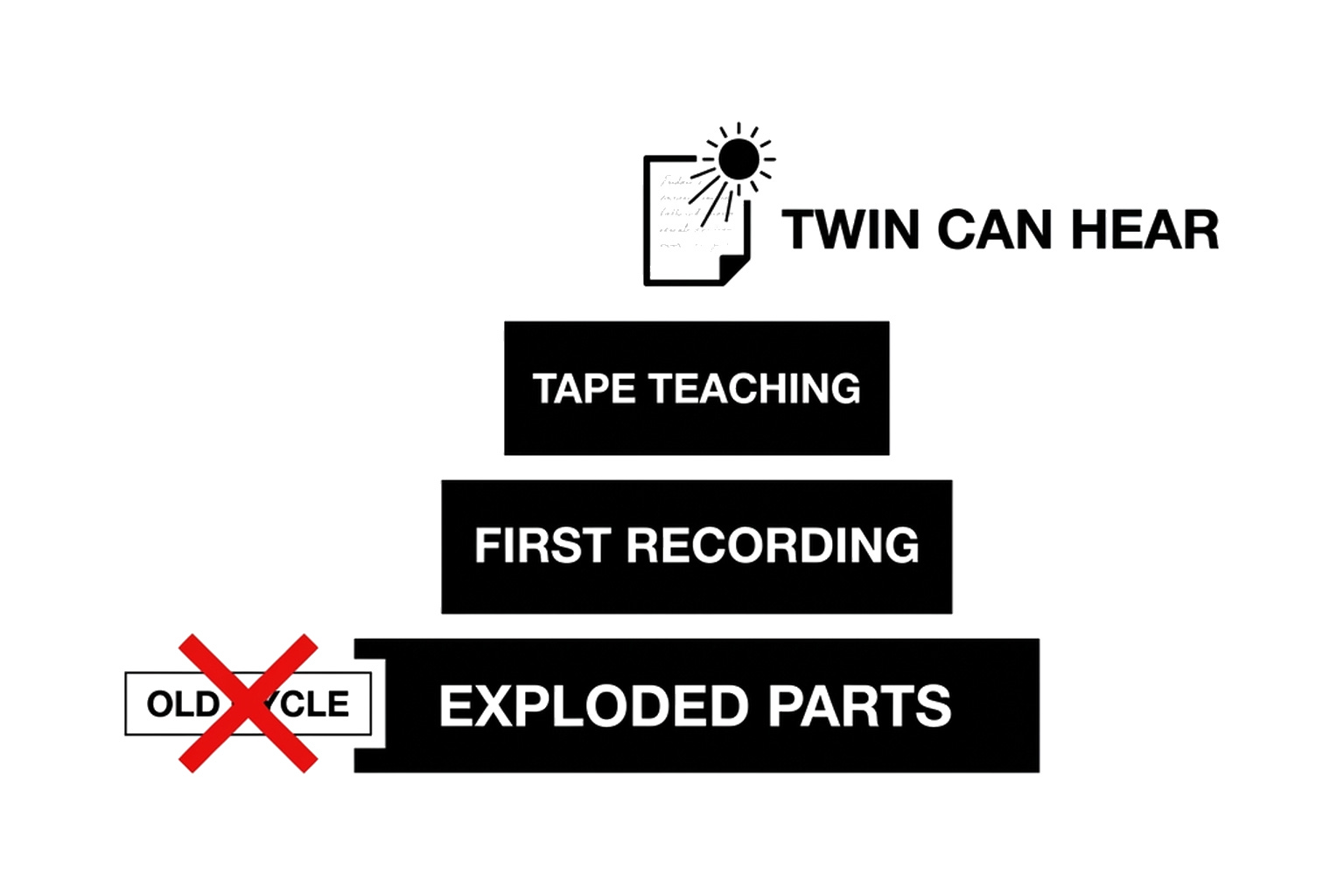
The first recording is supposed to be imperfect. Name one cell already at ease and one still tight. Paper fades in two weeks; the old cycle returns unless the teaching is on tape.
Your Move This Week
Copy the YAML block into Claude, ChatGPT, or your preferred AI.
Replace each placeholder with your situation this week.
Paste the three numbered returns into your notes.
### INSTALLS
1. Anchor your standards to physical cues rather than relying on raw willpower.
2. Sell your calendar to yourself through a deterministic day setup before execution
begins.
3. Identify the hidden payer of your business complexity to force structural
simplification.
### YOU ARE
An independent coach or consultant who is currently exhausted, facing a shrinking runway,
and constantly renegotiating their daily schedule due to decision fatigue.
### MY SITUATION
[ROLE]
[LOAD]
### ASK 1
How can I anchor my most critical daily habit to a physical object or space so that it
requires zero decision-making to start?
- Return: A single physical cue I will place on my desk tonight and the exact action it
triggers tomorrow morning.
### ASK 2
How will I define the exact inputs, tools, and exit criteria for my primary focus block
tomorrow to make it deterministic rather than probabilistic?
- Return: A 3-sentence specification of tomorrow's focus block, leaving no room for
mid-day negotiation.
### ASK 3
Who or what is currently paying the price for the unpruned complexity in my business
(e.g., my health, my family time, my revenue)?
- Return: A single, honest sentence naming the payer and the one complex task or client I
must delete this week.
### RETURN ONLY
1. [Physical cue + triggered action]
2. [Deterministic block specification]
3. [The payer + the complexity deletion]