

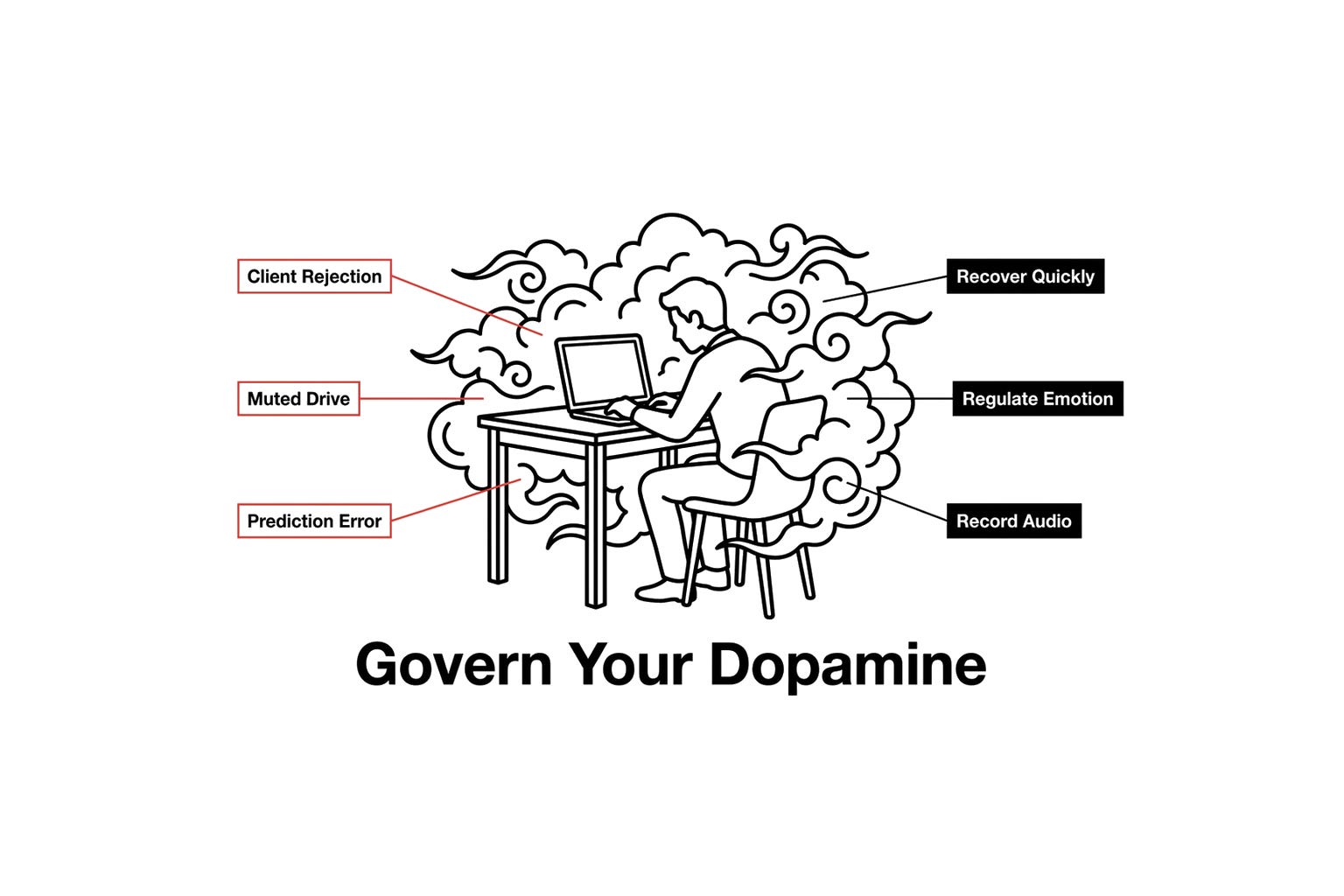
This week, we install an inner reset sequence, reclaim the raw drive you muted for safety, and build an automated circuit to govern your chemistry when a prospect walks away.
You sit at your desk at 2:00 PM on a Tuesday, staring at an email. A prospect who was a "guaranteed yes" yesterday has just pulled out, citing budget constraints. Instantly, your chest tightens, your breathing shallows, and a heavy, familiar fog descends on your brain. The transition from corporate safety net to solo consultant was supposed to buy you freedom, but right now, it feels like an emotional elevator that you do not control. When a name drops off your list, your entire business feels like a house of cards, and the quiet urge to look at corporate job boards starts whispering again.

The Elevator of the Inner Game
When you operated within a corporate structure, someone else held the ceiling. You had bad weeks, difficult calls, and missed targets, but the structural container absorbed the shock waves. Now, as an independent player, every client rejection feels like a direct verdict on your personal utility. The emotional swing from euphoria when a deal is close to absolute despondency when it falls through is not just exhausting—it is a heavy tax on your allostatic load.
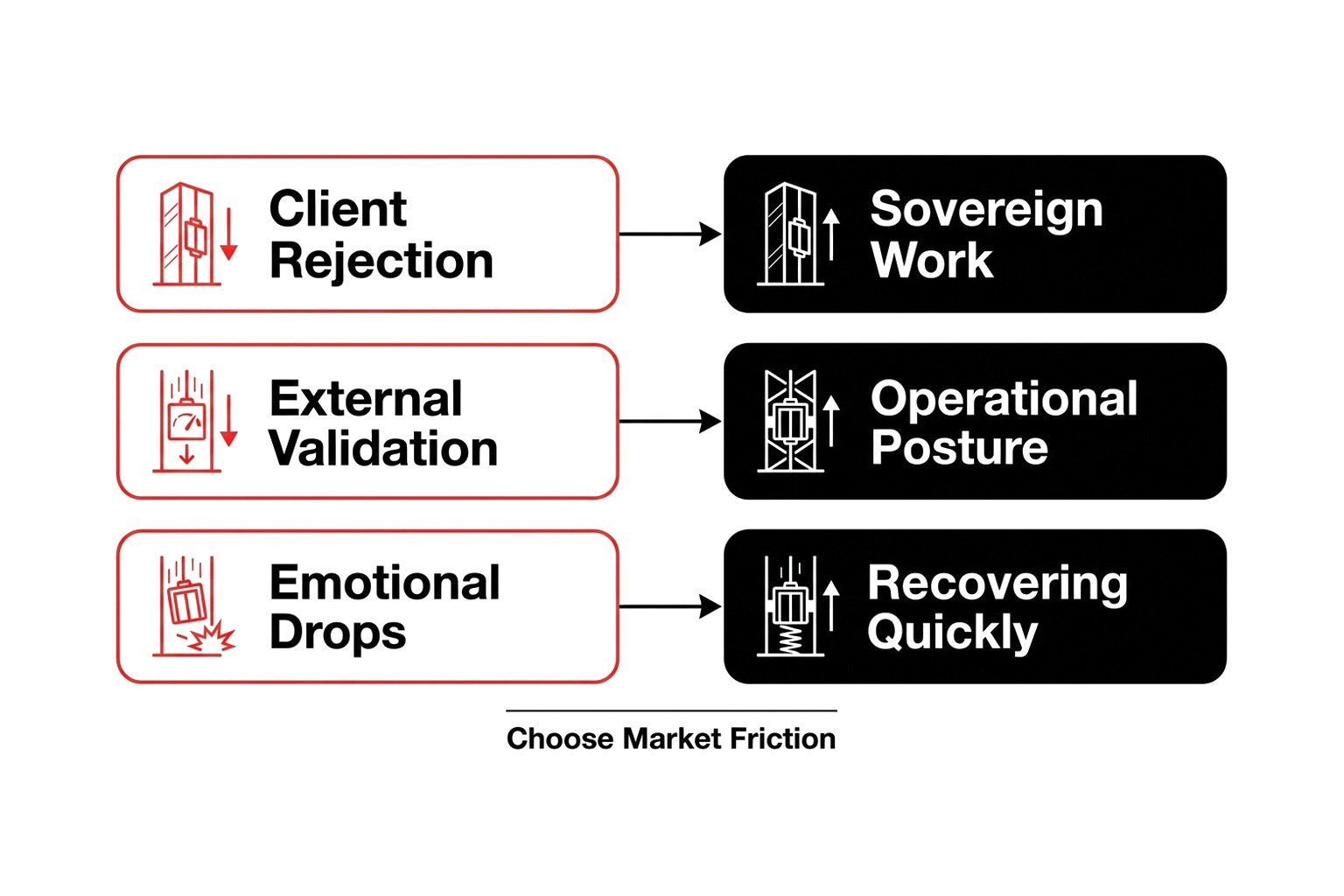
This volatility is the primary reason highly skilled professionals retreat to the safety of a salary. They mistake the normal friction of the market for a personal lack of alignment. The contrast between your corporate container and your solo practice acts as a perfect diagnostic environment. It reveals exactly where you rely on external validation to maintain your operational posture.
"A business is not just a commercial vehicle; it is a spiritual game. It will systematically fetch the exact parts of your character that you never had to look at while someone else held the corporate structure."
Go deeper 👉 : The Cost of Your Comfort Zone
To survive this transition, you must stop treating these emotional drops as signs that you should quit. They are simply the price of admission for sovereign work. When you choose this path, you are choosing a specific kind of discomfort. The goal is not to avoid the drop, but to change how quickly you recover from it.
The Flame You Anesthetized in the Name of Balance
Many independent consultants arrive at this crossroads after a period of intense corporate burnout. To heal, they construct a lifestyle based entirely on calm, boundaries, and equilibrium. They learn to regulate their nervous systems, step back from conflict, and downregulate their expectations. But in doing so, they often accidentally turn down the very motor required to build a sovereign business.
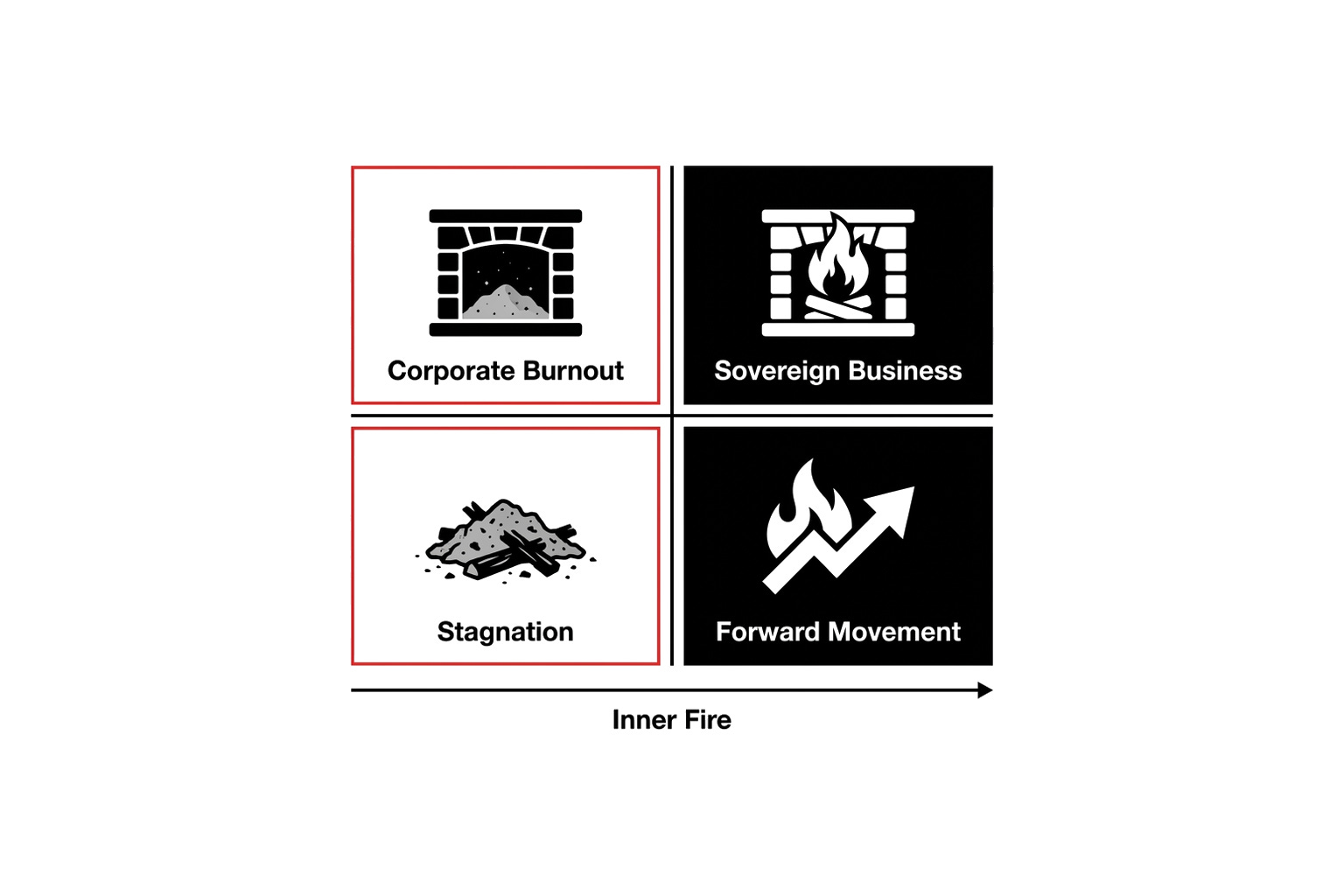
This is the trap of mismanaged approach-avoidance motivation. In your effort to avoid the destructive, red-hot anger of your past corporate life, you may have anesthetized your raw drive entirely. You call it balance, but your business calls it stagnation. Biologically, forward movement requires a degree of physiological arousal that feels remarkably similar to the intensity you have been trying to avoid.
"You can spend years exhaling, learning to be calm, and calling it maturity. But a business requires an inhale. If you mute your fire to protect yourself from burning out, you might find you no longer have the heat to build anything at all."
Go deeper 👉 : The Trap of the Quiet Life
This is where instrumental emotion regulation becomes essential. You do not need to become a toxic hustler to succeed, but you must allow your inner fire back into the room. If someone close to you remarks that you seem to have gone flat, do not dismiss it as a complaint. Treat it as diagnostic data. Your market can sense when you are operating at half-heat, and they will rarely buy from a flat posture.
Building a Circuit for the Minute You Drop
When a prospect says no, your brain immediately registers a reward prediction error. Because you expected a positive outcome, your dopamine levels plummet below baseline. In this low-energy minute, your cognitive brain is essentially offline. Your primitive survival circuits take over, whispering that the strategy is worthless, that you are a failure, and that you should close your laptop for the weekend.
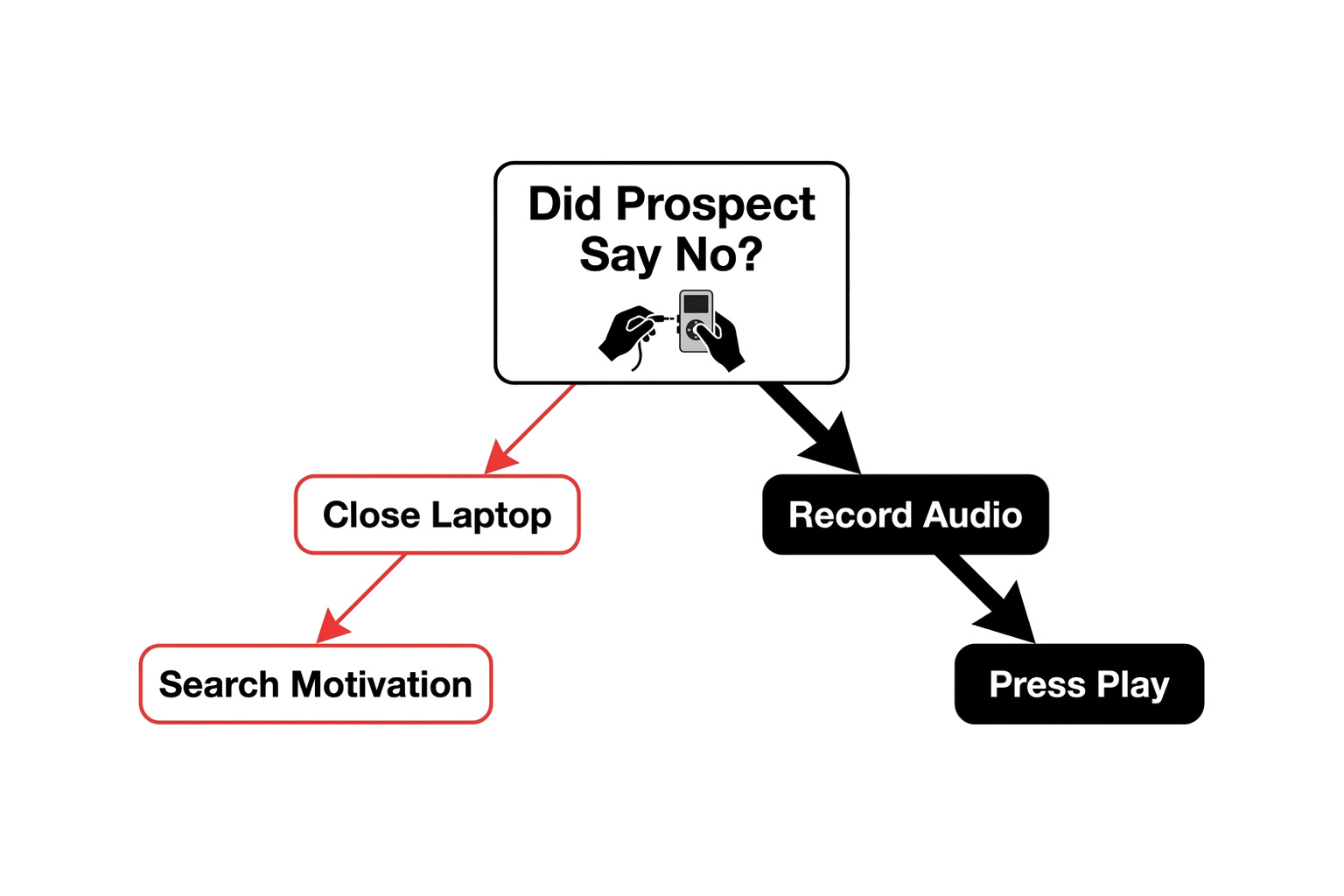
If your only strategy in this moment is to search for a hit of extrinsic motivation—watching a high-energy video or listening to a podcast—you are merely borrowing energy you cannot sustain. You become dependent on the next mental high to do basic work. A professional does not rely on chemistry to execute; they build a system that bypasses the need for high energy altogether.
To break this loop, you must exercise strict dopamine governance. Instead of fighting the chemical drop, you install a pre-designed physical anchor. I advise my clients to record a ten-minute audio track of themselves while they are in a clear, high-energy state. In this recording, you speak directly to your future, flat self. You outline the long-term strategic benefits of the current struggle, acknowledge the physical pain of the rejection, and dictate the exact next micro-step.
When the "no" lands and the cognitive fog rolls in, you do not think. You do not negotiate. You simply put on your headphones, press play, and let your past self guide your current body back to the keyboard.
Exploded-view thinking: Record the first imperfect teaching
A strategy you cannot explode into parts is a strategy you cannot teach. Take the trait, the context, and the consequence apart the way a mechanic lays a gearbox on the bench — so your twin can hear the sequence.
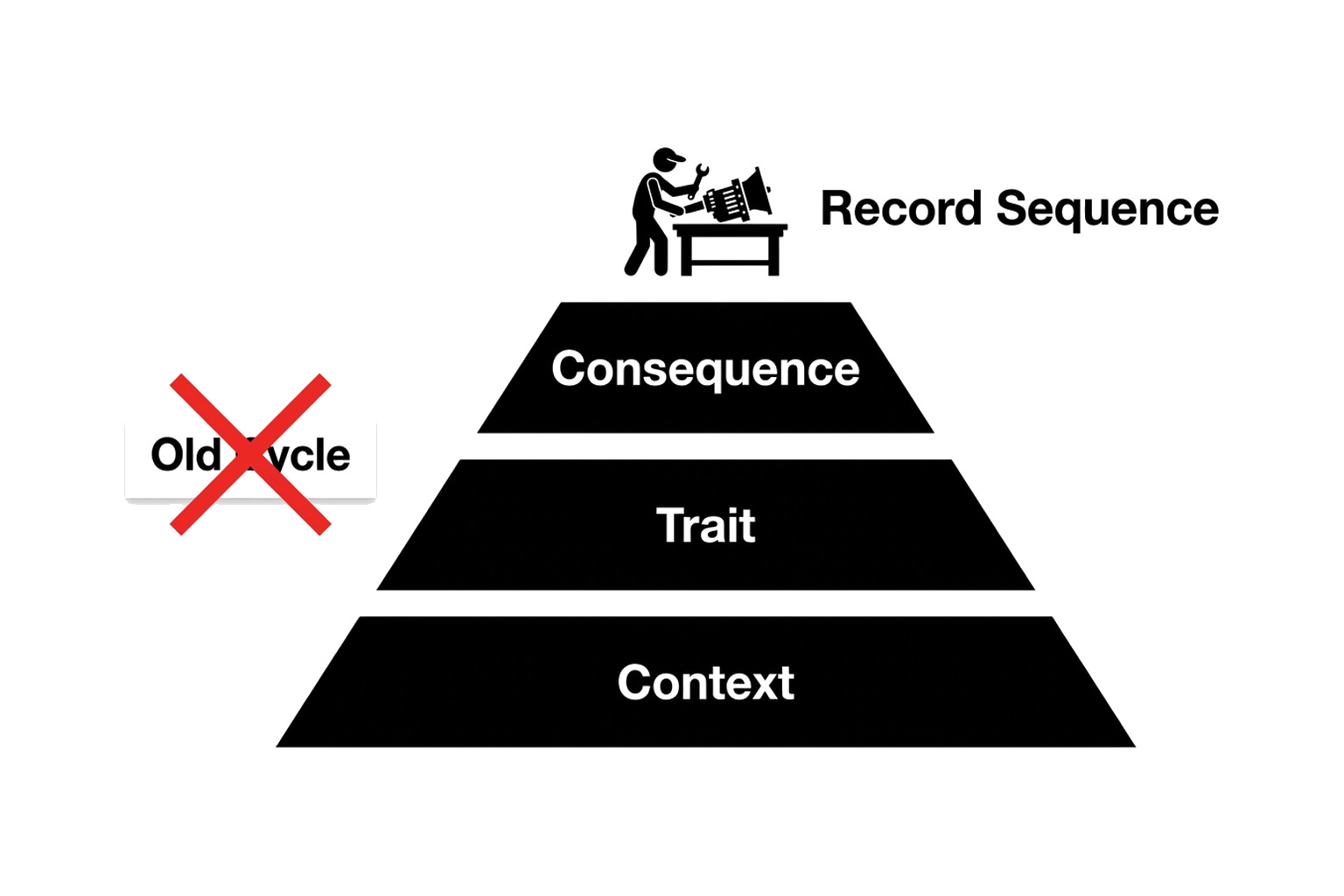
The first recording is supposed to be imperfect. Name one cell already at ease and one still tight. Paper fades in two weeks; the old cycle returns unless the teaching is on tape.
Your Move This Week
Copy the YAML block into Claude, ChatGPT, or your preferred AI.
Replace each placeholder with your situation this week.
Paste the three numbered returns into your notes.
### INSTALLS
1. The Anchor Recording: Build a 10-minute audio track of your core strategic benefits to
play the exact minute a refusal lands.
2. The Approach Audit: Identify where you have suppressed your raw drive under the guise
of "balance" and re-engage your active motor.
3. The Low-Energy Circuit: Design a pre-decided sequence of actions for your flat moments
to bypass the need for raw motivation.
### YOU ARE
A consultant or coach who has built a safety net but feels paralyzed by the emotional
volatility of client acquisition, frequently crashing into low-energy states when
prospects decline.
### MY SITUATION
[ROLE]
[LOAD]
### ASK 1
How do I construct an anchor recording that targets my specific reward prediction error
when a prospect says no?
Return:
- The exact structural prompts to record for myself while my energy is high.
- How to frame the discomfort without falling into toxic positivity.
- The physical triggers to pair with playing the audio.
### ASK 2
How do I identify if I have anesthetized my inner fire in the name of balance?
Return:
- A self-diagnostic check for distinguishing true equilibrium from muted approach
motivation.
- One micro-negotiation to test my tolerance for healthy, forward-leaning intensity this
week.
### ASK 3
How do I run a low-energy sequence that doesn't depend on mental willpower?
Return:
- A step-by-step physical protocol to execute when my chemistry drops.
- How to separate extrinsic motivation hits from an automated operational system.
### RETURN ONLY
1. The structural script for the anchor recording, detailing the shift from chemical
disappointment to long-term strategic clarity.
2. The diagnostic checklist to locate anesthetized drive, along with one concrete
experiment to let that capacity move.
3. The low-energy operational sequence to bypass willpower, ensuring action occurs even
when the emotional elevator is at its lowest point.