

Here is how to stabilize your neurochemistry, build a secondary reward loop, and keep your business certainty intact when the market goes quiet.
The email draft sits open on your screen. You have just clicked "Send" to postpone your upcoming mastermind program because only two clients signed up, and your financial floor was four. On paper, it is a logical business decision to push the date by two weeks, protect your margins, and give yourself more time to market. But as the screen blinks back at you, a heavy, cold weight settles deep in your chest.
Your stomach tightens, and suddenly, the simple act of opening your CRM or making another follow-up call feels like lifting lead. Within ten minutes, you find yourself standing in the kitchen, staring blankly into the open fridge, reaching for whatever high-sugar snack or comfort food is closest. This isn't a sudden lapse in willpower, nor is it laziness. It is your biology reacting to a perceived survival threat, and unless you understand the neurological loop at play, it will quietly dismantle your business.

The Biological Signal to Abandon the Tree
When you launch an offer, your brain doesn't just calculate potential revenue; it pre-allocates a specific neurochemical budget based on your expectations. If you project four sign-ups and only get two, your brain registers a deficit. This drop in baseline dopamine is known as a reward prediction error, a mechanism originally mapped in neurobiology to help organisms survive.
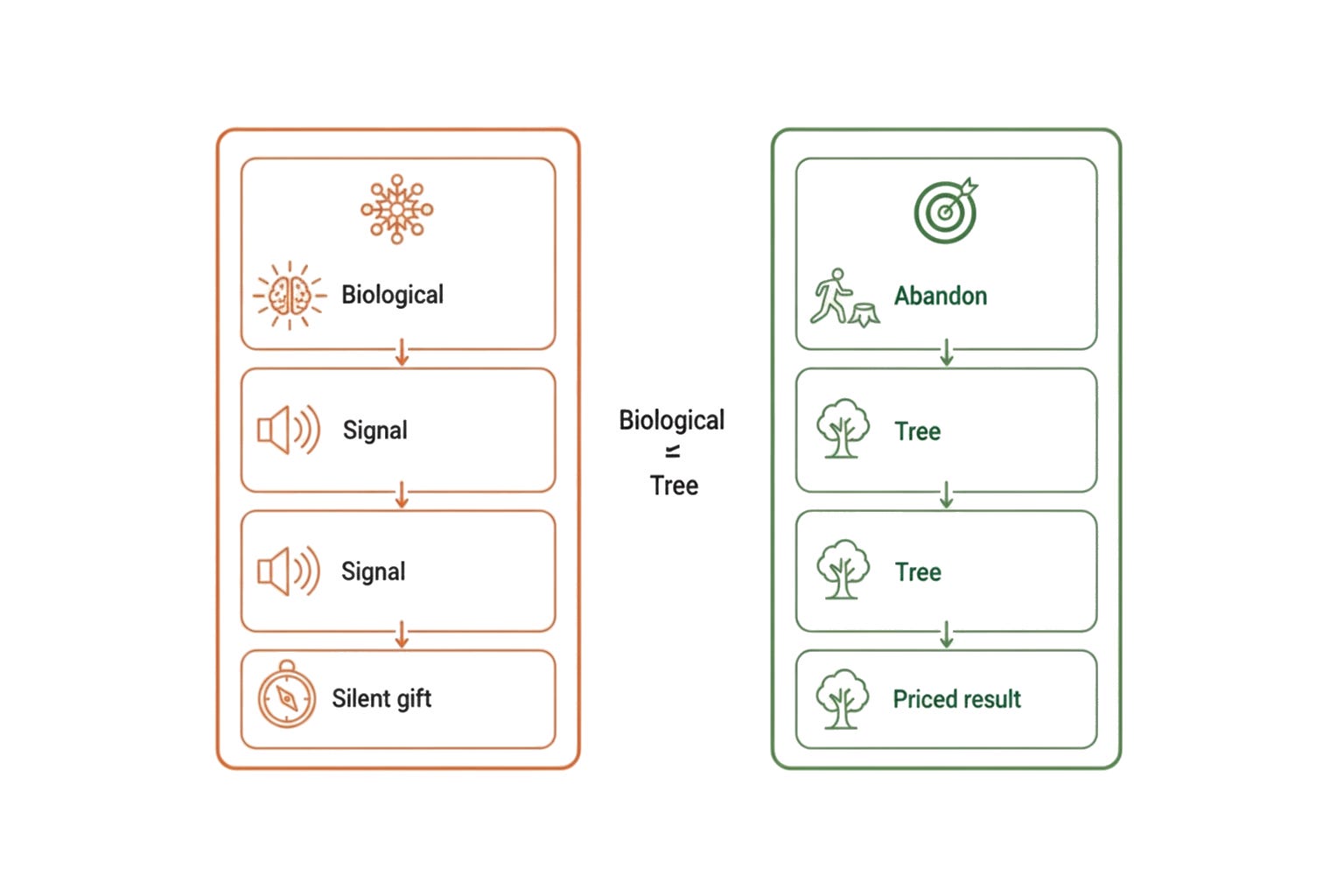
In nature, if an animal visits a tree expecting fruit and finds none, this negative prediction error fires a sharp neurological signal: abandon this cue, stop wasting energy, and find another tree. In modern business, however, this evolutionary safeguard is lethal. It interprets a temporary marketing lag or a slow sales cycle as a dead tree, flooding your body with a physical urge to abandon the project entirely.
Go deeper: How to Move Beyond Wounds and Humiliation
During my own early years of building this ecosystem, I had to learn that the first buyer of any program is always myself. If my certainty drops when the room is empty, the sale dies in me long before it dies in the mind of the client. When you let the market's immediate silence dictate your internal state, you surrender your operational sovereignty and let your biology run your business.
"When the result falls below what you pictured, your biology takes a direct hit. The brain doesn't see a business strategy; it sees a dry tree and orders you to stop looking for fruit. The real pain isn't the empty room—it is the loss of energy to restart."
Installing a Parallel Circuit for Unpaid Hours
When your primary business loop is silent—when emails go unanswered and the stripe account is quiet—you cannot rely on sheer enthusiasm to keep you moving. Your nervous system demands a return on energy spent. If your business cannot provide that return today, your brain will seek it elsewhere, driving you toward cheap dopamine spikes like binge-watching, sugar, or obsessive social media monitoring.
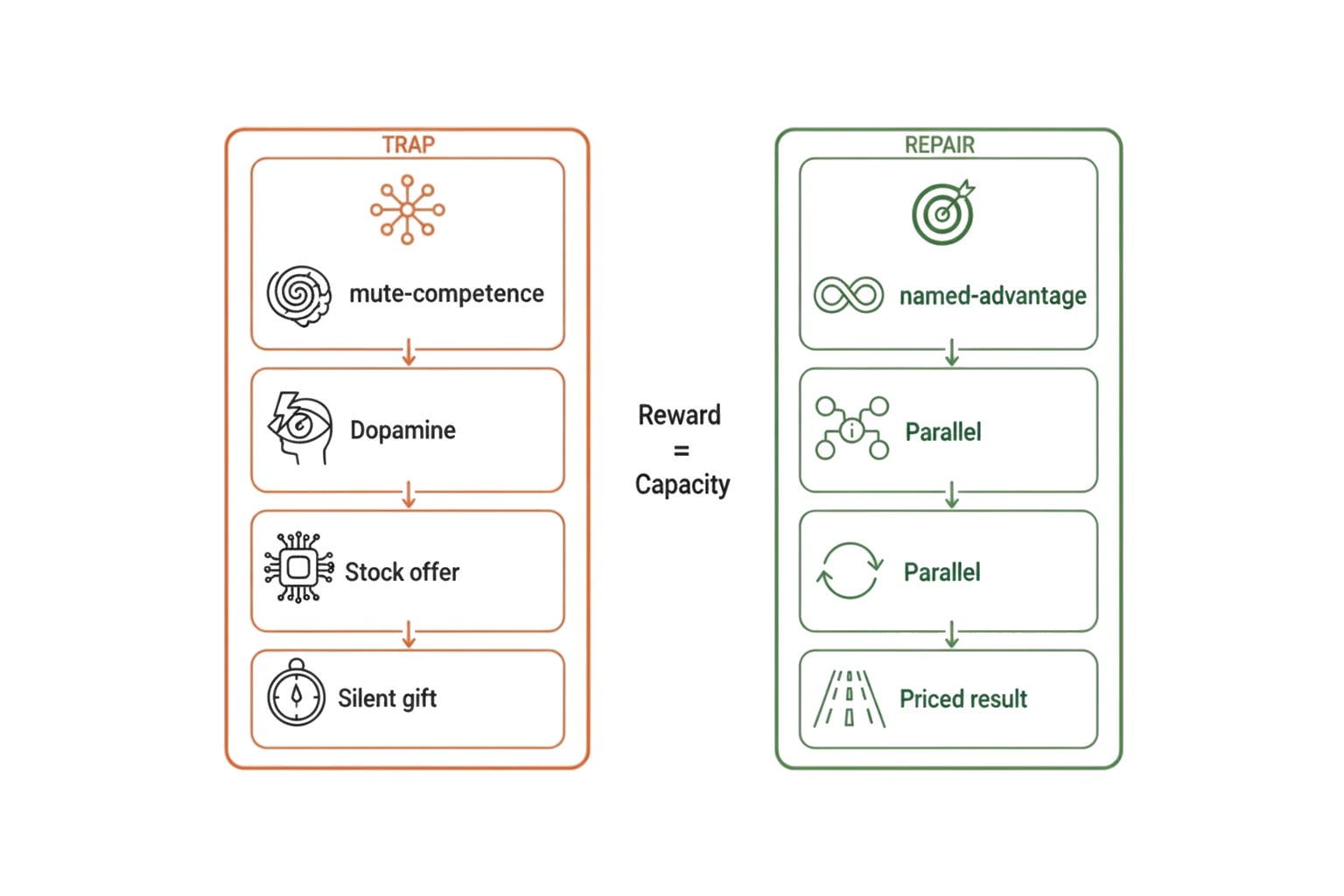
To protect your dopamine baseline, you must establish a parallel reward circuit. This is a deliberate, highly predictable activity that pays your brain in certainty and progress, completely independent of your client acquisition. It acts as a biological shock absorber, keeping your system online when your primary revenue engine is in a dry spell.
This parallel circuit must be physical and immediate. It could be a brutal uphill run where you control the effort and the outcome, a cold plunge that stops your internal micro-negotiations, or a structured writing ritual where the win is the finished page, not the applause. By triggering these controlled dopamine releases, you prevent the neurochemical crash that makes you want to hide from your sales pipeline.
"You do not cure a dopamine deficit by writing a list of intentions. You cure it by deciding where your baseline sits, and refusing to let an empty calendar dictate your sovereignty."
Redefining Productivity Beyond the Task Pile
The stuck consultant frequently falls victim to the arrival fallacy, the quiet belief that once they cross a certain revenue milestone or sign their next anchor client, the discomfort of self-promotion will permanently disappear. While waiting for that day, they develop sophisticated flight strategies to cope with the daily friction of building a business.
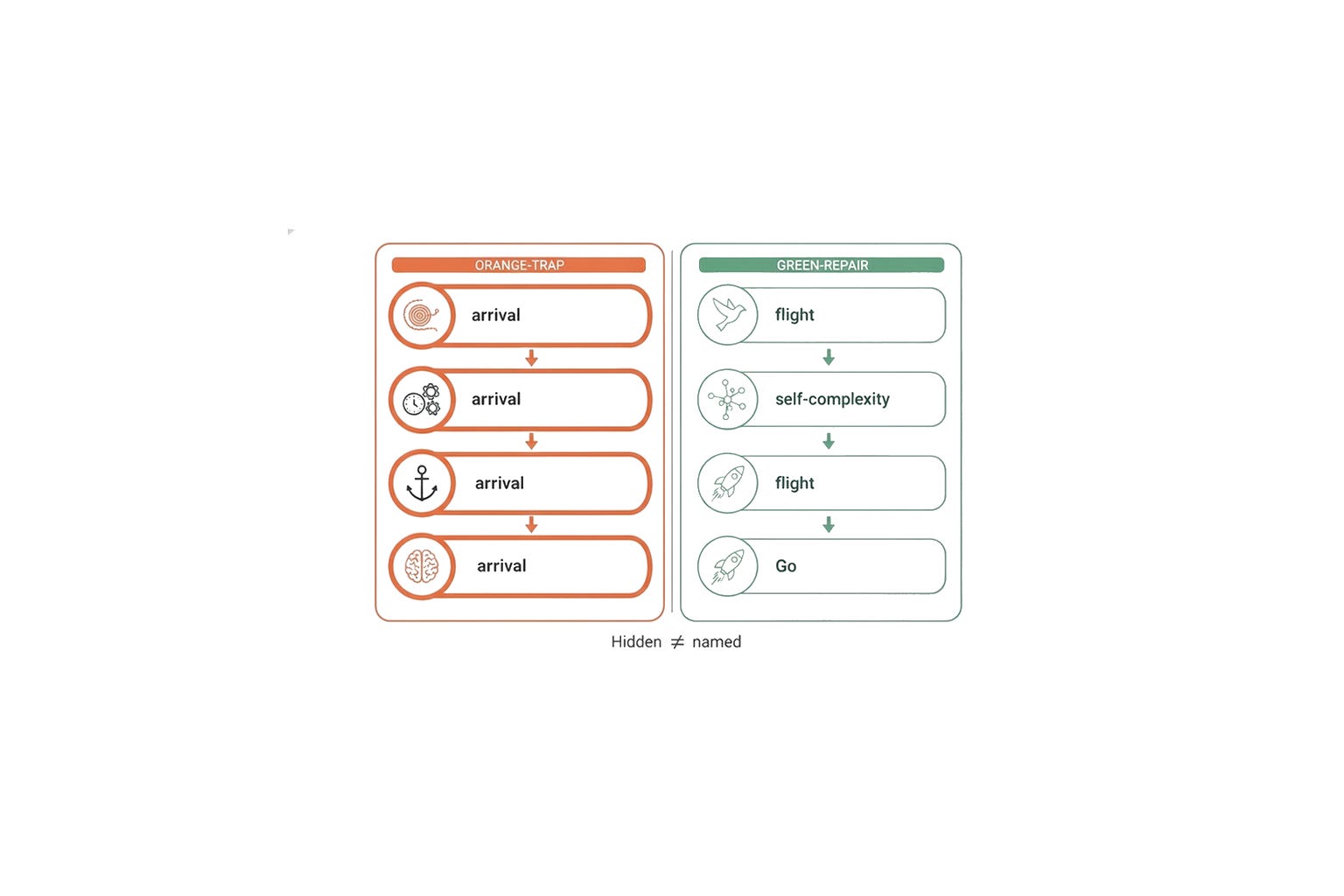
These strategies usually look like intense, frantic activity. You spend eight hours reorganizing your digital files, updating your website copy, or color-coding your calendar. At the end of the day, you feel exhausted and accomplished because you closed twenty tasks. This is a functional illusion: you have traded high-leverage, uncomfortable tasks—like calling a warm lead—for a pile of low-stakes admin work that protects you from rejection.
To break this loop, you must govern your energy like a true sovereign. Redefine your daily productivity metrics. A productive day is not one where you cleared your inbox; it is a day where you executed the single, high-friction action that actually moves your business forward, regardless of how your biology tried to negotiate you out of it.
Exploded-view thinking: Record the first imperfect teaching
A strategy you cannot explode into parts is a strategy you cannot teach. Take the trait, the context, and the consequence apart the way a mechanic lays a gearbox on the bench — so your twin can hear the sequence.
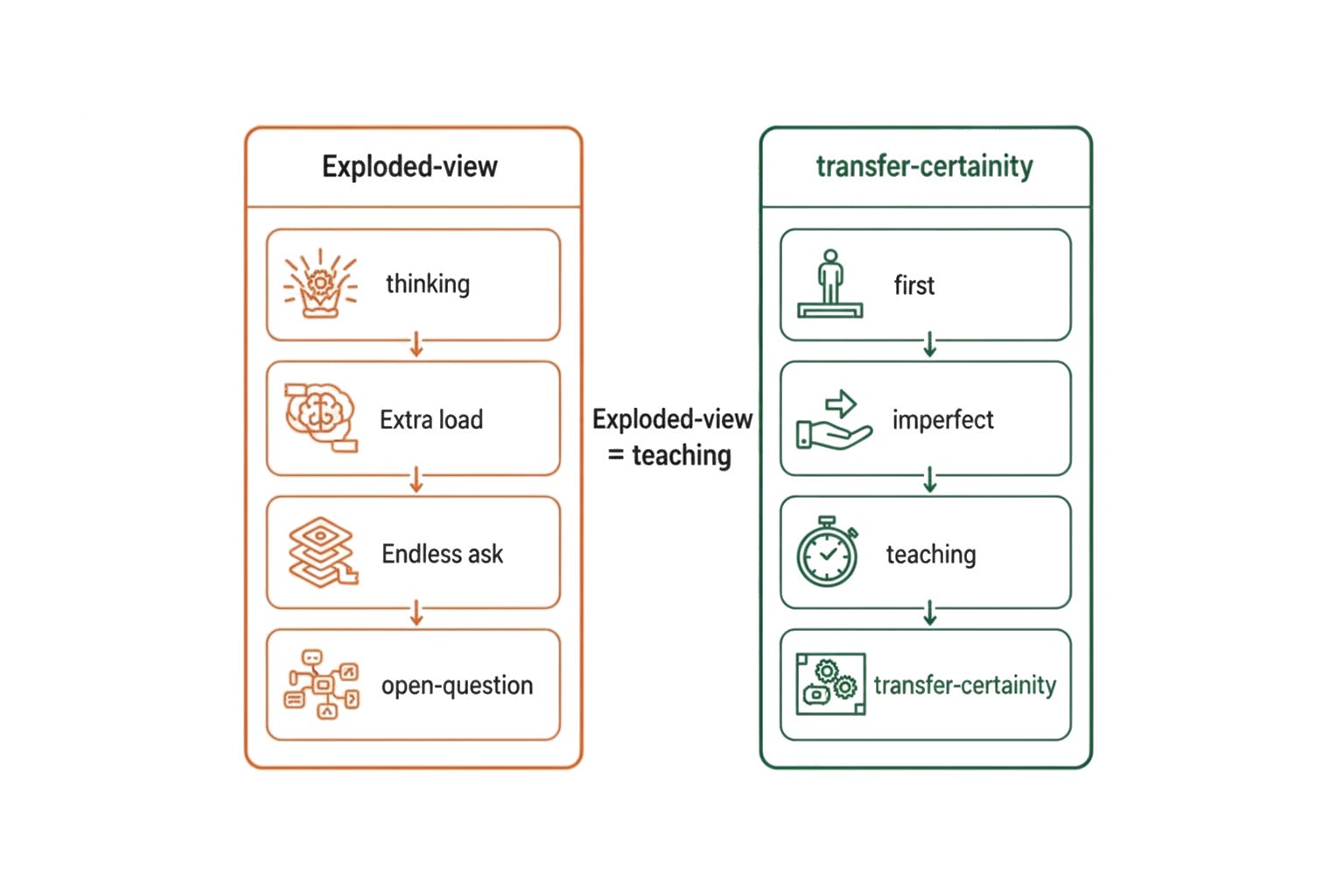
The first recording is supposed to be imperfect. Name one cell already at ease and one still tight. Paper fades in two weeks; the old cycle returns unless the teaching is on tape.
Your Move This Week
Copy the YAML block into Claude, ChatGPT, or your preferred AI.
Replace each placeholder with your situation this week.
Paste the three numbered returns into your notes.
### INSTALLS
1. Recognize the physiological "abandon the tree" signal when a launch or offer falls
short of your expectations.
2. Design and schedule a physical parallel reward circuit to stabilize your dopamine
baseline during unpaid hours.
3. Audit your daily task list to separate genuine strategic progress from administrative
flight strategies.
### YOU ARE
An independent coach or consultant who recently experienced a slow launch, a cancelled
program, or a quiet sales week, and is currently feeling the physical urge to withdraw,
hide in administrative tasks, or abandon the current strategy.
### MY SITUATION
- [ROLE]
- [CURRENT LAUNCH STATUS]
- [PRIMARY COPE MECHANISM]
- [ENERGY LEVEL (1-10)]
### ASK 1
Identify the exact physical sensation and behavioral cravings (e.g., fridge-gazing, social
media scrolling) that occurred when your last business offer fell short of your
expectations. Write down the specific "abandon the tree" narrative your brain tried to
sell you.
### ASK 2
Specify one physical, highly structured activity (independent of business results) that
you will use as your parallel reward circuit this week. Define the exact time, duration,
and metric of completion that will trigger a sense of progress.
### ASK 3
Review your calendar for the next 48 hours. Identify at least two high-volume,
low-leverage administrative tasks you are using as flight strategies, and replace them
with one uncomfortable, direct sales or outreach action.
### RETURN ONLY
1. The physical trigger and the exact "abandon the tree" sentence your brain sells you
when results are thin.
2. The operational details of your parallel reward circuit (activity, schedule, and
completion rule).
3. The two flight-strategy tasks you are cutting, paired with the one high-friction sales
action replacing them.