


To break free from the trap of endless preparation, you must master three core shifts: accelerating your speed of execution, redefining your reference class, and commanding the frame of your value.
The air inside the Paris design salon is thick with the scent of fresh lacquer, expensive espresso, and the quiet panic of unexecuted ambitions. An independent consultant stands near the entrance, clutching an invitation to meet a major potential partner, yet her chest tightens with a familiar, paralyzing hesitation. Her website is not fully updated, her new business cards did not arrive in time, and the visual surface of her business does not yet match the grand authority she wants to project. She whispers to herself that she is simply not ready, mistaking a temporary lack of printed paper for a lack of professional depth.
This is the trap of the unfinished showcase—the comfortable illusion that we must wait for external permissions before we can transfer certainty to a client.

The Latency of the Perfect Showcase
When you delay high-stakes conversations because your marketing assets are incomplete, you are participating in a highly sophisticated form of hiding. The mind loves the safety of the complexity trap, where spending weeks tweaking a logo or rewriting a proposal template feels like real, productive labor. In reality, this is a defense mechanism designed to protect you from the raw, unpredictable feedback of a live human interaction.
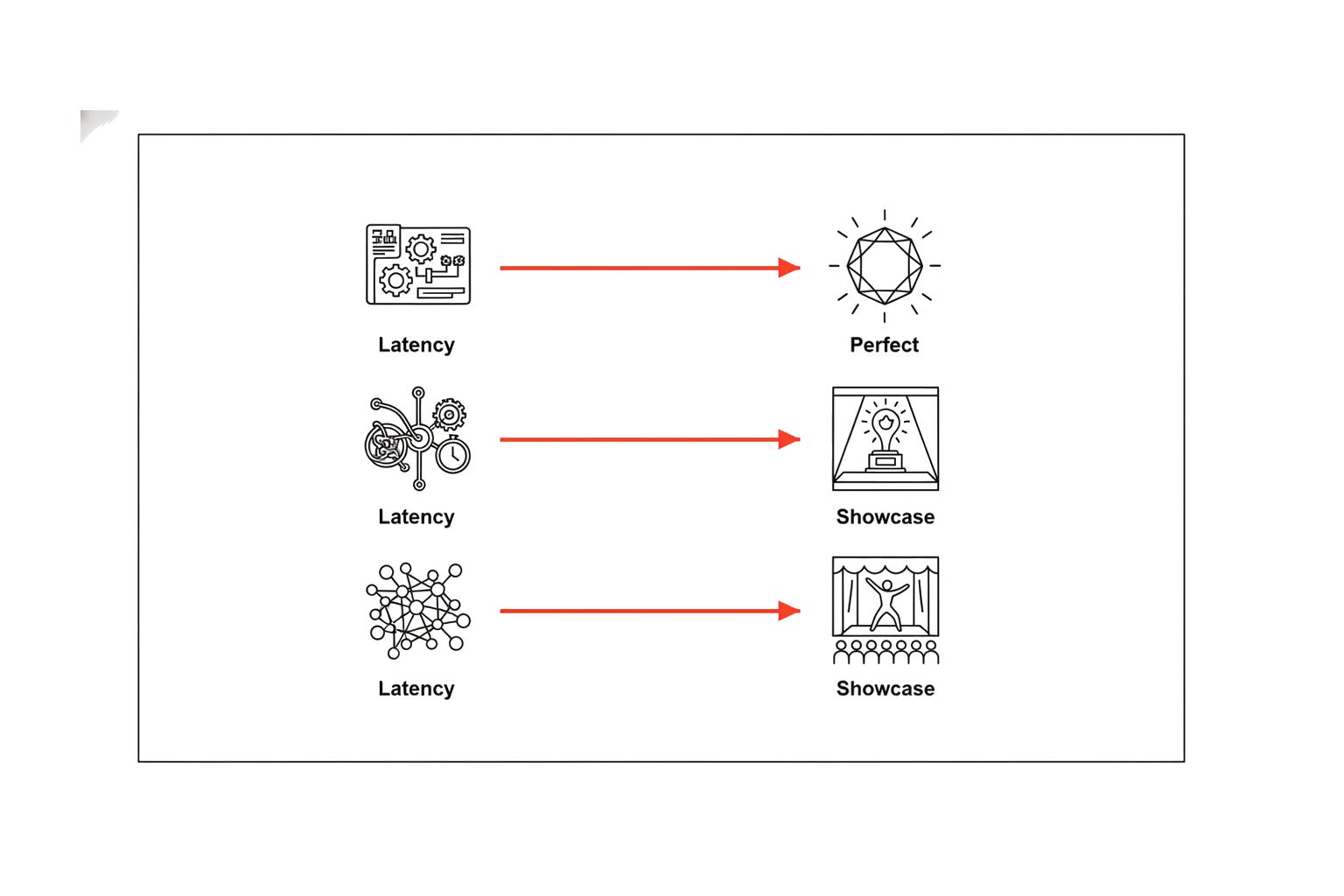
True operational sovereignty requires you to drastically shorten your speed of implementation—the precise duration between deciding on a strategic direction and executing the first imperfect action.
Every day you spend polishing the surface instead of engaging the market increases your cognitive load and drains your runway. High-performing operators do not wait for the perfect brochure to pitch; they understand that the sales interaction itself is where value is co-created. If you and your partners are aligned internally, the absence of a polished website is merely a detail, not a barrier.
"Ready is not the logo. Ready is the internal alignment of your conviction, walking into the room prepared to solve a problem that actually exists."
When you enter a room to explore a partnership, the other party is rarely looking at your business card; they are measuring your clarity. By allowing yourself to engage before the showcase is complete, you force your business to develop real muscle rather than decorative skin.
Go deeper 👉 : How to Move Beyond Wounds and Humiliation
Rewriting Your Reference Class
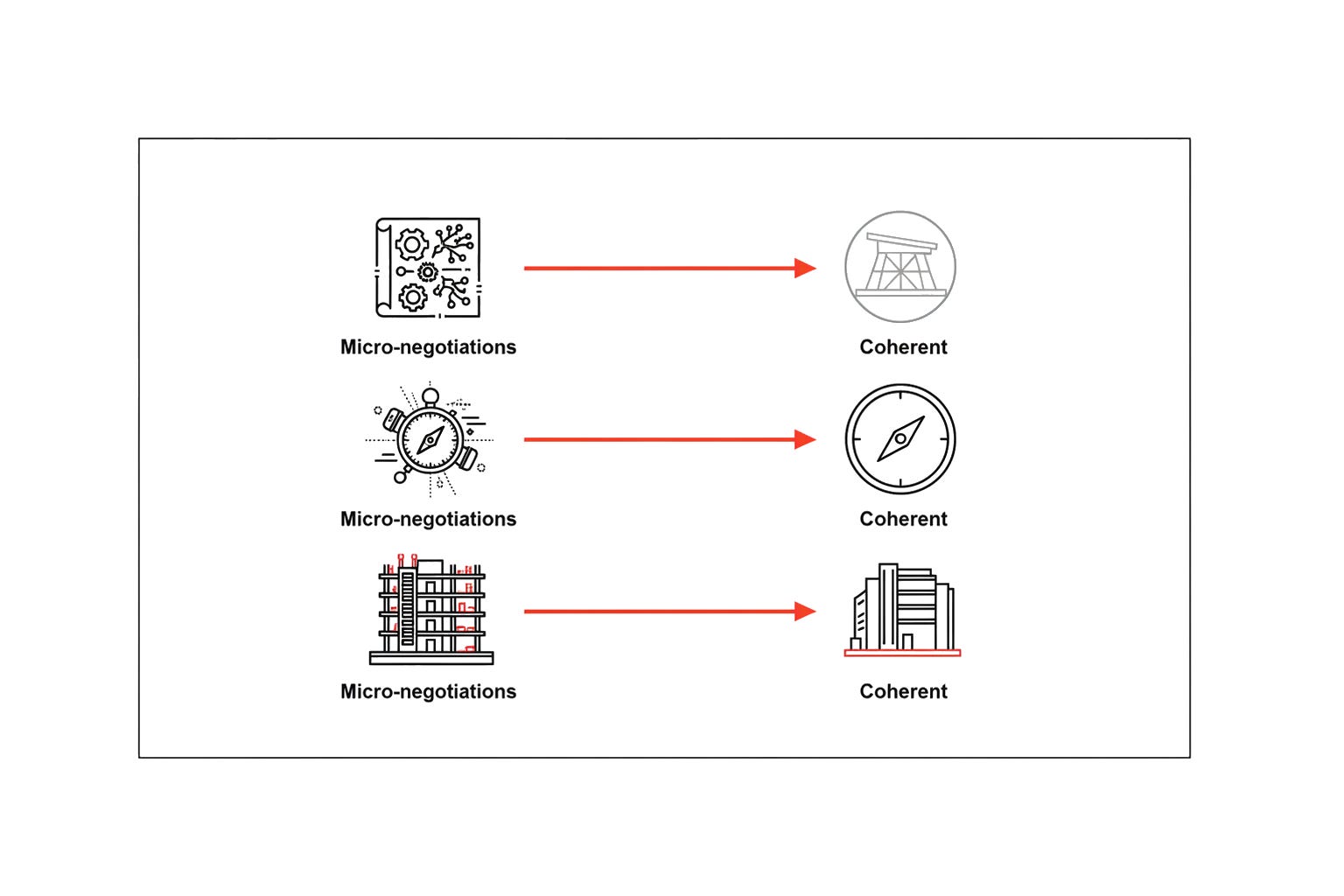
We often borrow our standards of professionalism from the wrong showcases, trying to clone the polished metrics of industry giants or celebrated mentors. This external comparison creates a constant state of internal friction, as we try to wear an identity that does not belong to us. To solve this, you must engage in deliberate micro-negotiations with your own standards, defining what excellence means for your specific stage of growth.
I learned this lesson clearly on the squash court years ago. Every Friday at five, I played a regular match and won consistently, gradually convincing myself that I was an exceptional player.
But when I stepped onto a court to play against athletes who trained as a competitive team, I lost every single game. My physical skills had not suddenly deteriorated; my reference class had simply shifted.
In business, if you measure your current delivery against a twenty-year veteran's polished showcase, you will paralyze your progress. Cognitive science explains this through the lens of coherent arbitrariness, a phenomenon demonstrating that human minds do not calculate absolute value. Instead, we anchor our judgments to the first arbitrary reference point we perceive and then build our entire logical framework around it.
If your initial anchor is an idealized, corporate standard of "professionalism," your mind will consistently find reasons to keep you hiding behind the scenes.
"You cannot be a beginner and a veteran in the same instant. Your job is not to clone someone else's singularity, but to assume the boundaries of your own delivery."
By establishing your own personal definitions of value, you stop submitting to the codes of others. You allow yourself to be a work in progress, which is a position of immense strength and honesty.
The Architecture of Coherent Arbitrariness
Value is rarely a direct product of the hours you work, the materials you use, or the complexity of your methodology. Instead, value is dictated entirely by the context of value—the frame, the environment, and the authority you project. A world-class violinist playing in a crowded subway station will be ignored by thousands of commuters who drop only spare change; the exact same musician performing in an prestigious concert hall commands hundreds of dollars per ticket. The object of value does not change, but the frame does.
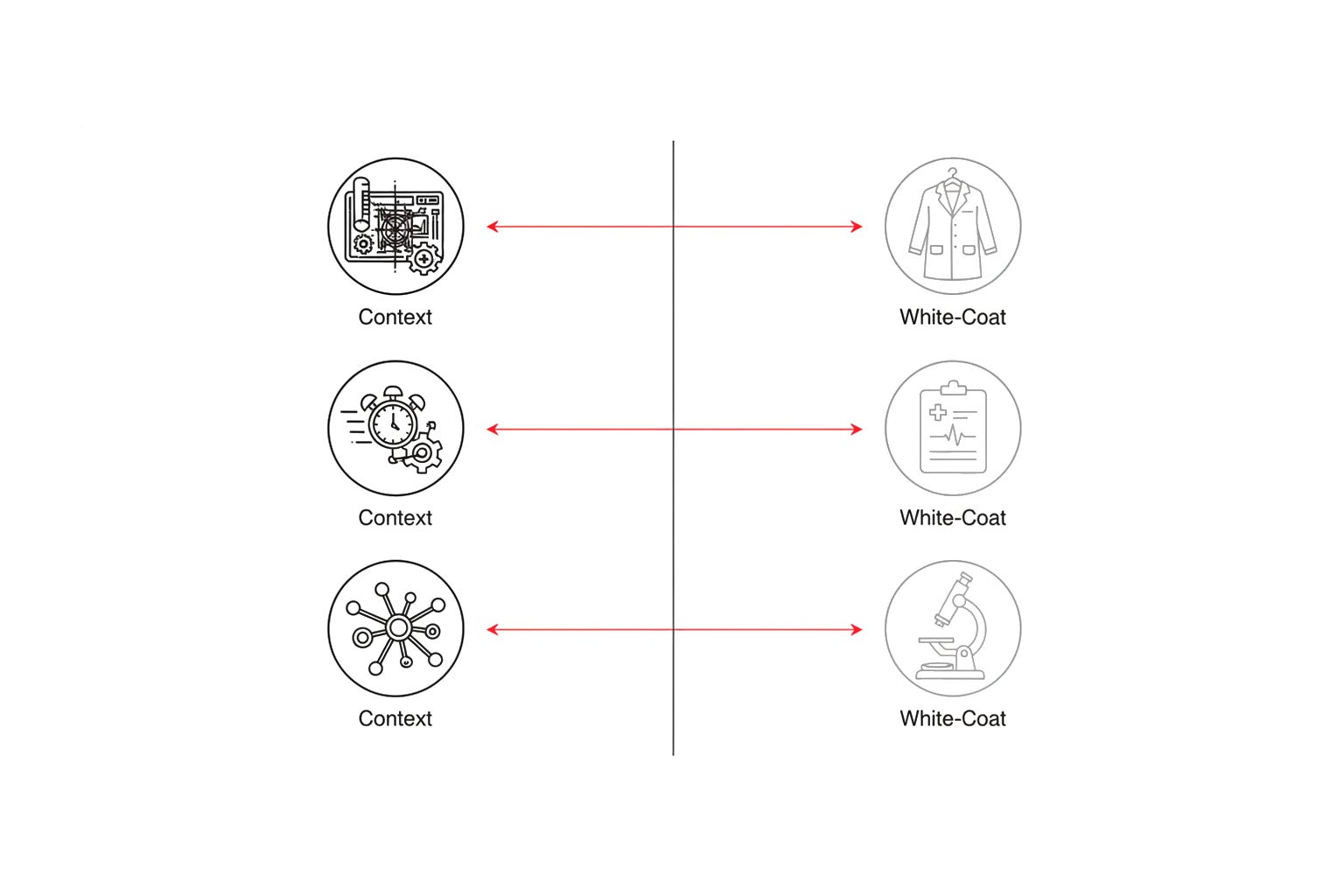
To establish this frame, you must cultivate white-coat authority, positioning your expertise as a diagnostic solution rather than a general service.
When you present your work without a strong frame, you invite the client to negotiate on your labor costs rather than your outcomes. This is why high-performing consultants do not sell their time; they sell the transformation. They construct a deliberate, high-ticket environment where their insights are treated as premium assets, not commodities.
"If you do not frame your worth, the market will default to the lowest common denominator. The frame is not an ornament; it is the price."
When you stop waiting for external permission and start commanding the context of your interactions, the need for a perfect, pre-packaged showcase disappears. You become the authority in the room, and the client buys your certainty long before they ever look at your website.
Exploded-view thinking: Record the first imperfect teaching
A strategy you cannot explode into parts is a strategy you cannot teach. Take the trait, the context, and the consequence apart the way a mechanic lays a gearbox on the bench — so your twin can hear the sequence.
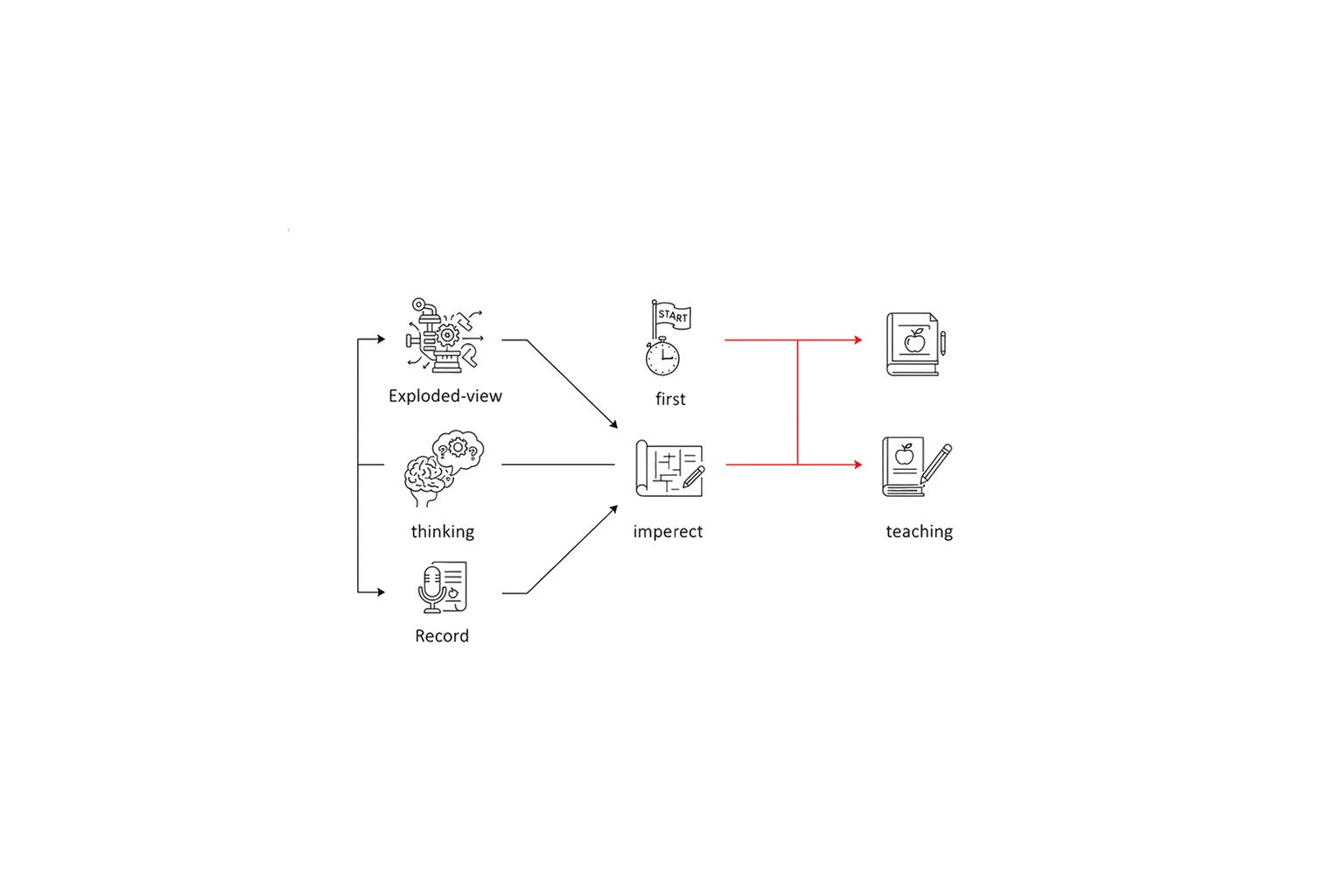
The first recording is supposed to be imperfect. Name one cell already at ease and one still tight. Paper fades in two weeks; the old cycle returns unless the teaching is on tape.
Your Move This Week
Copy the YAML block into Claude, ChatGPT, or your preferred AI.
Replace each placeholder with your situation this week.
Paste the three numbered returns into your notes.
### INSTALLS
1. Shorten your speed of implementation by launching an imperfect initiative within 48
hours.
2. Define your personal standard of professionalism instead of copying an external
corporate showcase.
3. Establish a premium frame for your expertise to shift client focus from labor to
outcomes.
### YOU ARE
An independent coach or consultant who is currently delaying high-ticket outreach or a
major offer because your website, branding, or marketing materials do not feel
"perfectly ready."
### MY SITUATION
[ROLE]
[LOAD]
### ASK 1
Identify one specific outreach message, pitch, or meeting you have been delaying due to an
"incomplete" asset (website, brochure, or card). Commit to executing this interaction
within the next 48 hours without the asset.
### ASK 2
Write down your personal definition of a "professional" delivery for your current stage,
contrasting it directly with the unrealistic, borrowed industry showcase you have been
using to judge yourself.
### ASK 3
Identify one current offer where you are selling your hours or labor. Reframe this offer
entirely around the diagnostic outcome and the premium context of your expertise, removing
all references to hourly rates.
### RETURN ONLY
1. The single high-stakes action you will take within 48 hours, stripped of all
preparatory excuses.
2. Your newly defined, stage-appropriate standard of professionalism that replaces your
borrowed corporate anchor.
3. The reframed outcome of your primary offer, illustrating how you will present its value
without selling your time.