

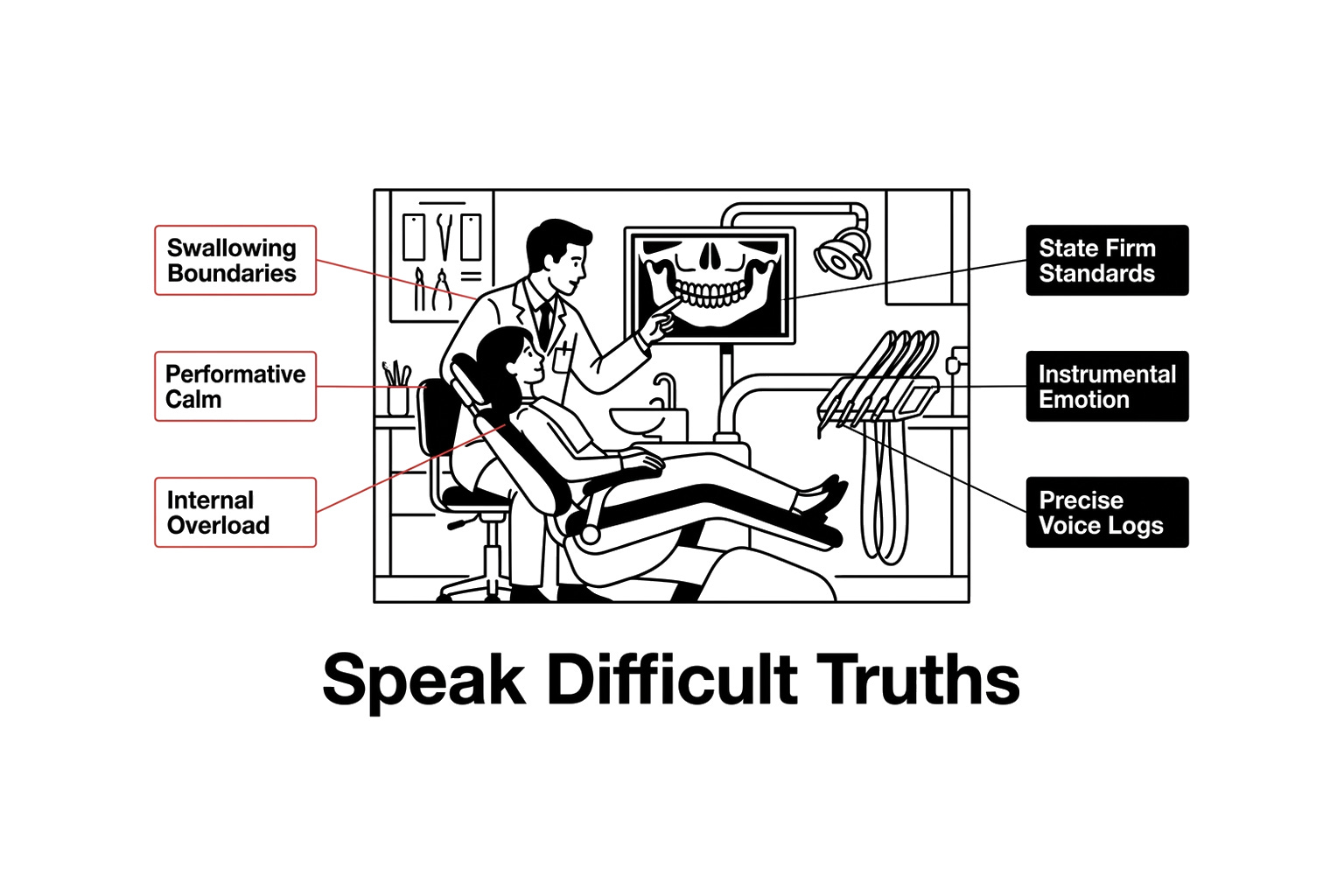
This breakdown maps three operational installations: turning swallowed operational tension into sovereign clarity, replacing fake composure with decided instrumental emotion, and practicing vocal discipline to convert friction into execution.
The dentist leaned over the chair, pointed at the x-ray, and asked a single, unexpected question: What are you biting down on so hard during the day? For months, a seasoned consultant had been scaling her practice, moving into larger contracts, filling her roster, and turning away client requests. Externally, revenue was expanding, but internally, an intense ache had settled deep into her jaw. Sitting in the dental chair, she realized the truth: the physical pain wasn't an anatomical fluke, but the direct invoice for every boundary she had diluted, every pricing conversation she had softened, and every uncomfortable sentence she had swallowed to preserve a polite dynamic.

The Jaw-Clenching Trap of Sovereign Growth
When you scale an independent consulting practice, your old operational problems disappear and are replaced by higher-stakes frictions. Leaving behind basic client acquisition brings relief, but managing full capacity, scope creep, and boundaries creates immediate tension. If you fail to upgrade your willingness to speak uncomfortable truths at the same rate your business expands, your body will absorb the difference. The unsaid boundary does not evaporate; it simply shifts into physical tissue.
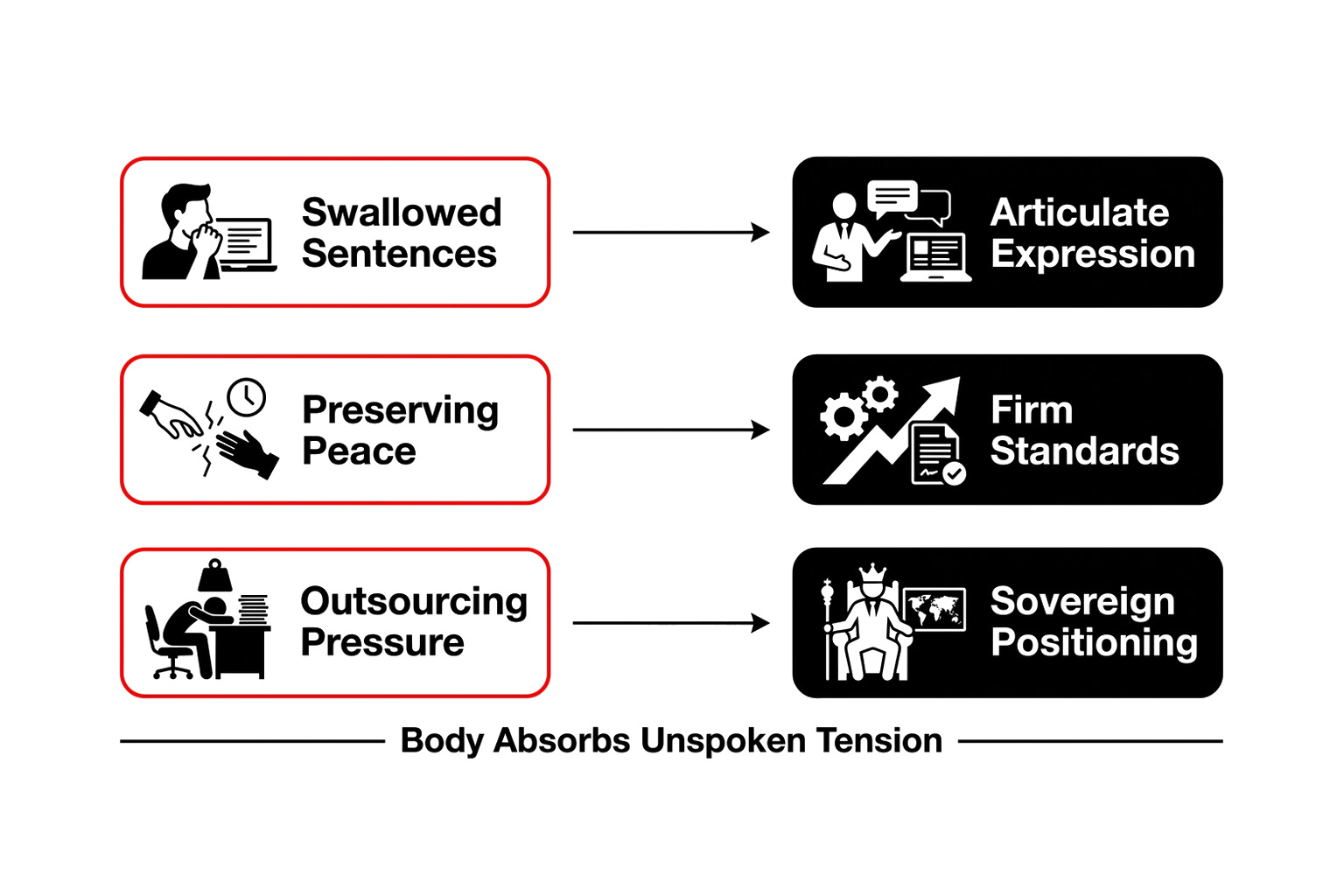
This phenomenon represents the somatic printing of unsaid debt. When high-stakes tension is denied a vocal outlet, neurobiological stress pathways redirect that energy into neuromuscular contraction. Neuroscience shows that suppressing articulate expression under stress dysregulates autonomic homeostasis and increases allostatic nervous system load. When you decline to challenge a demanding client or fail to state a firm standard, your nervous system registers the threat and locks the muscular frame, turning swallowed sentences into chronic masseter jaw tension or focal fatigue.
"When you swallow a necessary truth to preserve peace in the room, you don't eliminate the charge. You simply force your nervous system to store it in your jaw, your shoulders, or your gut."
Upgrading your practice requires recognizing that acute operational friction is the tax on higher ambition. Comfort is not the metric of success; rather, the ultimate operational luxury is choosing which high-grade difficulties you permit to structure your calendar. If you want to hold larger rooms and command premium fees, you must accept the friction that accompanies sovereign positioning instead of outsourcing that pressure to your body.
Instrumental Emotion and the Myth of Calm Leadership
Many operators fall into a binary trap when handling emotional pressure under stress. In their early career, they react impulsively—stinging back when provoked or letting frustration leak into client communications. To fix this, they adopt a persona of perpetual calm, remaining flat, agreeable, and accommodating regardless of the breach. Yet this forced serenity fails the fundamental test of leadership: the counterpart does not hear the reality of the boundary, and no real operational adjustment occurs.
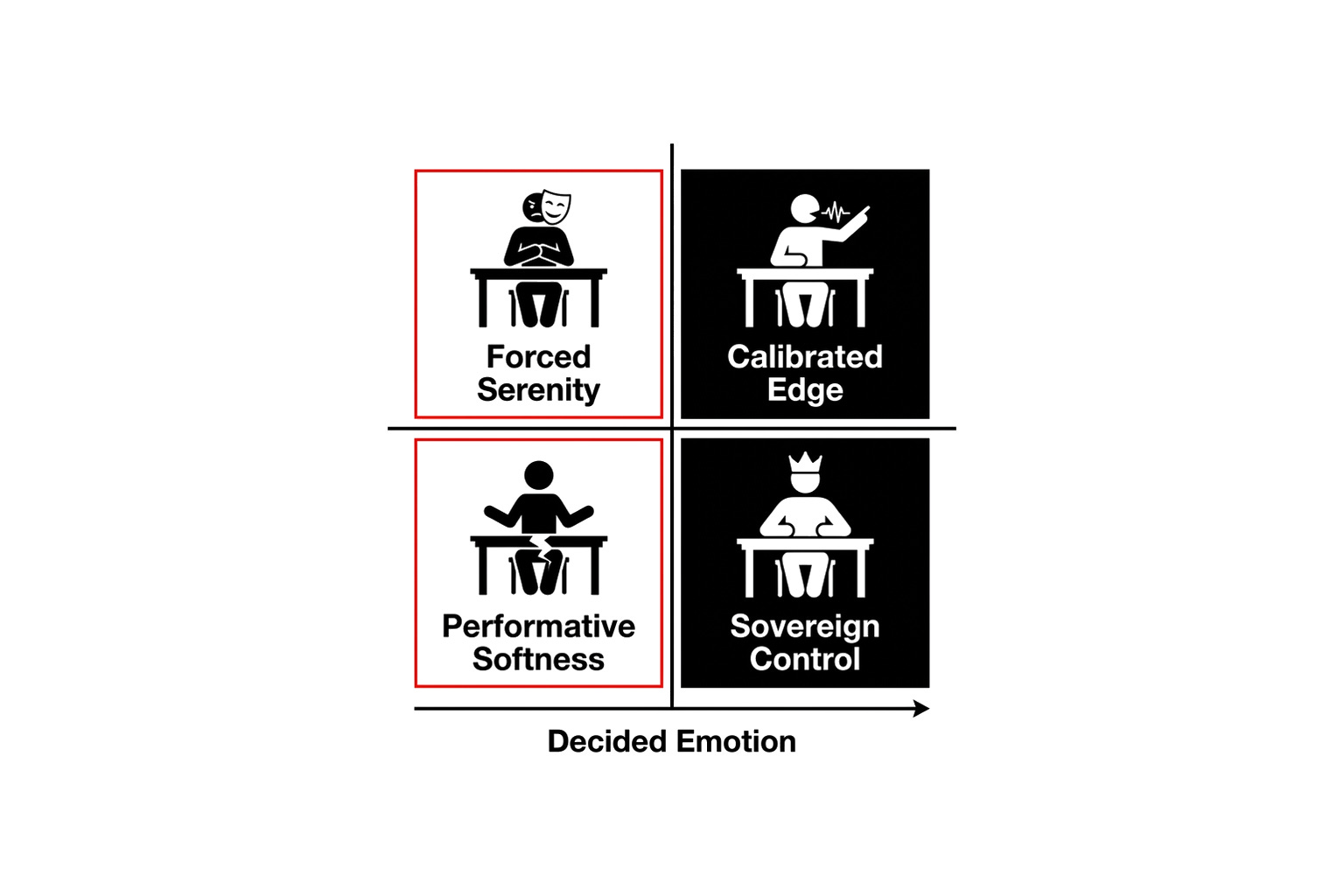
True sovereign control requires stepping out of this reactive swing and executing instrumental emotion regulation. Rather than drowning in anger or burying it under performative calm, a sovereign leader deploys calibrated emotional edge deliberately to land a crucial point. You do not let emotion possess you; you select the necessary vocal weight and firm cadence required to establish complete operational alignment in the room.
"To exercise sovereign authority, you must stop mistaking performative softness for composure. Decided emotion is not a loss of control; it is the deliberate application of weight when a critical standard is on the line."
Deploying calibrated firm edge requires accepting a specific trade-off: you must be willing to let others classify you as demanding, strict, or uncompromising. When you prioritize maintaining a universally liked image over establishing operational boundaries, you surrender your authority. Establishing sovereign operational governance means taking full accountability for your standard, accepting the social discomfort, and refusing to let fear of standing out dictate your posture in critical negotiations.
Precision Out Loud: The Martial Art of Thought
Vague internal dialogue breeds operational drag. When faced with a complex client dispute or a delayed deliverable, most consultants keep the stress trapped in internal monologue, repeating crude phrases like this is unbearable or I cannot handle this workload. These vague definitions obscure the actual systemic issue and keep the brain locked in passive emotional overload.
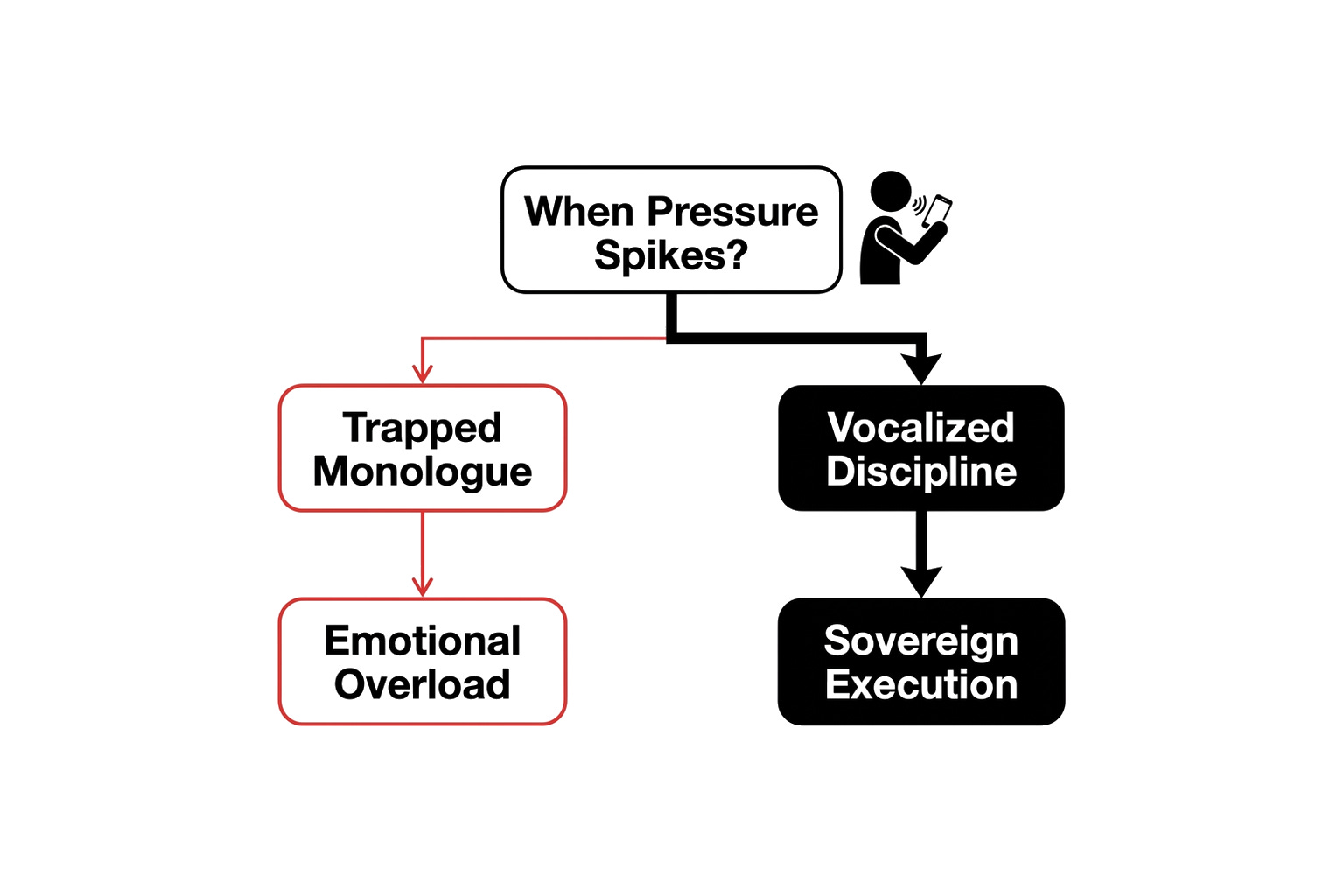
The solution is cultivating high emotion differentiation through a vocalized discipline of thought. When you force yourself to speak your internal friction out loud into explicit vocabulary, the raw emotional charge dissipates and exposes the underlying structural dynamic. Research demonstrates that precise cognitive labeling diminishes amygdala reactivity, allowing the prefrontal cortex to regain operational control and identify immediate concrete solutions.
"A crude, vague sentence spoken inside your head is just emotional weather. Real sovereign command begins when you discipline the thought out loud into vocabulary precise enough to act on."
For two weeks now, I have been recording short one-to-three-minute voice logs multiple times a day when the pressure spikes. Not to keep a diary, but to force my brain to translate raw friction into precise words before it settles into my body. By describing the operational dynamic aloud—naming the exact standard breached, the client boundary required, and the specific step to take—you eliminate the internal ambiguity that creates physical exhaustion. Speaking the problem out loud forces you to stop hiding behind vague stress and step directly into sovereign execution.
Exploded-view thinking: Record the first imperfect teaching
A strategy you cannot explode into parts is a strategy you cannot teach. Take the trait, the context, and the consequence apart the way a mechanic lays a gearbox on the bench — so your twin can hear the sequence.
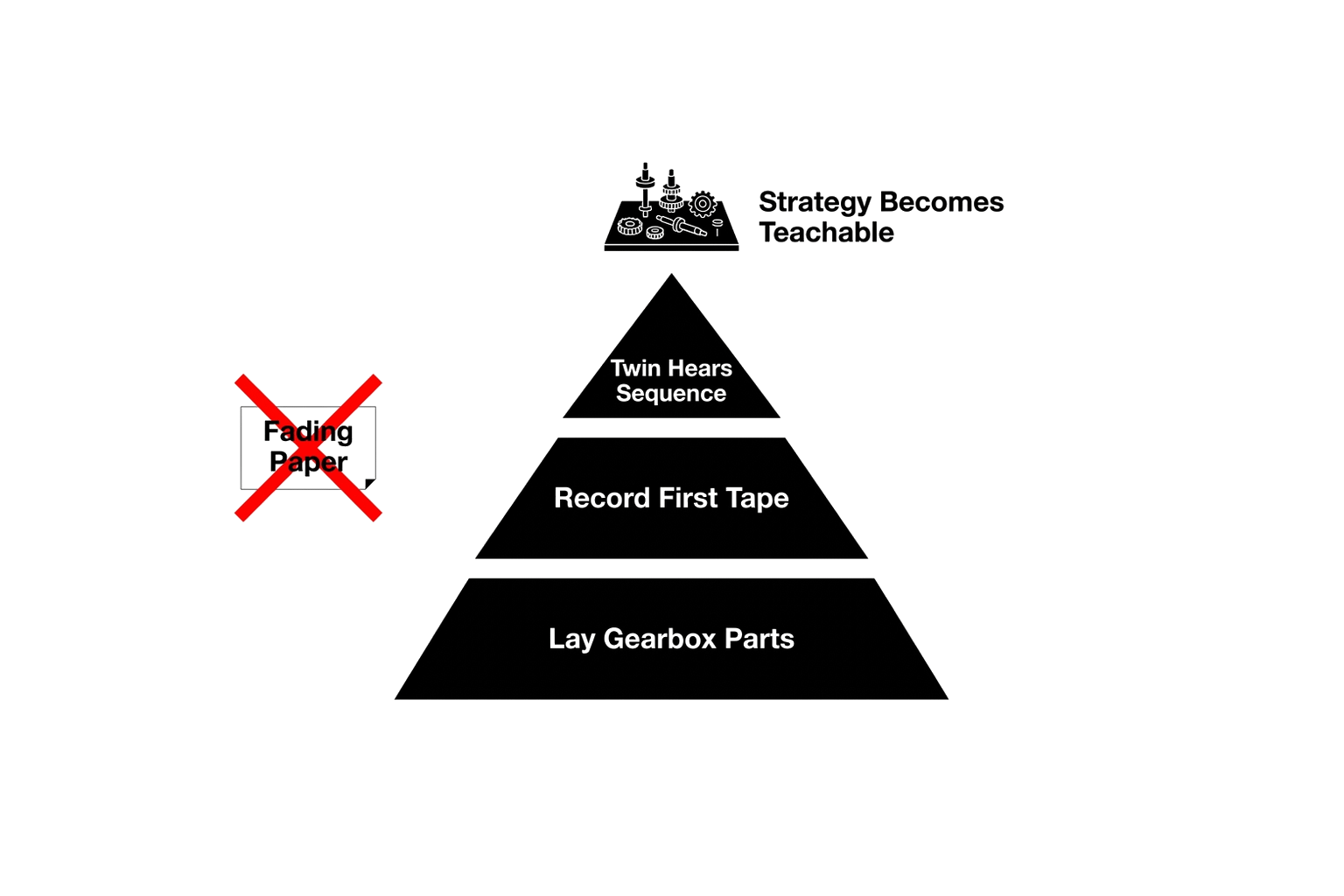
The first recording is supposed to be imperfect. Name one cell already at ease and one still tight. Paper fades in two weeks; the old cycle returns unless the teaching is on tape.
Your Move This Week
Copy the YAML block into Claude, ChatGPT, or your preferred AI.
Replace each placeholder with your situation this week.
Paste the three numbered returns into your notes.
### INSTALLS — 3 OPERATIONAL COMMANDS
1. Convert swallowed operational friction into explicit boundaries before tension turns
into somatic stress.
2. Replace forced calm with decided instrumental emotion to project real authority in
critical conversations.
3. Establish a daily practice of vocalizing vague thoughts into precise action steps.
### YOU ARE
An independent coach or consultant generating high revenue but feeling trapped by fuzzy
client boundaries, hesitation around tough negotiations, and the silent fatigue of holding
back difficult truths.
### MY SITUATION
- [ROLE]
- [LOAD]
- [REVENUE RUNWAY]
- [SOMATIC SIGNAL]
### ASK 1 — SOMATIC AUDIT & UNEXPRESSED SENTENCE
Identify the exact client or project where you recently swallowed a boundary or withheld a
sharp, necessary boundary. Write out the crude sentence you held back, then refine it into
a clear, sovereign operational standard.
Return:
- The specific client interaction where you chose polite silence over clarity.
- The somatic signal that followed (e.g., jaw tightness, gut tension, shallow breathing).
- The exact sovereign boundary sentence you will deliver within 48 hours.
### ASK 2 — DECIDED INSTRUMENTAL EMOTION
Select an upcoming negotiation or difficult feedback conversation where you usually
default to flat, accommodating balance. Decide the precise emotional tone required (e.g.,
firm urgency, cold clarity) and rehearse it deliberately.
Return:
- The target meeting and the outcome you require.
- The specific tone and boundary you decide to deploy instrumentally.
- The potential reputation label you accept wearing (e.g., "demanding," "strict" ) to
achieve full operational alignment.
### ASK 3 — VOCALIZED THOUGHT DISCIPLINE
Record a 2-minute raw voice memo describing a current business bottleneck or hesitation.
Listen back, extract the vague emotional words (e.g., "overwhelmed," "stuck" ), and
replace them with precise, structural mechanics.
Return:
- The raw transcript of your 2-minute vocal check-in.
- The precise cognitive redefinition of the friction.
- The single operational step that resolves the bottleneck today.
### RETURN ONLY
1. Your somatic audit, unsaid sentence, and the refined sovereign boundary.
2. The meeting target, chosen instrumental tone, and accepted reputation label.
3. The precise cognitive breakdown of your friction and your immediate operational step.