

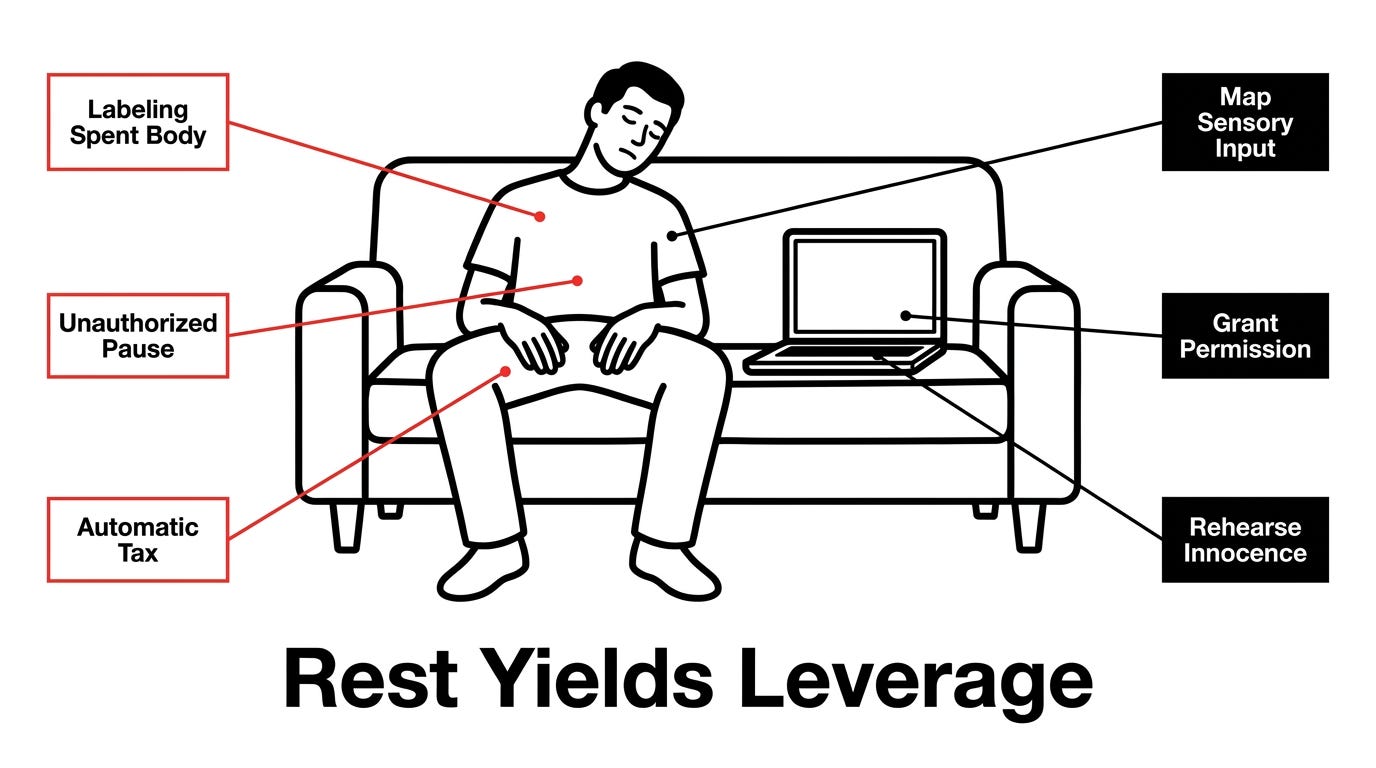
Here is how to decouple fatigue from identity, dismantle conditioned rest-guilt, and systematically rehearse sovereign recovery in three precise steps.
You close your laptop at 7:00 PM after six back-to-back coaching sessions and a failed proposal follow-up. The delivery went reasonably well, but as you step away from your desk, a heavy fog settles into your shoulders. Your runway is thinning, your pipeline feels fragile, and your immediate impulse is to open your phone, check email once more, or force yourself into another hour of content strategy.
Instead, you force yourself to sit on the couch and do nothing. Within four minutes, an intolerable friction rises in your chest: a quiet, persistent prosecution that whispers you have no right to stop when your business isn't safe yet.

The Sentence That Captures Your Fatigue
Go deeper 👉 : How to Move Beyond Wounds and Humiliation
When an independent consultant faces operational stress, the brain instantly demands an explanation for low physical energy. The default move is to construct a totalizing identity narrative out of a transient biological state. You declare "I am exhausted" or "I am someone who can't keep up," converting a temporary sensory input into an immutable truth about your competence. This error in somatic signal translation traps you in a closed loop where the descriptive label confirms the exhaustion it purports to measure.
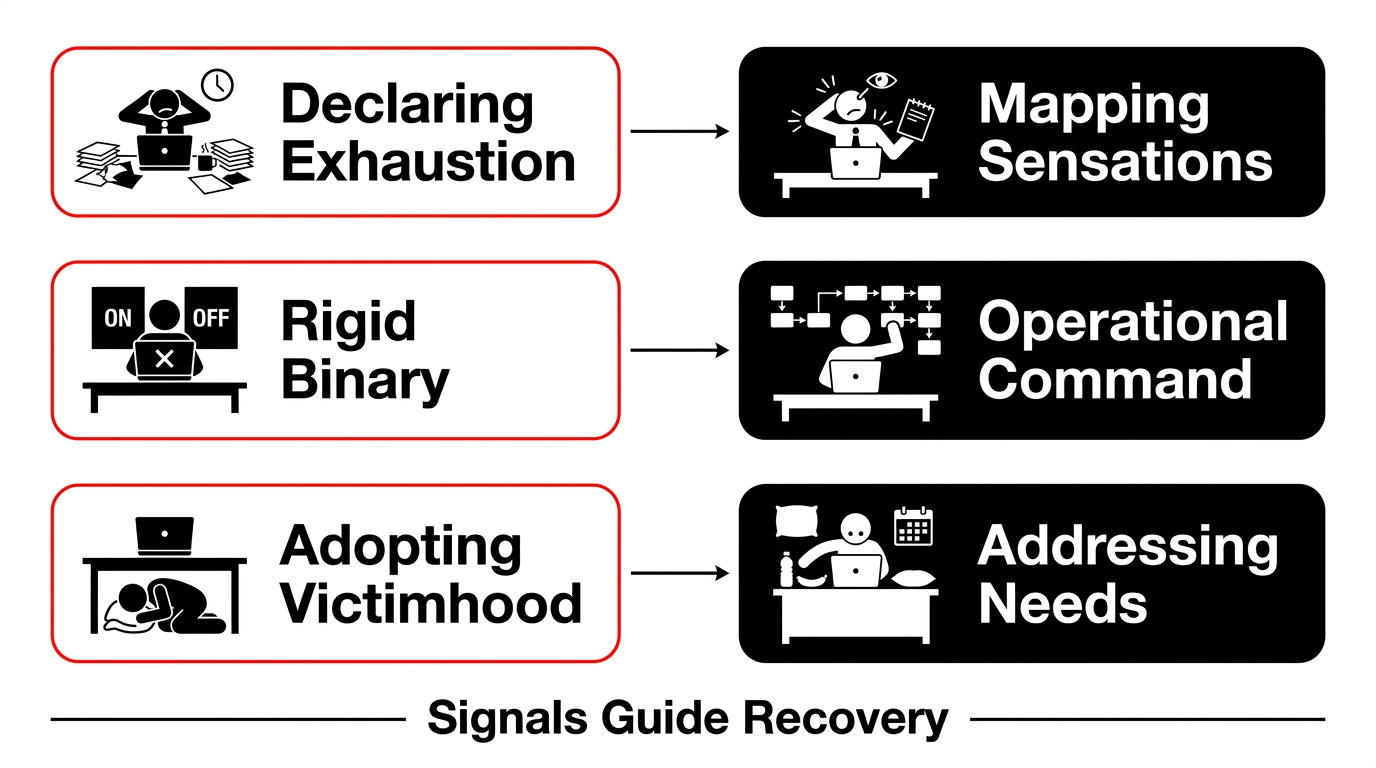
The body rarely sends a single, monolithic command. In reality, you simultaneously hold two competing biological needs: the need to execute high-value work and the need to achieve complete cognitive emptiness. When you force these needs into a rigid binary, you fall into a functional trap. You convince yourself that you must either be a relentless operator who never stops or a broken individual who constantly needs retreat.
"A tired sentence is not an identity. When you label a spent body as a broken self, you freeze the very signal meant to guide your operational recovery."
True operational command lies in refusing to let a single context write your entire identity. Excellence is not a binary toggle between grinding and collapsing; it is the refusal to turn a localized requirement into a universal self-definition. When you notice the phrase "I am tired" surfacing, your first operational duty is to stop validating the narrative. Map the physical sensation, identify the precise sensory input beneath it, and address the physiological requirement without adopting the victimhood of the label.
Deconstructing the Tax on Unproductive Time
Go deeper 👉 : The Operating Model of High Performers
Most founders operate under an unwritten rule inherited from corporate conditioning: unproductive time is morally suspect. When your runway is tight, every minute spent away from client generation feels like an act of negligence. Yet when an elite athlete finishes a world-class performance, recovery is not treated as a luxury or a moral failure; it is scheduled into the training protocol as a strict physiological requirement to preserve allostatic load balance.
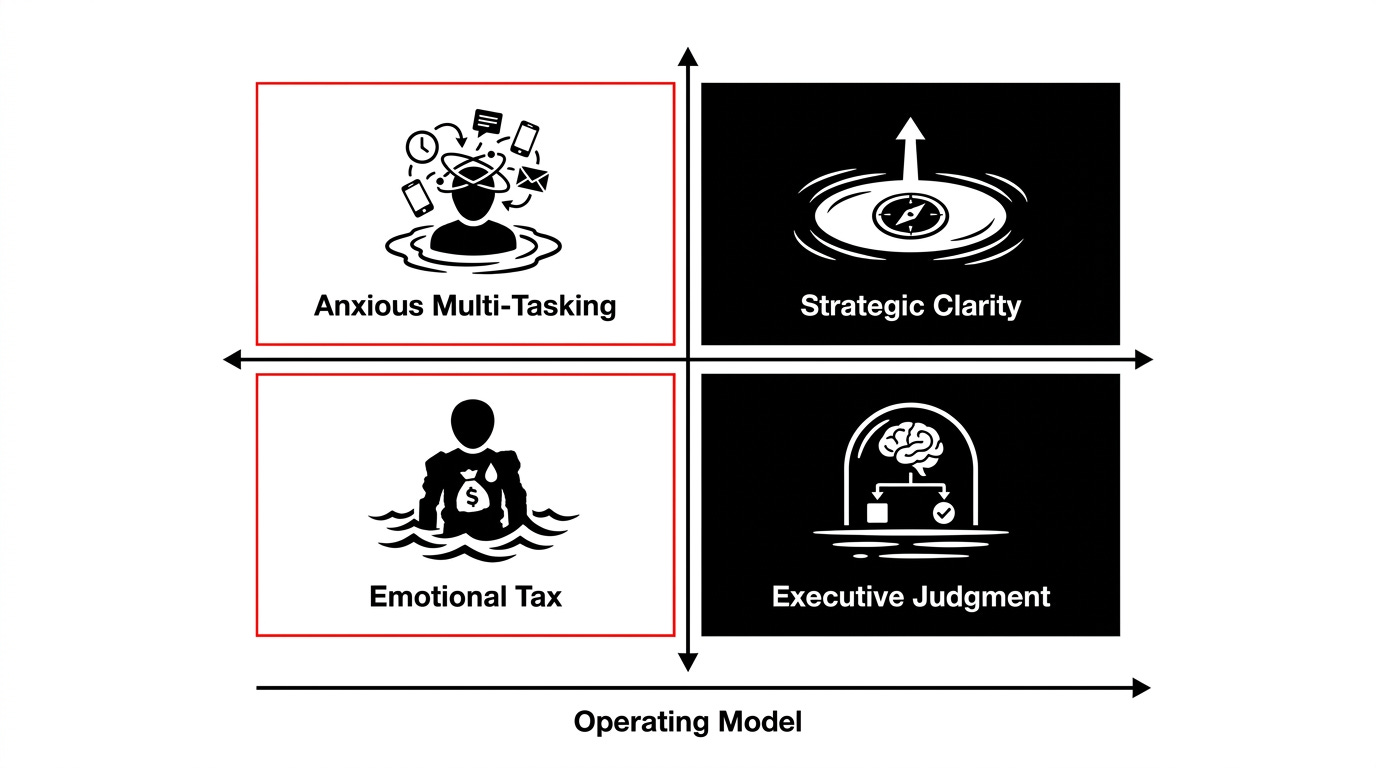
When you attempt to take a two-hour break without explicit internal authorization, your system levies an immediate tax: guilt. You sit on a park bench or lie down, but instead of recovering, your prefrontal cortex runs a real-time audit of everything you should be producing. You spend two hours resting, but because you paid the emotional tax, you return to your desk twice as exhausted as when you sat down.
"Guilt is not proof that you are being lazy; it is merely a conditioned tax on an unauthorized pause. When you stop paying the tax, the pause yields pure leverage."
When I spent two hours in thermal baths recently to cut the noise and reset my baseline, the goal wasn't to escape reality—it was to take clean references back into high-stakes execution. That time was not extra, and it was certainly not a luxury; it was more than necessary to maintain executive judgment.
Guilt is an instrumental emotion regulation issue, not a moral flaw. It is a neurological reflex installed by years of equating human worth with task completion. When you realize that one sovereign, deeply present hour of recovery can deliver more strategic clarity than eighty hours of anxious multi-tasking, the tax reveals itself as an expensive illusion.
Rehearsing the State of Innocence
Go deeper 👉 : Mastering the Internal Environment
To break the tax, you cannot rely on passive rest or willpower; you must engage in deliberate mental rehearsal. Your conditioned guilt circuit activates automatically whenever you enter unstructured time because your brain lacks a clean, somatic reference for non-productive presence. You must systematically build an alternative neurological pathway where stillness carries zero penalty.
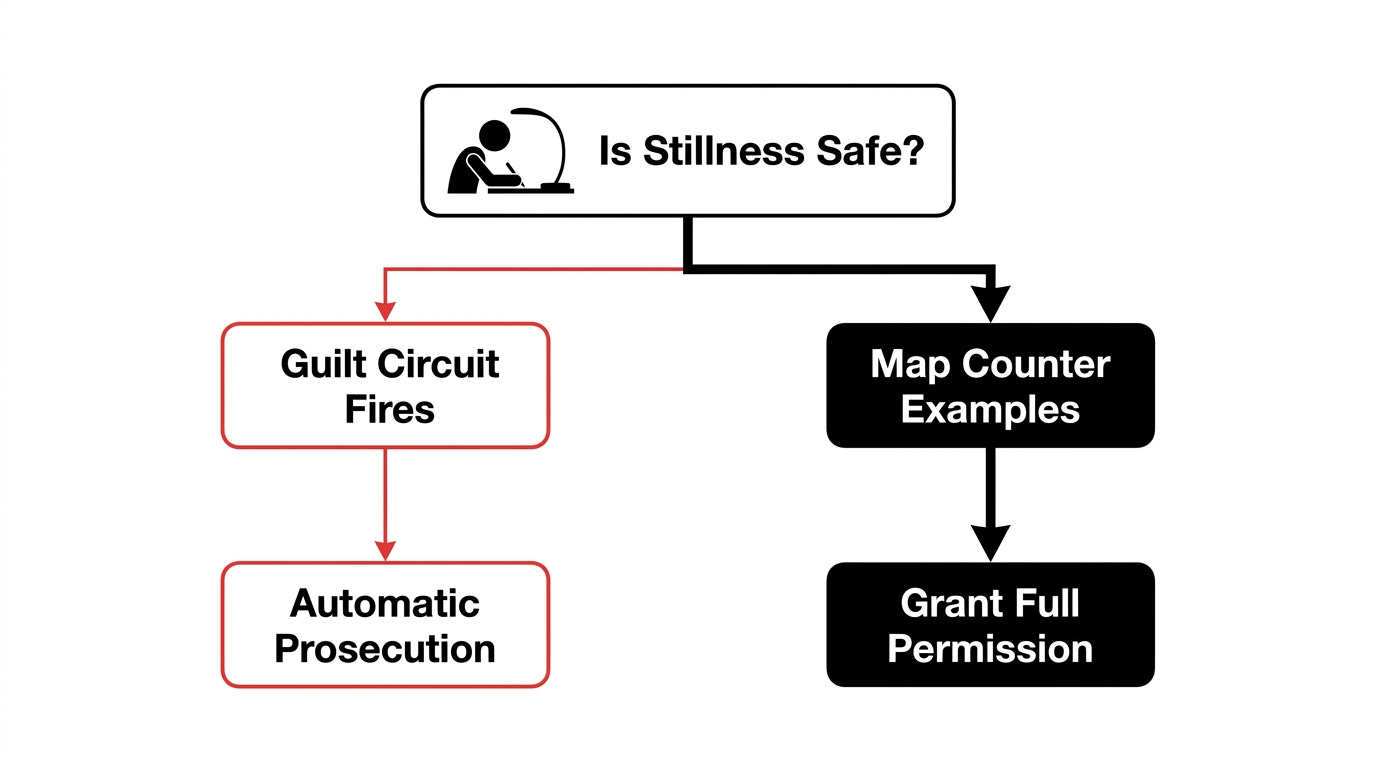
This requires deploying a cognitive reappraisal schema to map counter-examples from your own life. Identify the non-standard hours where you were deemed unusual, unconventional, or "unproductive" by traditional metrics, yet felt zero internal guilt—moments of pure creative focus, deep connection, or bold decision-making. These instances prove that strange or non-busy hours do not inherently trigger self-prosecution; the guilt fires only when an unauthorized rule is breached.
By overriding the automatic tax, you access a neurobiological state of innocence—a state where the parasympathetic nervous system engages fully because the mind grants complete permission to exist without output. You do not wait for your business to be perfectly secure before granting yourself this permission. You grant the permission now, precisely because high-stakes business decisions require an uncompromised nervous system.
Exploded-view thinking: Record the first imperfect teaching
A strategy you cannot explode into parts is a strategy you cannot teach. Take the trait, the context, and the consequence apart the way a mechanic lays a gearbox on the bench — so your twin can hear the sequence.
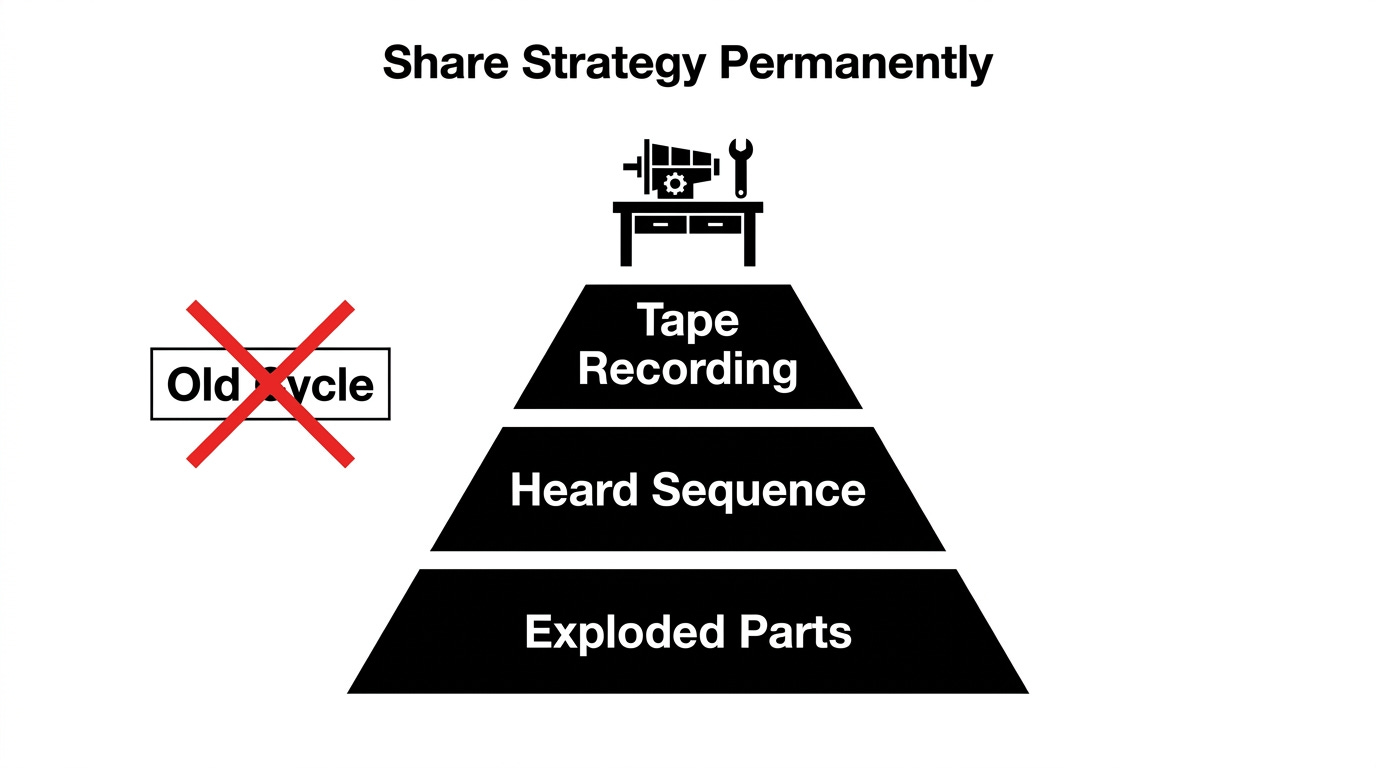
The first recording is supposed to be imperfect. Name one cell already at ease and one still tight. Paper fades in two weeks; the old cycle returns unless the teaching is on tape.
Your Move This Week
Copy the YAML block into Claude, ChatGPT, or your preferred AI.
Replace each placeholder with your situation this week.
Paste the three numbered returns into your notes.
### INSTALLS — 1. Audit descriptive fatigue sentences 2. Strip the guilt tax from unstructured recovery 3. Rehearse the state of innocence
### YOU ARE
An independent coach or consultant navigating tight client delivery and revenue stress,
caught in a loop of perpetual motion where rest triggers operational guilt and exhaustion
impairs closing confidence.
### MY SITUATION
- [ROLE]
- [LOAD]
- [ENERGY_STATE]
### ASK 1 — AUDIT DESCRIPTIVE FATIGUE SENTENCES
Audit your daily energy dips by separating physical biological signals from identity
conclusions.
Return:
- Identify the exact phrase you speak when feeling drained (e.g., "I am burnt out" vs.
"My nervous system needs 20 minutes of silent integration" ).
- Note the precise physical sensation triggering the phrase without assigning a moral
judgment to it.
### ASK 2 — STRIP THE GUILT TAX FROM RECOVERY
Isolate your unstructured rest blocks and eliminate the mental prosecution that follows
stopping work.
Return:
- List two non-standard hours this week where you paused work without delivering output.
- Write down the exact rule or voice that claimed you were being unproductive, and reframe
it through sovereign boundary-setting.
### ASK 3 — REHEARSE THE STATE OF INNOCENCE
Conduct a mental simulation of resting without debt, anchoring a physical state of calm
and complete permission.
Return:
- Select a 15-minute recovery window for tomorrow.
- Identify the exact feelable emotion (serenity, baseline power, clean focus) that
replaces guilt during that hour.
### RETURN ONLY
1. Your raw biological signal vs. descriptive label pair.
2. The specific rule driving your rest-guilt and its operational replacement.
3. The chosen emotional anchor for your 15-minute innocent recovery block.