


This week, we install three specific upgrades to your business operations: we identify the physical tells of your experiential avoidance, we calculate the compounding financial cost of your micro-negotiations, and we split the heavy words that freeze your sales conversations into objective grids.
The room is loud, filled with corporate directors who have the exact budgets your coaching business needs to survive the next twelve months. You spot one standing alone near the terrace, looking at their phone. This is the moment to walk over, introduce yourself, and pitch the pilot program you spent all of August drafting. Instead, your feet stay glued to the carpet, your throat tightens, and your hand reaches down to refill your glass at the buffet. You tell yourself you are just waiting for a more natural opening, but your bank account is paying the price for that delay.
The Chemistry of the Glass Refill
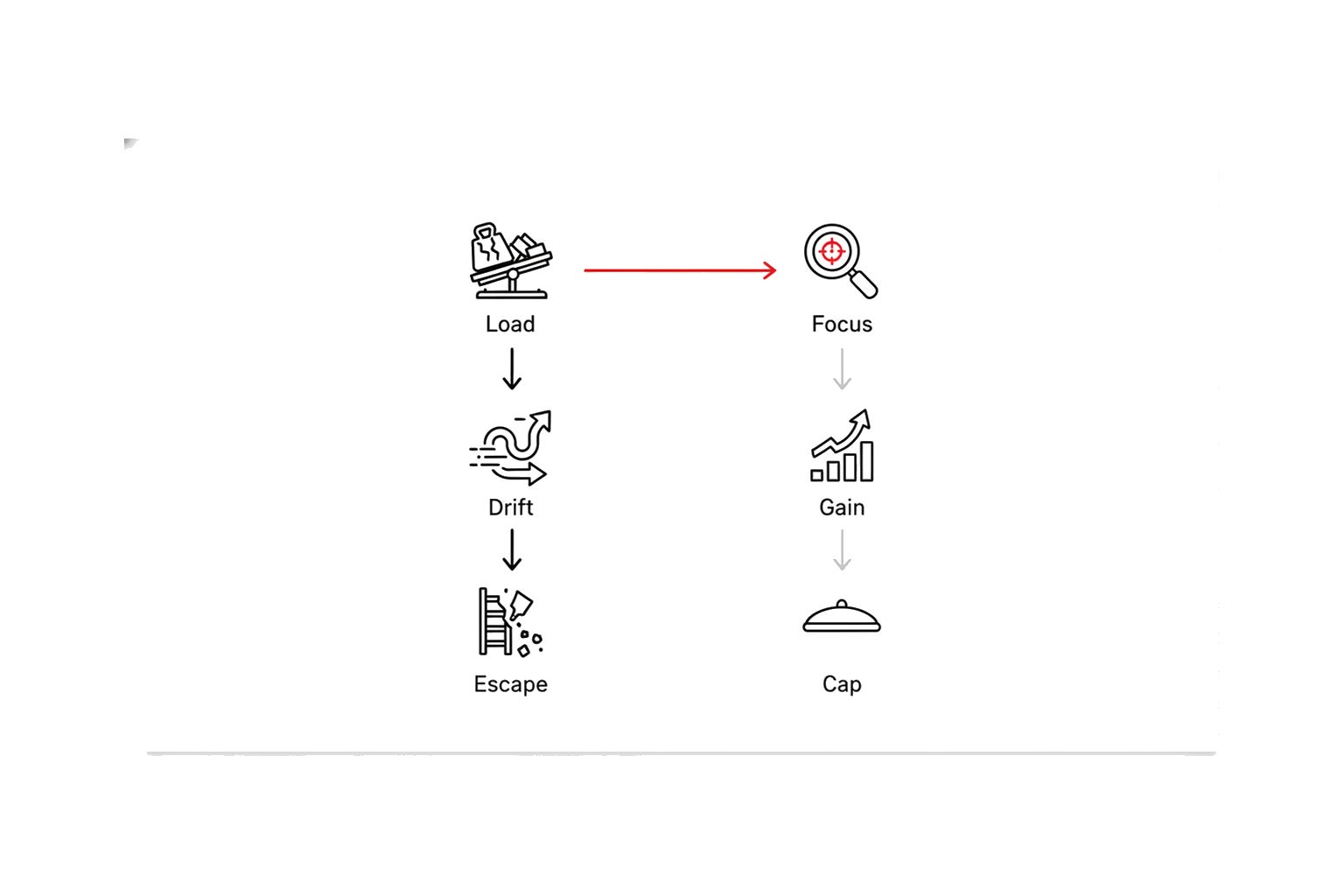
That sudden pivot to the buffet is not a lack of social skills or a bad value proposition. In behavioral psychology, this is known as experiential avoidance—a highly structured cognitive defense mechanism where the brain prioritizes immediate emotional relief over long-term strategic survival. When the Load of a live pitch hits, your autonomic nervous system drops heart-rate variability and triggers a mild fight-or-flight response. Your prefrontal cortex, under that hormonal spike, seeks any logical excuse to leave the discomfort.
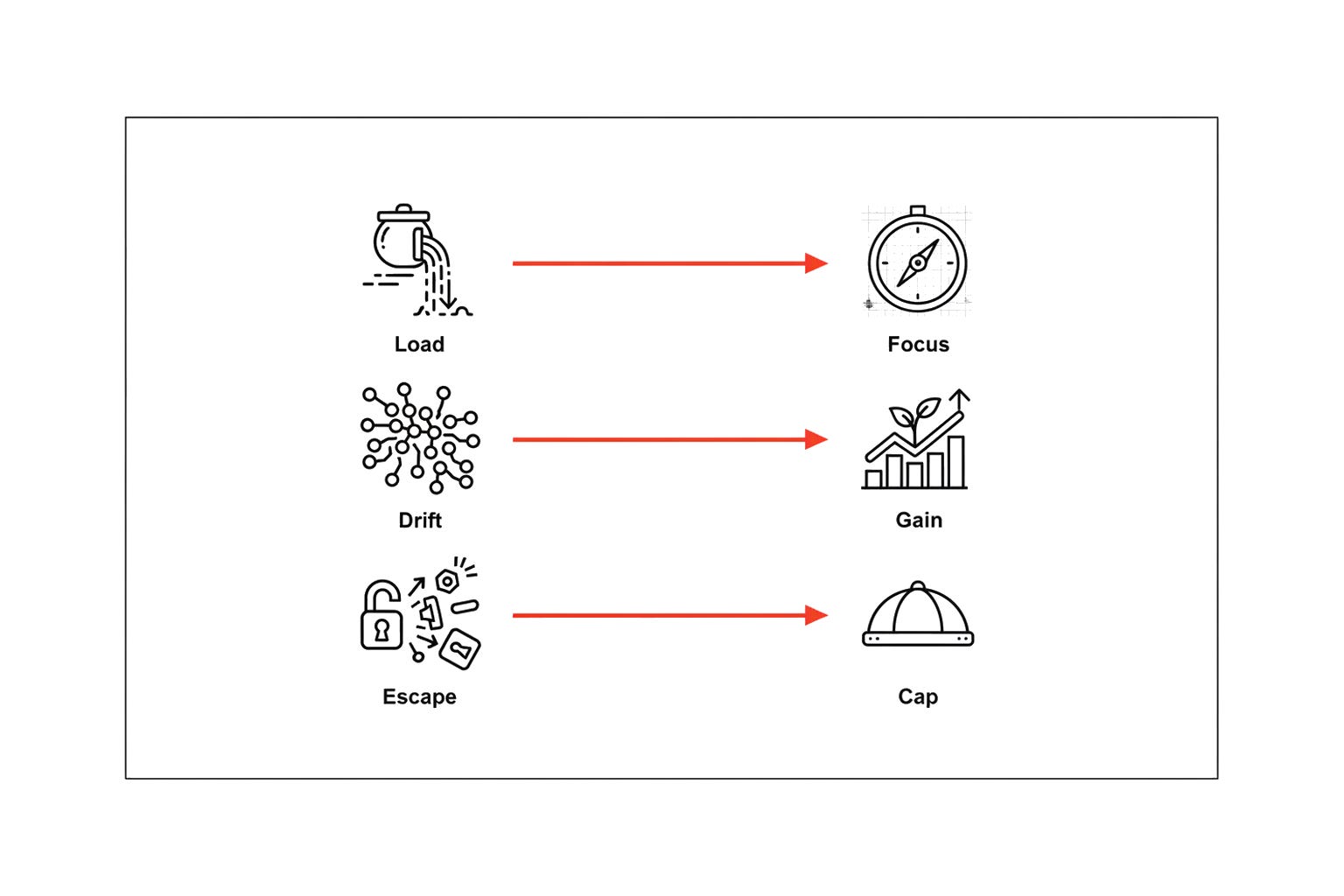
The business consequence of this cognitive loop is devastating. Because your body treats a sales pitch as a physical threat, Escape looks like work: you steer toward "safe" clients who cannot afford your real rates, then spend the day editing a website, building templates, or writing a free newsletter. You are working ten hours a day, but none of those hours are spent in the high-friction rooms where transactions happen.
To break this loop, you must first develop interoception—the ability to read your body’s internal signals before they dictate your actions. When you feel the urge to check your emails for the tenth time, or to leave an event early, your body is running a flight strategy. Naming the throat-tightening or the chest-constricting is the first Focus move: you pause the automated program before it spends the night.
The Micro-Negotiation of Your Runway
Every time you choose short-term comfort over a hard conversation, you enter into a micro-negotiation with your future. You trade your professional sovereignty for a temporary sense of safety. You tell yourself that you will pitch them next week, or that you need to refine the offer slide one more time before sending the proposal. This is how an independent consultant with fifteen years of corporate expertise slowly slides back toward updating their resume for a salaried job.
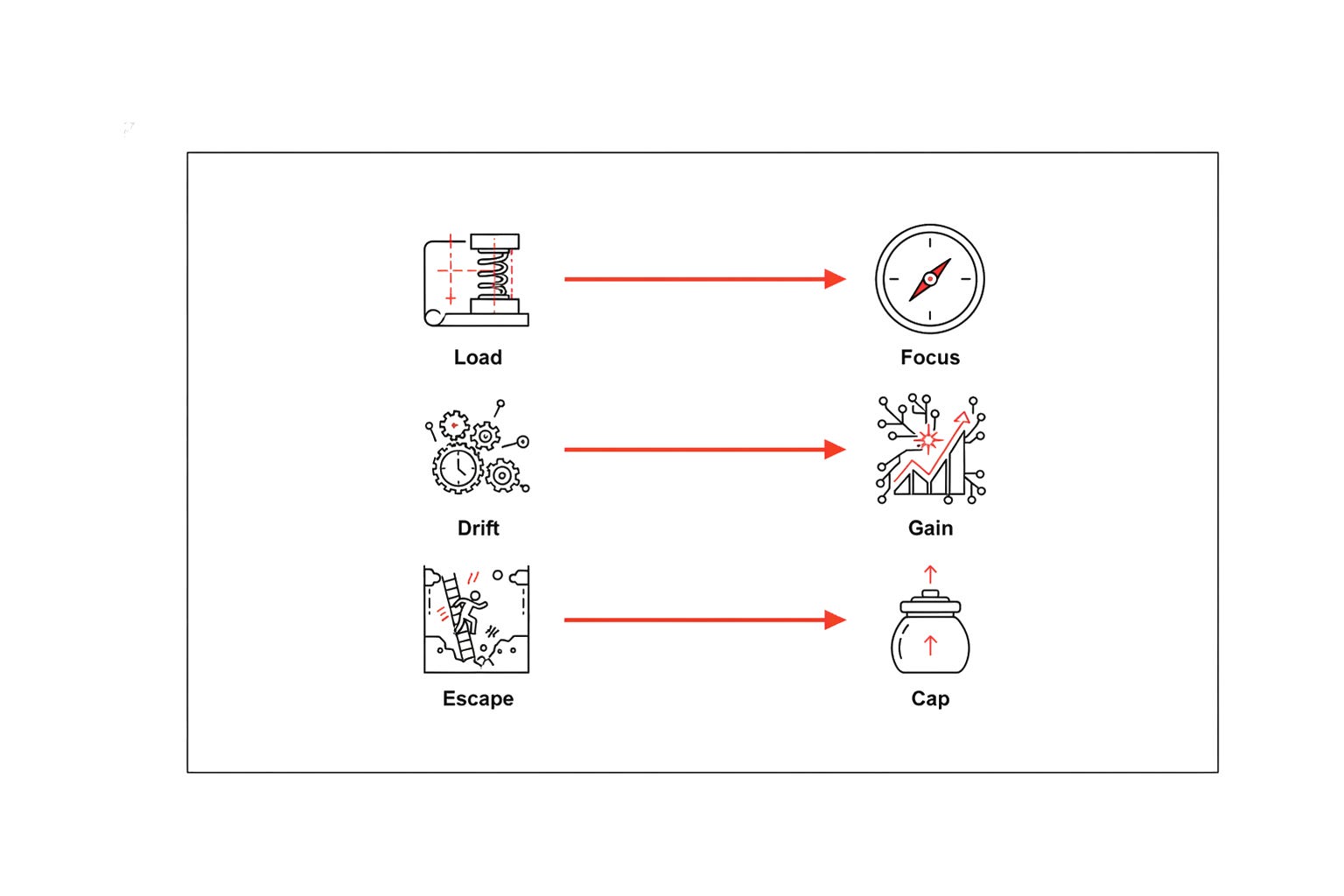
This Drift creates what we call an Identity Gap. You hold yourself to the high standard of a sovereign business owner, yet your daily actions resemble those of a hesitant freelancer waiting for permission to speak. The energy required to maintain this gap is immense, leaving you exhausted at the end of the week without having closed a single new contract.
"If you avoid, you do not confront. The resulting identity gap drains your daily operational energy, turning a short-term 'yes' to comfort into a long-term 'no' to your entire business."
I remember when I used to sit in my car before high-stakes sales meetings, rewriting my slides on my lap instead of walking through the front door. I told myself I was "polishing the value proposition" to ensure absolute quality, but my empty pipeline knew I was just running away from the moment of truth. Reclaiming your sovereignty means treating the discomfort of the pitch as a Cap on how much comfort you are allowed to buy with unpaid hours — not as a sign that something is wrong with your business.
Splitting the Scammer's Grid
When you dig beneath the fear of pitching, you rarely find a doubt about your actual competence. Most experienced consultants know they can deliver results once the contract is signed. The real block is an identity story: If I sell the dream of what is possible, and they fail to achieve it, I am a charlatan. To protect yourself from ever being perceived as a scammer, your nervous system shut downs the sales conversation before it even begins.
The solution is not to force yourself into a state of artificial confidence or to adopt the aggressive tactics of a high-pressure closer. Instead, you must use objective definitions to split this emotional block into a functional grid. Where are you already "selling a dream" in your life while remaining completely at ease? You do it when you reassure a partner that a difficult situation will work out, or when you convince a client to trust a process before the data is in.
"You do not need to become a ruthless Closer who doesn't care about delivery. But you must stop pretending your hesitation is 'high integrity' when it is actually just a physiological flight strategy."
The Transfer of Certainty
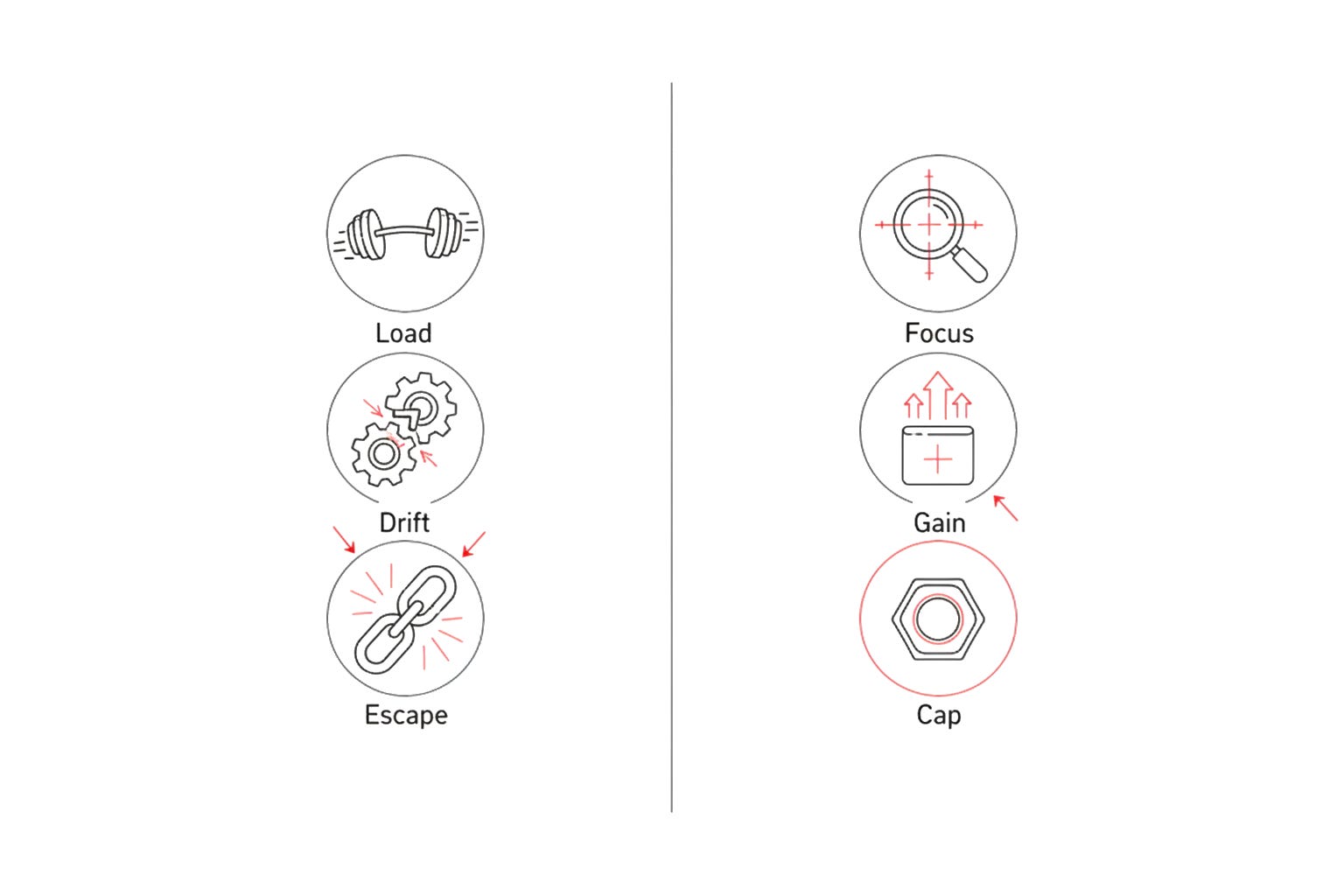
By building a personal reading grid, you can separate actual fraud from the necessary work of transferring certainty. A transaction cannot occur without a Transfer of Certainty—and that transfer does not travel on your slides. The Gain travels on your tone, your gaze, your posture, and your willingness to stand in the discomfort of the close. When you master both the support you offer and the tension you create, you stop running from the market and start leading it.
Your Move This Week
Copy the YAML block into Claude, ChatGPT, or your preferred AI.
Replace each placeholder with your situation this week.
Paste the three numbered returns into your notes.
### INSTALLS
1. Identify the physical triggers of your experiential avoidance before they turn into
flight strategies.
2. Calculate the long-term financial cost of your daily micro-negotiations.
3. Build a personal definition grid to separate high-integrity sales from your fear of
being a charlatan.
### YOU ARE
An independent coach or consultant who is highly competent at delivery but freezes,
procrastinates, or over-complicates when it is time to pitch high-value corporate clients.
### MY SITUATION
[ROLE]
[RUNWAY]
[OFFER_CLARITY]
[AVOIDANCE_TRIGGER]
### ASK 1
Recall the last time you hesitated to make a pitch or send a high-priced proposal. What
was the exact physical sensation in your body right before you chose to delay, and what
"productive" task did you do instead to escape that discomfort?
Return:
- The physical signal (e.g., tight chest, dry throat).
- The flight strategy disguised as work (e.g., formatting slides, researching prospects).
### ASK 2
Identify one high-value prospect you have been avoiding contacting. If you continue to
micro-negotiate and delay this pitch for another 30 days, what is the exact operational
and financial cost to your business runway?
Return:
- The name of the target segment or prospect.
- The financial cost of another month of avoidance.
### ASK 3
Draft your personal definition of "selling the dream." Write down one scenario where you
comfortably sell a positive future outcome to someone (in your family, with past clients,
or colleagues) without feeling like a fraud.
Return:
- Your definition of honest value transfer.
- One real-life scenario where you do this with complete integrity.
### RETURN ONLY
1. Physical signal: [Your body tell] | Flight task: [Your escape work]
2. Target: [Prospect type] | 30-day avoidance cost: [Amount in USD/EUR]
3. Honest pitch definition: [One sentence] | Safe zone: [Where you already do it]PS: Capacity before reach. Yann's Club is weekly mental-fitness reps for Life Performers — Personal Growth Engineering under load. Install the system that holds your edge.