How to Move Beyond the Wounds of Humiliation
Alert: These Wounds Can Slow Your Business Down

Hello and welcome to this new edition of my news. I am Yann Gabioud, expert in performance psychology, personal development coach and Life Designer.
My vision is to help entrepreneurs, solopreneurs like you to achieve your greatest ambitions. And precisely, in my News, we are going to dissect psychological aspects which can be levers or brakes in your journey as an entrepreneur.
You move forward in your life, in your project, in your ambition... and yet, there is this restraint. This inner tension difficult to name, but very familiar. A persistent hesitation when being visible, to defend your position, to speak out or to mark your territory.
It's not shyness. It's not a simple lack of confidence. What you feel is often rooted much deeper: a internal alert system which was built to avoid an old, brutal and striking experience: the humiliation. And this humiliation creates an injury that can impact your business.
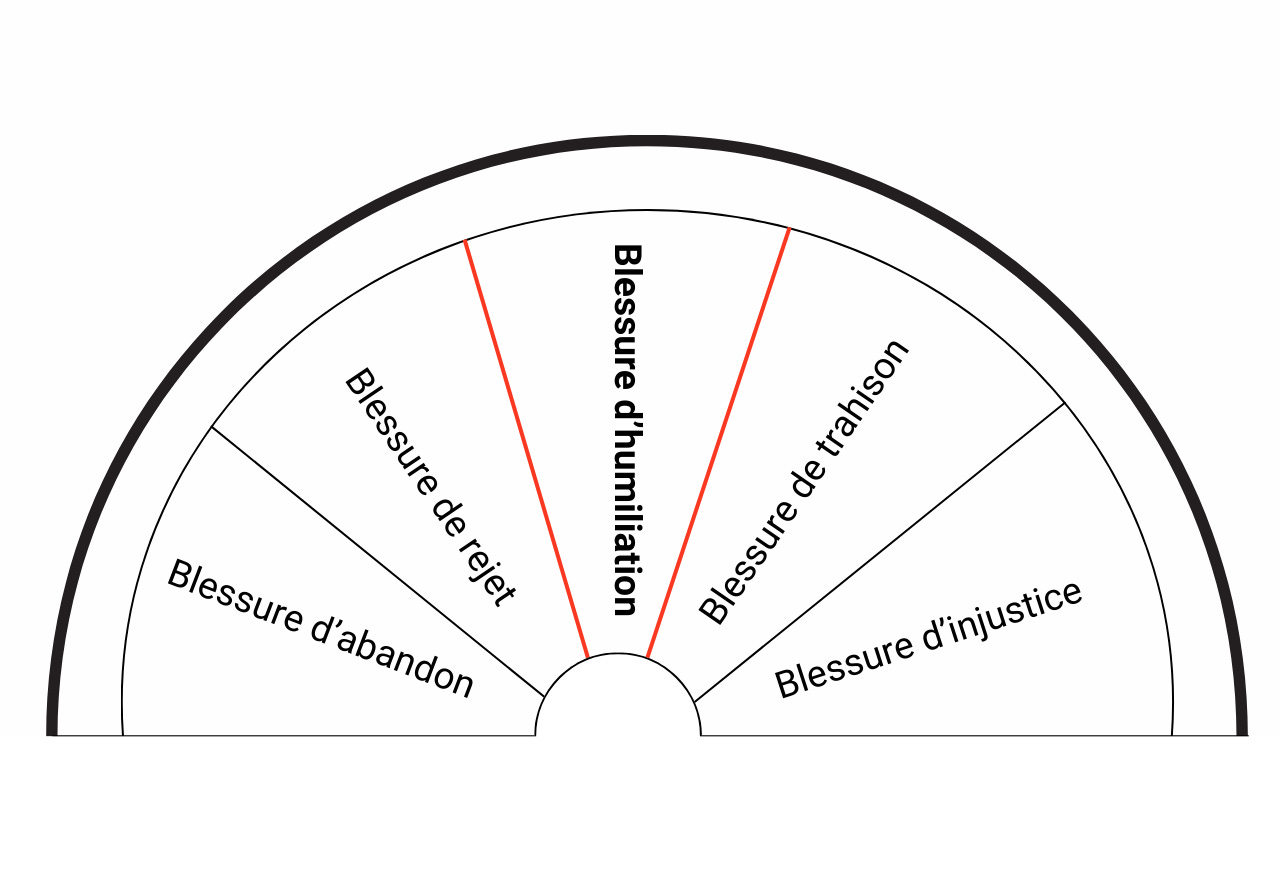
Where does this injury come from?
Very often, it is rooted in childhood, where your identity was still being constructed. You were like fresh soil: what we plant there grows strong.
In your family environment:
Maybe you were criticized a lot. Not constructive remarks, but harsh, harsh judgments. “You’re stupid”, “You’re dirty”, “You’re embarrassing us”.
Maybe you were constantly compared to a brother, sister, or another child who was “better than you.”
Maybe we didn't respect your space, your body, your privacy.
Or maybe you were controlled too much: what you should eat, wear, how you should carry yourself – with this constant feeling of being “bad” or “too much”.
And if your parents themselves carried their own shame, they may have passed it on to you in spite of themselves.
In your social or school life:
Maybe you have experienced teasing, group humiliation, rejection.
A teacher who ridiculed you in front of the whole class, a failure experienced under the laughter of others...
Moments when you were alone, observed, judged – and when you felt very small.
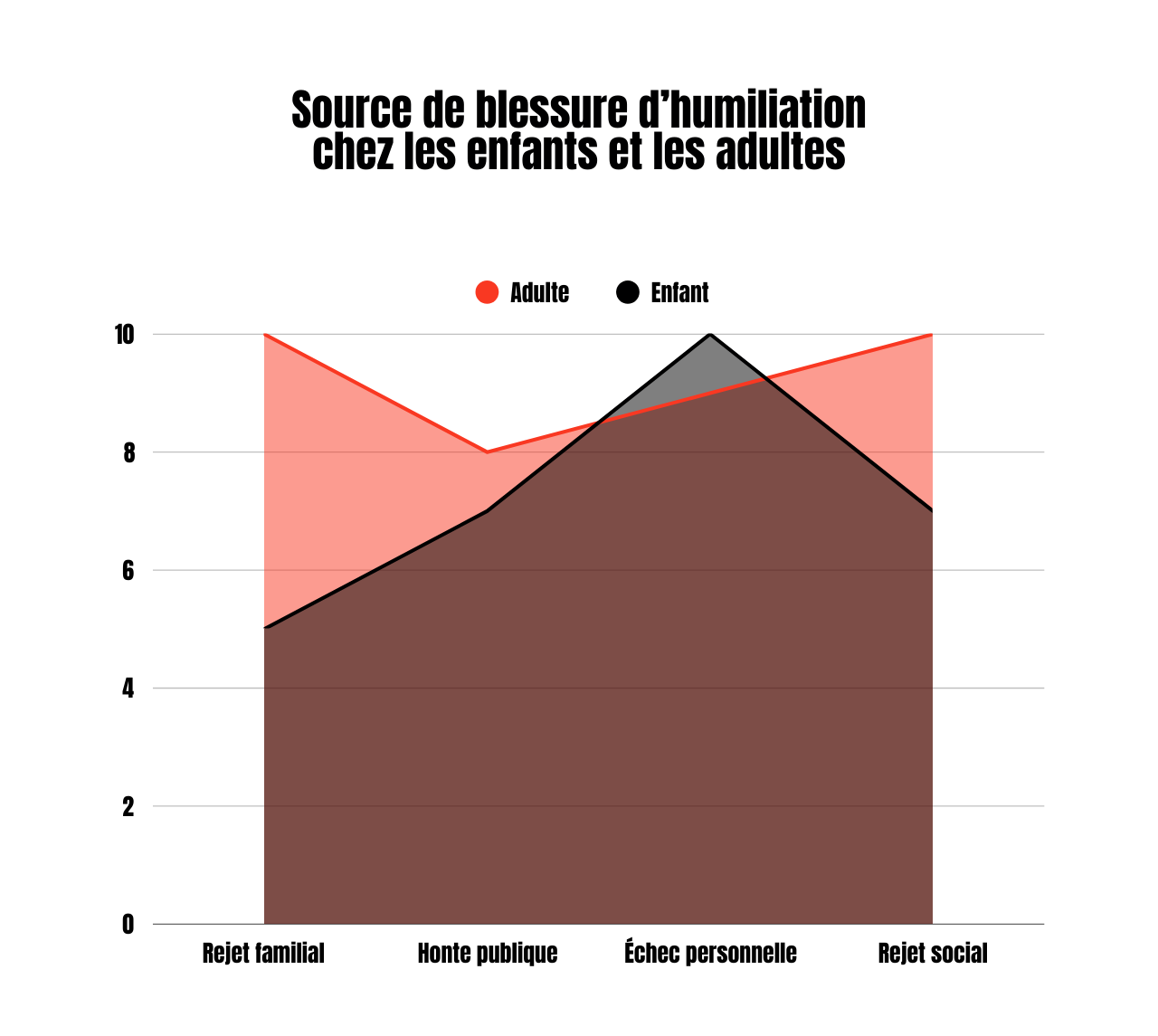
A 2003 study by Gilbert et al., published in The British Journal of Clinical Psychology (“The relationship of shame and guilt to family environment”), shows that repeated parental criticism or negative comparisons in childhood promote the internalization of shame. When a child hears judgments like "You're not good enough" or "You're shameful," he not only develops low self-esteem, but a deep belief that his very being is flawed. This internalized shame becomes a filter through which you can still perceive the world today, making you hypersensitive to external judgments. Understanding this origin allows you to begin to deconstruct these beliefs to reconnect with your intrinsic value.
You didn't imagine. Your body and your brain have really been scarred.
Neuroscience shows that humiliation activates the same brain areas as physical pain (anterior cingulate cortex, insula). You felt it as a shock, because it was one.
Bowlby and Ainsworth (attachment theory) explain how the child who does not feel welcomed, loved for who he is, develops a deep fear of rejection and the gaze of others.
Erikson would tell you that if, as a child, you were prevented from taking initiatives, from asserting yourself, or punished you when you did, then you may have internalized the idea that you are bad, that what you express or feel is shameful.
And then there is chronic stress, the kind that takes hold in your nervous system. This latent fear of being judged, belittled – even when nothing is happening.
The mechanisms in place: when your system freezes
When the wound of humiliation is active, it pushes you to develop a whole series of protective behaviors. Not out of weakness, but because your system has learned to anticipate pain.
You pay attention to everything. By your tone of voice. To your outfit. What you're going to say. You check, you control, you adjust. It’s not rigor, it’s vigilance. Intense social vigilance, often invisible to others, but exhausting for you.
You seek to avoid direct exposure: that where you could be contradicted, questioned, or simply observed. You want to shine, yes. But above all, do not be mocked, attacked or belittled. And this tension creates an inner conflict: you want to succeed, but you fear what this success implies in terms of outlook.
Psychologist Susan Harter, in a 1999 study published in Development and Psychopathology (“The effects of social rejection on self-concept and behavior”), demonstrated that repeated experiences of rejection or social humiliation lead to increased sensitivity to the gaze of others. This “rejection sensitivity” causes your brain to constantly scan your environment for signals of threat, like a critical tone or a mocking smile. It is not a weakness, but an adaptation of your nervous system to protect you. However, this constant vigilance drains your energy and limits your spontaneity. Becoming aware of this is the first step to deactivating this automatism and unlocking your potential.
The impact of this injury on your relationship to action
You may find yourself slowing down your own momentum. To sabotage the last steps. Not because you don't believe in your project, but because visible success attracts attention... and with it, the possibility of being belittled.
You accept conditions that are less favorable than they should be. You hesitate to set fair prices. You doubt the legitimacy of your skills. You accept too much, you give a lot, you ask for little.
And when recognition comes, you feel uncomfortable. You doubt his sincerity. You fear that it will be followed by criticism. You prefer to deflect the compliment rather than risk showing yourself vulnerable by receiving it.
A 2004 study by Berglas and Jones, published in The Self-Handicapping Leadership ("Self-handicapping: The paradox that isn't"), explores the phenomenon of self-handicapping, where a person unconsciously sabotages their own efforts to avoid possible humiliation in the event of failure. If you hesitate to set fair prices or finalize an ambitious project, it is not for lack of skill, but because your brain prefers to “control” failure rather than risk external judgment. Recognizing this mechanism allows you to regain control and act in alignment with your ambitions, without letting fear dictate your choices.
You are not weak. You are hypersensitive to social disqualification. You learned to spot the slightest signals of threat, and you built yourself an armor. But this armor limits you. It filters your relationships, restricts your authenticity, cuts you off from part of your creativity.
You may have already wondered why you don't feel truly free, even when you're performing well. Why do you feel this emptiness, this tension, even when you get results. Because you remained hypervigilant. Because you don't yet feel completely authorized to be, without a strategy.
However, you can develop your strength. You need to strengthen yourself. To develop this inner core that does not give in. Not a shell, but a psychic spine. This is what I call Fortitude.
Why is Fortitude your ally to no longer suffer these injuries?
Fortitude is this foundation that you build when you refuse to define yourself by your wounds, even if they existed. It’s a calm, grounded mental strength that keeps you standing even when your system wants to leak or collapse.
Psychologist Ann Masten, in a 2001 study published in American Psychologist (“Ordinary magic: Resilience processes in development”), defines resilience as the ability to adapt and thrive despite adversities, thanks to internal resources like emotional regulation and social support. The Fortitude that I propose to you is directly inspired by this resilience: it does not consist of ignoring the pain of humiliation, but of developing an inner strength that allows you to overcome judgments without collapsing. By cultivating this “ordinary magic”, you can transform your wounds into points of support to move forward with confidence.
She doesn't deny the pain. She crosses it.
She does not seek to avoid judgment. She puts it into perspective.
She doesn't push you to please. It reconnects you to your sovereignty.
Fortitude is a structural solution, not an emotional response.
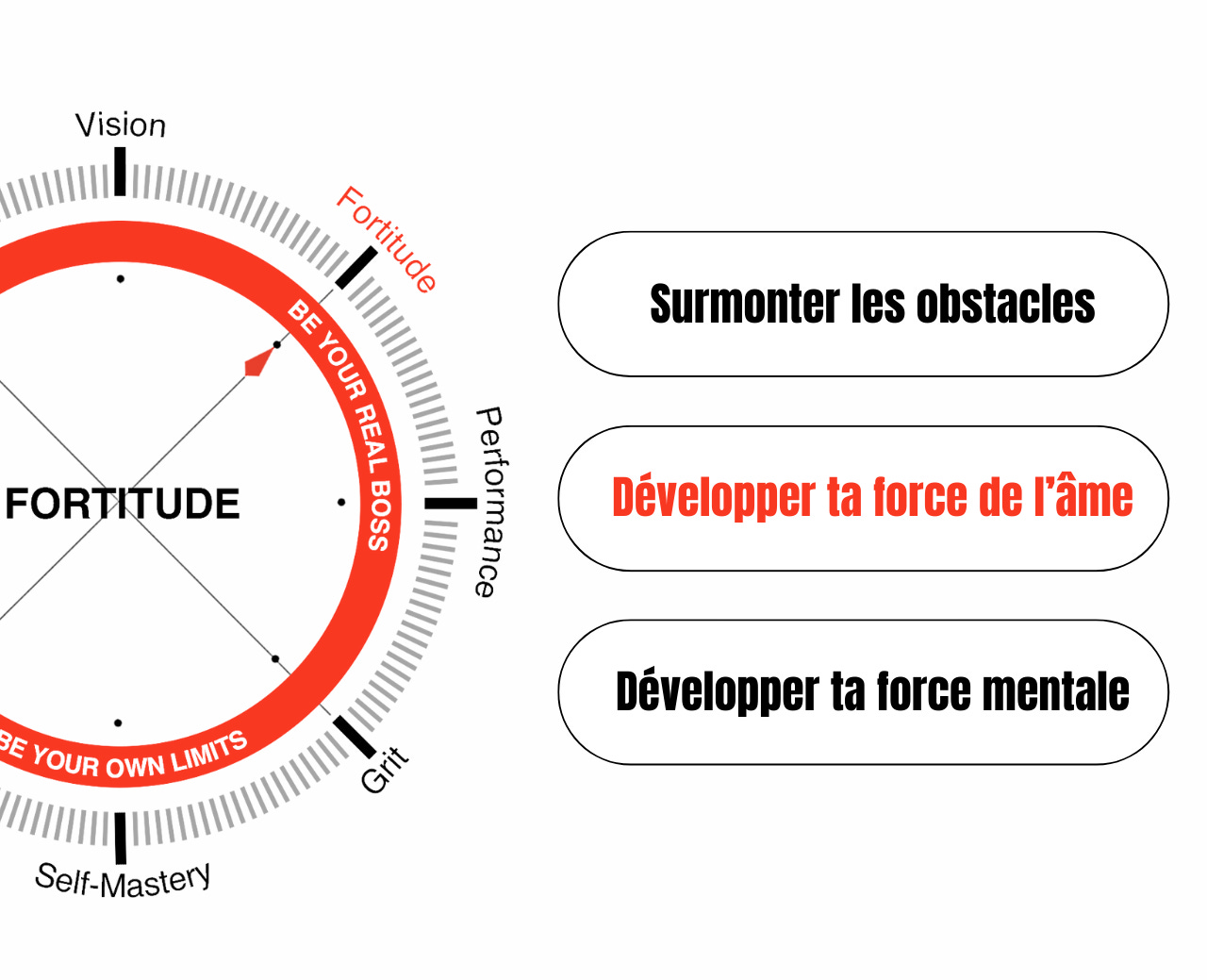
It does not consist of "thinking positive", but of align yourself with yourself, even when it’s uncomfortable. It is based on three levers that you can activate, today, with strategic regularity.
Be You – The Real You: truth as an anchor
Every time you choose to express yourself without a strategic filter, you strengthen your internal structure. You reposition yourself in the face of your story: you no longer act to avoid injury, you act to express who you are.
This choice makes you more stable, more free. Not because others change, but because you stop being dependent on their gaze.
Be Your Real Boss: autonomy as a discipline
Fortitude is rooted in the ability to decide from your axis, and not from the fear of rejection.
You make your decisions consciously : set your prices, set your limits, expose yourself. You don't do it to prove anything. You do it because you know that your center is stronger than the possible tremors around it.
You no longer seek validation. You assert your direction.
Be Your Own Limits: Growth as a Strategy
You don't wait for fear to disappear before moving forward. You move forward with it, relying on this strength that you cultivate day after day.
You are not fighting against your blockages, you are using them as points of support.
You go beyond, not to impose yourself, but to reveal yourself. To build this inner stability which, little by little, makes you impervious to humiliation. Not insensitive. But solid.
You undoubtedly have a clear vision, ambitious projects, and authentic energy to offer. But this energy cannot be fully expressed as long as this injury dictates the background of your decisions.
Working on the wound of humiliation is not doing "personal development" to feel better occasionally. It's deconstructing the invisible foundations which condition your relationship with the world. It’s freeing you from protection patterns that no longer protect you, but lock you away.
And this work is not abstract. It is concrete, precise, strategically useful for your personal and professional development. It is demanding, but deeply liberating.
Currently, I am preparing a program that will help you overcome this wound of humiliation and build the Fortitude you need to embody the ambitious entrepreneur you want to become. This program is called THE MORNING VOICE, a powerful tool designed to reset your mindset every day. It reconnects you to your inner strength, remind you of who you really are, and align yourself with your vision, without letting fear or shame hold you back.
It's in progress, and I will share all the details with you soon. In the meantime, leave me a Big Like to support the evolution of the News. Your commitment makes the difference.